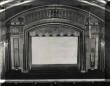
The Whole Story of The Famous Kinema Ballroom in Dunfermline (now in its 78th Year!)
|
| Biogz 'C'
Here you will find some short biographies (biogz) of solo artists whose surname commences with this letter or bands with names commencing with this letter (omitting any commonly used prefix such as 'The'). Click on the name below or scroll down the page at your leisure. Cadiz
Nick Grieve - vocals Rock band from Edinburgh, active 1979 - 1981? Nick has also played with ‘Panzer’, ’Chasar’, ’Limelight Robbery’, ’Snakebite’, ‘Alden Bald’ and currently ‘Adrenalyn’ from Musselburgh. If you can add any further information to this piece please contact me here.
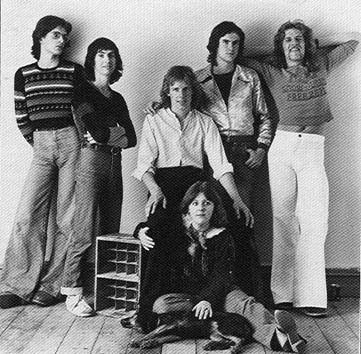
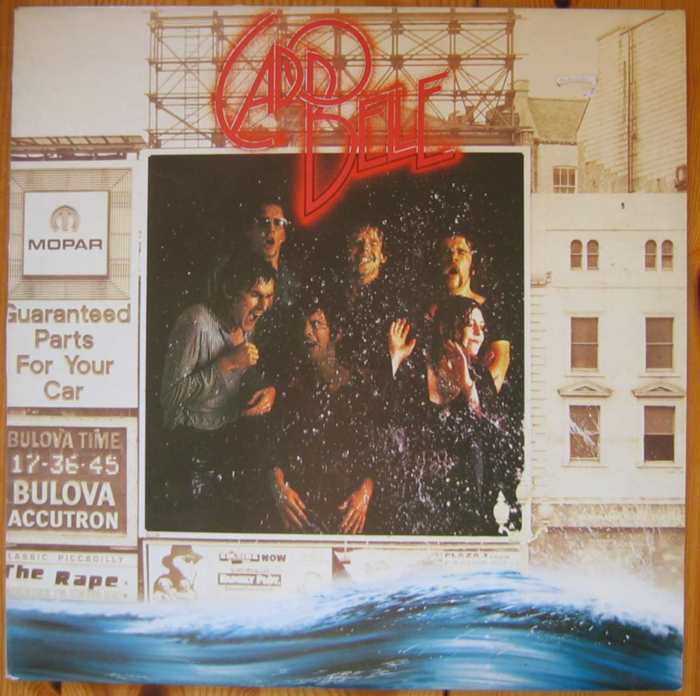
Maggie Reilly - vocals Stuart MacKillop asked Maggie Reilly to join his band 'Joe Cool' and in October 1974 they merged with 'Up' to produce a band often described as 'Scottish Soul' and were often favourably compared to 'The Average White Band'. Cado Belle released one eponymous album in autumn 1976 on the Anchor label and an EP in 1977 ('It's Over' / 'September' / 'Play It Once For Me' / 'Gimme Little Sign') but they were to split in 1979 when Gavin Hodgson left for Ireland and Stuart MacKillop went off to work with ABBA. At the same time, their label Anchor became bankrupt ... Maggie turned to session work in numerous studio jobs, worked with the trio 'Riotous Assembly' [with jazz musicians Jimmy Mullen - guitar and the late Dick Morrissey - saxophone] and had considerable exposure with Mike Oldfield. She famously opted for a nominal one-off session fee of £500 for Oldfield's hit 'Moonlight Shadow' (1983) over worldwide royalties .. Oops! She also recorded a solo cover of the Rolling Stones' 'As Tears Go By' (1984) and contributed to many different projects with stars and legends such as Jack Bruce, Dave Gilmour, Mike Batt and George Harrison. Guitarist Alan Darby has gone on to work with such luminaries as Eric Clapton, Van Morrison, Robert Palmer, Paul McCartney, Sting, Elton John, Bonnie Raitt, Ronan Keating, Burt Bacharach, Rod Stewart, Bryan Adams, Mark Knopfler, Westlife, Marti Pellow, Paul Young, Jon Anderson, and John Martyn. As well as producing his own solo album, he continues to work in film, television and notably for stage with the musical 'We Will Rock You'. Founder member, saxophonist and flautist Colin Tully, went on to write the scores for Bill Forsyth's early films, 'That Sinking Feeling' and 'Gregory's Girl' and play on the Eurovision Song Contest winner in 1980, 'What's Another Year' sung by Johnny Logan (a number one hit in nine countries) and form the Celtic jazz group, 'Sensorium'.
Forrie Cairns ( & The Clansmen)
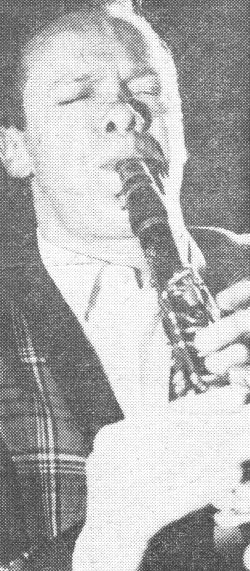
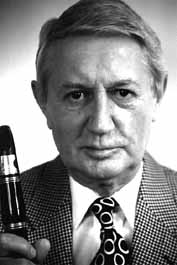
There were a number of fine clarinettists who emerged during the jazz boom of the fifties. One of the finest, and the very finest still active, is Forrie Cairns. He brings an energy and commitment to his playing which is admired by the young lions of Scottish jazz Info courtesy of: www.scottishjazzallstars.com
The Californians
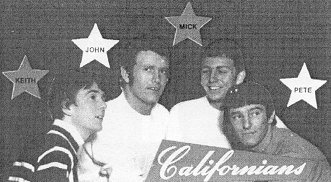
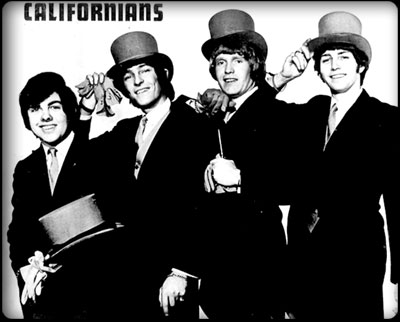
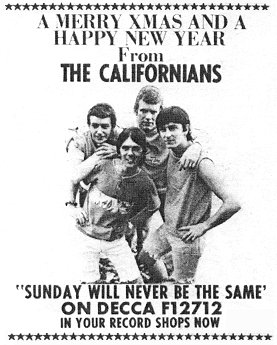
John O’Hara - lead vocals Later: A close harmony group formed in Wolverhampton in May 1966 when Sheila Deni left 'The Black Diamonds' who acquired the label 'The UK's Beach Boys'. They travelled the length and breadth of the UK during the latter half of the sixties, unsurprisingly becoming very popular amongst American servicemen on USAF bases here, chalking-up many TV & radio appearances including one major package tour in 1967 with Jimi Hendrix, Cat Stevens, Englebert Humperdink and the Walker Brothers before they split in 1970. Trivia - both drummers Evans & Trevis played drums standing up and when Evans left the band he later became a DJ. Singles:
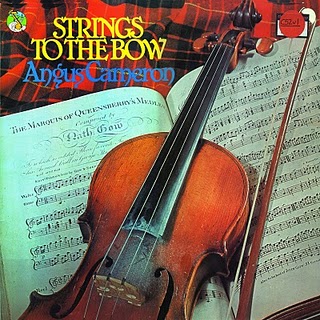
Born in around 1935 in Kirriemuir, Angus began classical violin lessons at the age of eight and was heavily influenced by his father, Will Cameron, who was one of three brothers who performed as 'The Cameron Men'. Angus won the 1952 Alyth Fiddle Festival (at the age of 17) and soon afterwards he also won the Scottish Fiddle Championship and began playing frequently on BBC radio and television. As well as playing with his own Scottish Country Dance Band, he is no stranger to variety theatre and he has reintroduced the 'Angus Strathspey and Reel Society' which he conducted for more than 13 years. He is often credited with inspiring Yehudi Menuhin wit a love of Scottish fiddle music and he recorded the two solo albums above, playing his trademark Vincenzo Panormo violin made in 1637. His array of awards include: The Golden Fiddle Award (1977). His BSc in mathematics led to a professional career as a Maths teacher.
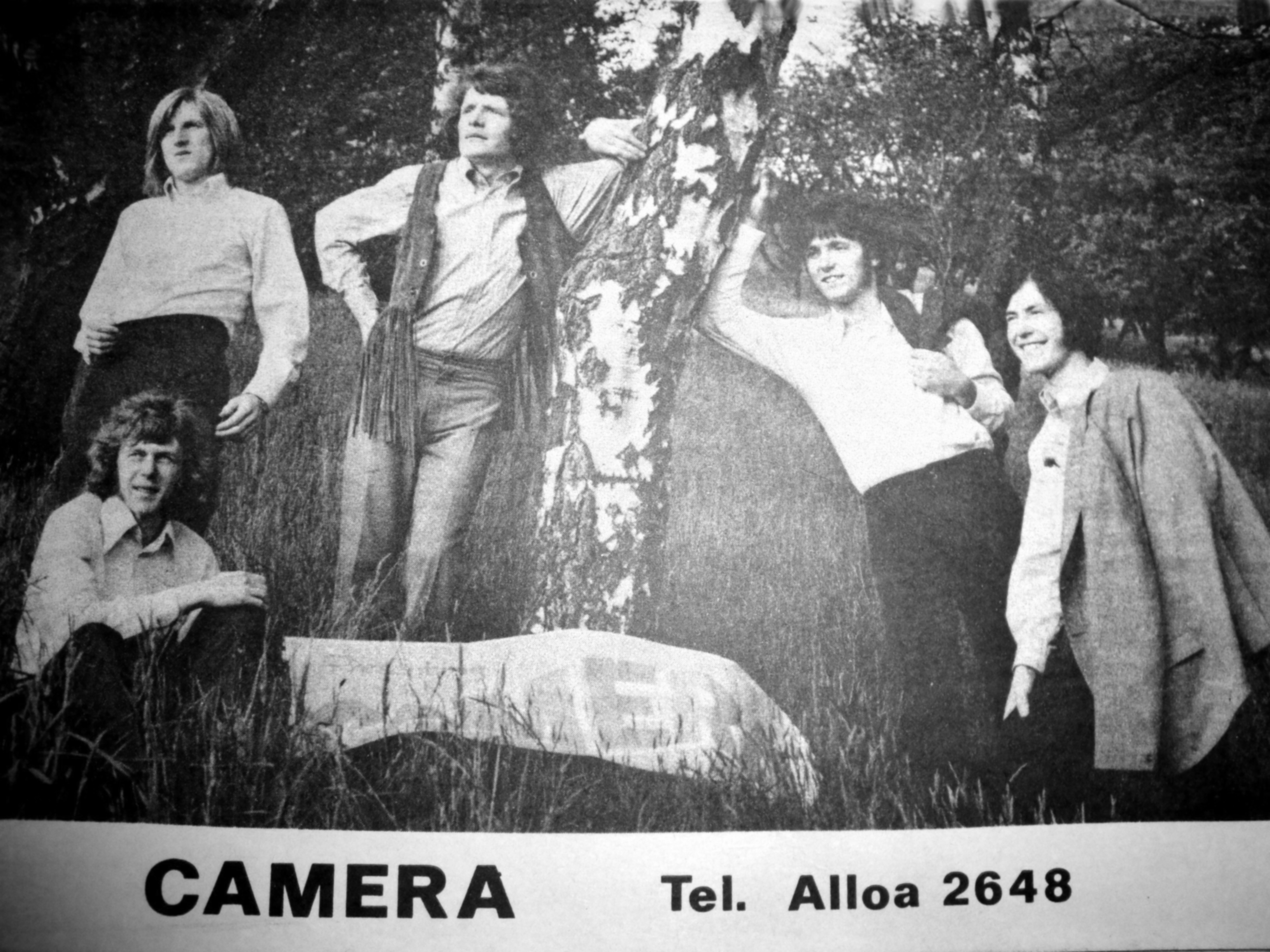
Charles Allan - vocals Camera were a 5-piece from Alloa, formed in 1966 who played the Kinema twice in 1971 before splitting that same year. Charles emigrated to South Africa and joined a band there in 1974 called 'The Staccatos' who managed to have a #1 single there with a song called ''Cry To Me'. He's now semi-retired and living in Cheshire, playing in a duo called 'Slice The Ice' in the clubs of Northwest England.
Alex Campbell
“Alex Campbell was the most important and influential folk singer of the folksong revival in Europe, admired, respected and loved by his fellow performers and his audiences. An outrageous, hard drinking, hard travelling, hard living man.” - Allan Taylor. “he was not a ‘technical’ folk singer, he sang from experience and with feeling.” - The Guinness Book of Folk Music. Alex Campbell was a Glaswegian folk singer, born circa 1925 and one of the grand old men of the Scottish folk revival. He learned his trade the hard way, busking on the streets of London & Paris. He sang and performed in many styles, traditional songs and his own compositions and is probably best known for the song 'Been On The Road Too Long'. He may have featured on more than one hundred albums, including 'Alex Campbell With His Friends' (1966) which included Sandy Denny, Johnny Silvo and Cliff Aungier. He died in 1987.
Lorna Campbell - vocal Brian Clark - guitar & vocal (joined in 1963) John Dunkerley - guitar, banjo, mandolin Dave Phillips - guitar (left in 1963) Dave Swarbrick - violin, mandolin (left in 1966) Dave Pegg bass - guitar (joined in 1967) Andy Smith - banjo, mandolin (joined in 1969) The Ian Campbell Group are likely the most well known and respected folk music group to come out of Birmingham. Ian Campbell was born June 10, 1933 in Aberdeen, Scotland and his family moved to Birmingham in 1946. He formed the Clarion Skiffle Group in the mid 1950s along with his sister Lorna who was also the singer. They were later joined by guitarist Dave Phillips and banjo player Gordon McCulloch, and by 1958 were known as the Ian Campbell Four. By 1960, McCulloch had been replaced by John Dunkerley and the group was also joined by violinist Dave Swarbrick (born April 5, 1941 in London). The group became well known on the local folk music scene and played regularly around Birmingham, often appearing at The Crown Pub on Station Street. It was there that they played on a live recording that was released as Ceilidh At The Crown in 1962. The following year, the group was signed to Transatlantic Records and released their first album entitled This Is The Ian Campbell Folk Group. At around this time, Dave Phillips left and was replaced by Brian Clark. The Ian Campbell Group are likely the most well known and respected folk music group to come out of Birmingham. Ian Campbell was born June 10, 1933 in Aberdeen, Scotland and his family moved to Birmingham in 1946. He formed the Clarion Skiffle Group in the mid 1950s along with his sister Lorna who was also the singer. They were later joined by guitarist Dave Phillips and banjo player Gordon McCulloch, and by 1958 were known as the Ian Campbell Four. The Ian Campbell Group soon established themselves as a highly proficient live act who became well known for their instrumental abilities as well as Ian Campbell's talent as a songwriter. Tours and television appearances followed, and in March of 1965 the group even managed to get a hit single with their rendition of Bob Dylan's The Times They Are A-Changin'. The group's major strength however, lay in their live performances where the line-up was often supplemented by top session musicians. In 1966, Dave Swarbrick left to become a major player in the British folk scene and later joined the well known group Fairport Convention. Bass player Dave Pegg from the Birmingham group The Uglys joined the Ian Campbell Group in 1967 and a few years later would also leave to join Fairport Convention. Despite many further personnel changes, the Ian Campbell Folk Group continued to tour and release records throughout the 1960s and 1970s although tragically, John Dunkerley died of Hodgkinsons disease in 1977 at only 35 years old. The group disbanded in the late 1970's but their status in folk music circles has continued to increase since then as one of the earliest significant British folk groups. Note: Ian Campbell is also father to Ali and Robin Campbell of Birmingham's internationally famous reggae group UB40. The Ian Campbell Folk Group 1960's Record Releases (highest UK chart position in brackets) Singles:
Albums:
Info courtesy of: www.brumbeat.net
Canute
Robbie Gray - lead vocal, harmonica Band from Kilmarnock around 1974. Robbie went on to join The Dead End Kids If you can add any further information to this piece please contact me here.
Capricorn were the later incarnation of 'Sweet Blindness'. Please click to read a biography of 'Sweet Blindness'. If you can add any further information to this piece please contact me here.
If you can add any further information to this piece please contact me here.
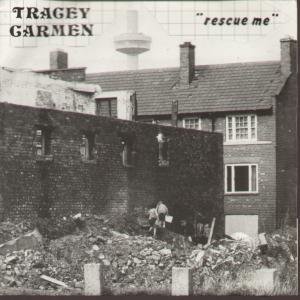
Tracey Carmen (perhaps aka Tracey Karmen?) released a single 'Rescue Me' in 1986. She may be a member of 'Yolanta Sy' and/or the artiste featured on 'Happiness Happening' by 'Lange'. If you can add any further information to this piece please contact me here.
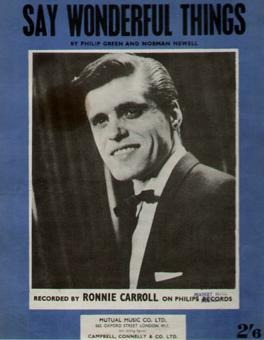
Ronnie Carroll's chart career coincided with the formative years of rock and roll although his singing was still very much set in the style of a traditional crooner. His career had begun in his home city where he gained a reputation for his ability to emulate black American singers of the day- notably Nat 'King' Cole. He would apply black make up to gain a credible visual effect much in the way that the then popular 'Black & White Minstrels' did on TV at around that time. It was certainly this that gained him the nickname 'The Minstrel'. These beginnings are undoubtedly seen today as bizarre, but even in the late 1950s it was an unusual start. Despite this he was recognised as having an exceptional singing voice in his own right and found it relatively easy to find work in the variety theatre. It was on one such show that he met and fell in love with his first wife, singer Millicent Martin. It was shortly after they were married that she became familiar to UK TV audiences through her weekly appearances on the 'That Was The Week That Was' TV show. As a result of the couple's commitment to work they settled at this time in north west London. Although somehow never quite breaking through into the very top flight of British singers, Ronnie Carroll's output on disc was well enough received. He was chosen as the singer for Britain's entry in the Eurovision song contest in 1962 and with 'Ring-A-Ding Girl' achieved a creditable fourth place. This success was followed by two top10 hits during 1962 and 1963, but unfortunately a lack of good material meant that he could not sustain a chart presence. By 1965 he had gone two years without even a minor hit and his marriage had broken down leading to a separation. Ronnie Carroll never managed to kick start his chart career again and by the end of the decade even his TV appearances had become few and far between. During the early 1970s he abandoned his singing career and undertook a disastrous business venture in the Winward Isles. Although he eventually returned to London, he has not attempted to perform regularly again, but has subsequently used his knowledge of the entertainment business in a management capacity. Info courtesy of: www.45-rpm.org.uk
Jimmy Powells - mandolin An Edinburgh based four-piece harmony folk group including guitars, double dass, mandolin, banjo, concertina, penny whistle and later clarinet of all things when Gerard Dott joined. Gerard had just spent a year in America playing with the Incredible String Band. A trained clarinet player with a jazz background, Gerard had previously played with their double bass player and bought a Gibson banjo in a pawn shop in America and basically figured it all out in a couple of months!! He also picked up Jimmy's mandolin and with the scale worked out in two minutes, proceeded to play harmony mandolin when they did Lara’s Theme in their commercial gigs. They practiced long and hard often spending four or five hours on the vocals of one song. Double Bassist Graham Blamire (who started the band) had endless energy and would sit up into the early hours writing out their harmonies. The end result was two and a half years of gigs all over Scotland (part-time) including memorable weekends to The Isle of Skye. Info courtesy of: http://www.jimmypowells.co.uk/biog.htm
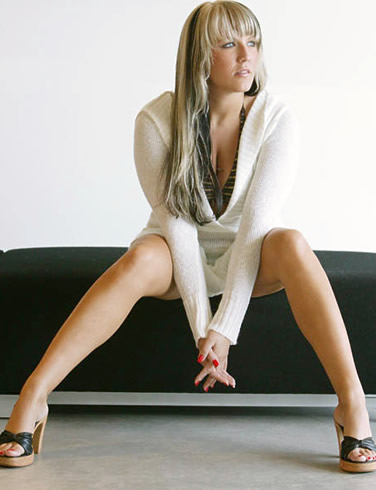
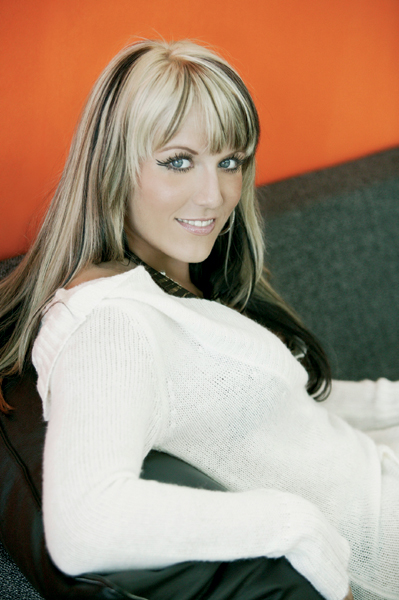
Natalie Horler
A singer & dancer, German/British born Cascada was born Natalie Horler in Bonn, Germany on 23rd September 1981 and is of English descent.
Cascada’s first single ‘Miracle’ was released in Germany in March 2004. It would go on to be a success in that country and consequently grab the attention of Robbins Entertainment, the American label responsible for breaking European club and rhythmic artists like DJ Sammy, Lasgo, Ian Van Dahl, Narcotic Thrust and D.H.T. onto the US pop market. Cascada would go on to release three more singles in Germany: ‘Bad Boy’, ‘Everytime We Touch’, and a cover of the 1992 Roxette song ‘How Do You Do!’
Cascada’s single, ‘Every Time We Touch’ from the debut album of the same name features her dramatic and passionate vocals married with the musical backing of DJ/producers, Manuel Reuter (DJ Manian) and Yann (Yanou). Scottish vocalist Maggie Reilly originally sang it and they’ve kept the chorus but changed the verses.
The album, features covers of Savage Garden’s ‘Truly Madly Deeply’ and Kim Wilde’s new wave nugget ‘Kids In America’. Cascada has been busy touring America as well as Austria, Ireland and Germany.Info from: www.cascada-music.de
Malcolm Cook - vocals The Casuals were based in Wick and were noted for having no country & western in their set. Andy Sinclair also played with 'The Rhythm Four', 'Impact' & 'Them and Us'. (They should not be confused with another band of 'Casuals' from the same era, who plied much of their trade in Milan.) If you can add any further information to this piece please contact me here.
Roy Clark - guitar, vocals Later: Formed in Falkirk, Scotland in 1970 by Ronnie Glen & Roy Clark (ex 'Alex Hamilton & The Blue Sabres') and Hamish Miller & Charlie Dyer (ex 'Friendship'). They played a series of open-air gigs in Callendar Park in Falkirk in the summer of 1970, after which Jim Marshall (guitar & vocals, ex 'Manuela & The Dops') joined. Charlie Dyer later formed 'Thrush', the last ever band to play at the Glasgow Apollo. Info courtesy of: www.falkirkmusicscene.co.uk
Hugh O'Donnel - lead vocals Later also: Causeway Folk were unsurprisingly, a Scottish folk group, from Newmills in Fife active from around 71/72 until 1974/5 when all but Hugh and Archie would form fairly successful and well travelled local folk outfit 'Heritage'. My thanks to Jim Gibson for much of the above information. If you can add any further information to this piece please contact me here.
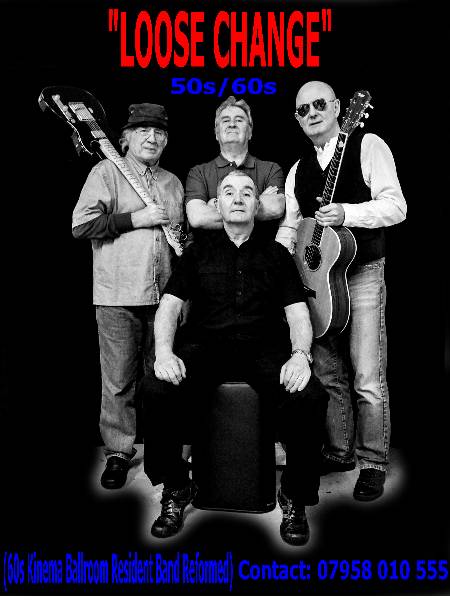
Personnel included: 1st line-up: 2nd line-up: Also: John Malcolm had a solo career under the name Joey Valentine and Dave Valentine had a major record deal with his band 'RAF' while Stuart Tosh went on to join 'Pilot' then '10cc'. John Nicol later played with 'Cafe Jacques'. Andy Grossart moved to London and played or recorded for artists as varied as 'The Supremes', 'Tina Turner', 'Jerry Lee Lewis', 'Lonnie Donegan' & 'Roxy Music' through to Roy Castle and Tommy Cooper. He wrote the theme for the 'Record Breakers' TV series along with Roy and toured and travelled with him up until Roy's death. He lives in Baltimore, USA and is a regular member of 'The Tornados' and has also been with 'The Manfreds'. In 2009/10 Dougie Stronge went on to form a 5-piece local covers band (60s to present) called 'The Kinemas' after the ballroom of course! Find them here: http://www.myspace.com/thekinemas & here: http://www.facebook.com/pages/The-Kinemas/151424641574823 Other members re-emerged as covers band 'Loose change'.
(I'm much indebted to Watty Robertson, Andy Grossart & David Graham for much of the information above.)
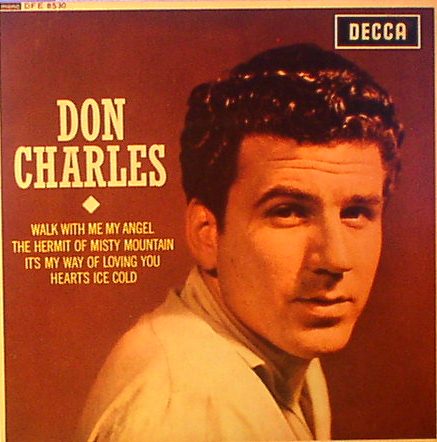
Born Walter Stanley Scuffham (aka Don Bennett) in England on 10th December 1933, his first recording was the single "Paintbox Lover" (1961) produced by George Martin. Later he joined Joe Meek's stable of acts at Decca, adopting his stage name at Joe's suggestion. His only UK chart appearance came in 1962 with 'Walk with Me My Angel' at No 39. A cover version of 'The Hermit of Misty Mountain' and 'It's My Way of Loving You' failed to repeat their predecessor's success. 1963's 'Angel of Love' was banned by the BBC because of the lyric - "Everyone has an angel of love, Way up in the heavens above". Nowadays such a decision would result in stratospheric sales - not so however, in the early 60s, and his career was badly damaged. (How times have changed!). Subsequent releases bombed, Meek and Charles left Decca and eventually Charles retired after more chart disappointments. Music's loss was however the used car business's gain and he wrote a successful book called 'How to Buy a Used Car (And Save Money)'. He died on the 4th of December 2005 aged 71. Joe Meek is quoted as having said to Charles - "You are my only legit artist".
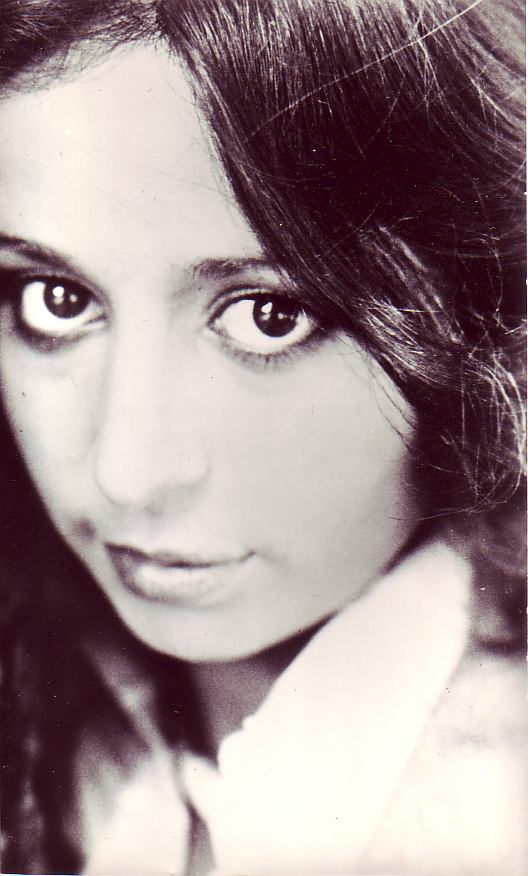
Renowned as the little girl with the big piercing voice, Tina Charles was born 10th March 1954 and she attended the Coroner Academy of Arts and Drama. In 1969 at the age of 15 Tina recorded three singles, including 'Good To Be Alive' featuring a young, unknown backing vocalist called Reginald Dwight (Elton John). She also had a six-week spot on 'The Two Ronnies', singing covers. Regular theatre and stage work complemented more high profile appearances with such as Englebert Humperdink, Tom Jones and Gilbert O’Sullivan. In the early seventies she joined a cover versions band called 'Northern Lights' and worked with 'Kilburn & The High Roads' (Ian Dury & The Blockheads). She sang backing vocals on the UK chart No 1 - 'Make Me Smile (Come Up And See Me)' by Steve Harley and Cockney Rebel, and on the '5000 Volts' top ten hit 'I'm On Fire', both in 1975. As it turned out, her own fame was just around the next corner. In early 1976 she was introduced to and sang for the well known producer, Biddu, resulting in a CBS deal and the UK chart No1 and worldwide 26 million seller, 'I Love To Love (But My Baby Loves To Dance)' with which she toured the world. In the following two years she released six other singles including 'Dance Little Lady Dance' and 'Dr Love' (both UK chart top ten hits) and an album 'Heart 'N' Soul' which peaked at No 35 in 1977. The birth of her son caused a career change away from touring to more studio work. A few years later a return to recording produced disappointing results, however 'I Love To Love' was remixed in 1986 and became a top ten hit in many European countries including fourteen weeks at No 2 in France.
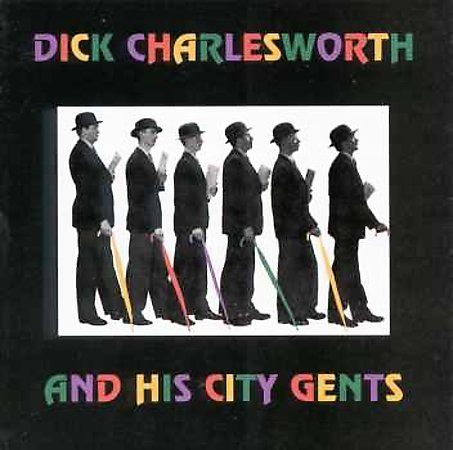
Dick Charlesworth and His City Gents
Richard Anthony (Dick) Charlesworth was a highly respected self-taught trad-jazz clarinettist from Sheffield and leader of the City Gents 9who wore bowler hats and black pin-striped jackets). As a teenager, he bought his first clarinet with the proceeds from selling his bicycle and fishing rods! He formed his first group in 1956 (aged just 24), winning the south London jazz band championship 12 months later! They became known as his 'City Gents' in 1959 and played the ballroom on Friday 4th May 1962. They worked constantly in the UK and Europe and appeared frequently on TV (The Morecambe & Wise Show and and Sunday Night at the London Palladium) & radio. Dick split the band up in 1964 He later formed a management company based around 'The Graham Bond Organisation' before taking a position as an onboard bandleader for P&O for many years, then moving to Spain to run a music bar and ultimately returning to the UK in 1982 and reformed The City Gents. He died April 15th 2008 aged 72.
Jim Slaven - vocals Pop band from Saltcoats in the mid 60s to mid 80s. Their style turned heavier in their later days. If you can add any further information to this piece please contact me here.
Johnny Benn - vocals Bristol indie guitar rock quintet ‘The Chemists’ take their name form the fact that Johnny & Sam shared a flat (where they rehearsed) above a Chemists shop and became friendly with the owners. Wherever they are on tour they always try to keep in touch with the results of their hometown football team Bristol Rovers. Sam knew Wayne from College, Matt answered a local newspaper advert they placed for a drummer and Matt introduced Dave who is from York. Although many tag their niche as indie guitar rock, they find that too limiting and prefer to cite influences such as ‘Queens of the Stone Age’, ‘The Pixies’, ‘The Police’ and ‘Doves’. Their Kinema appearance is part of this year’s two-month tour with The Music (October) and Feeder (November), having already played with The Bluetones, The Crimea and The Delays. Their current single ‘Something for the Weekend' / 'Tazmanian Devil' will be followed by 'Radio Booth' in December and both precede the release of their debut album in 2009. Trivia:
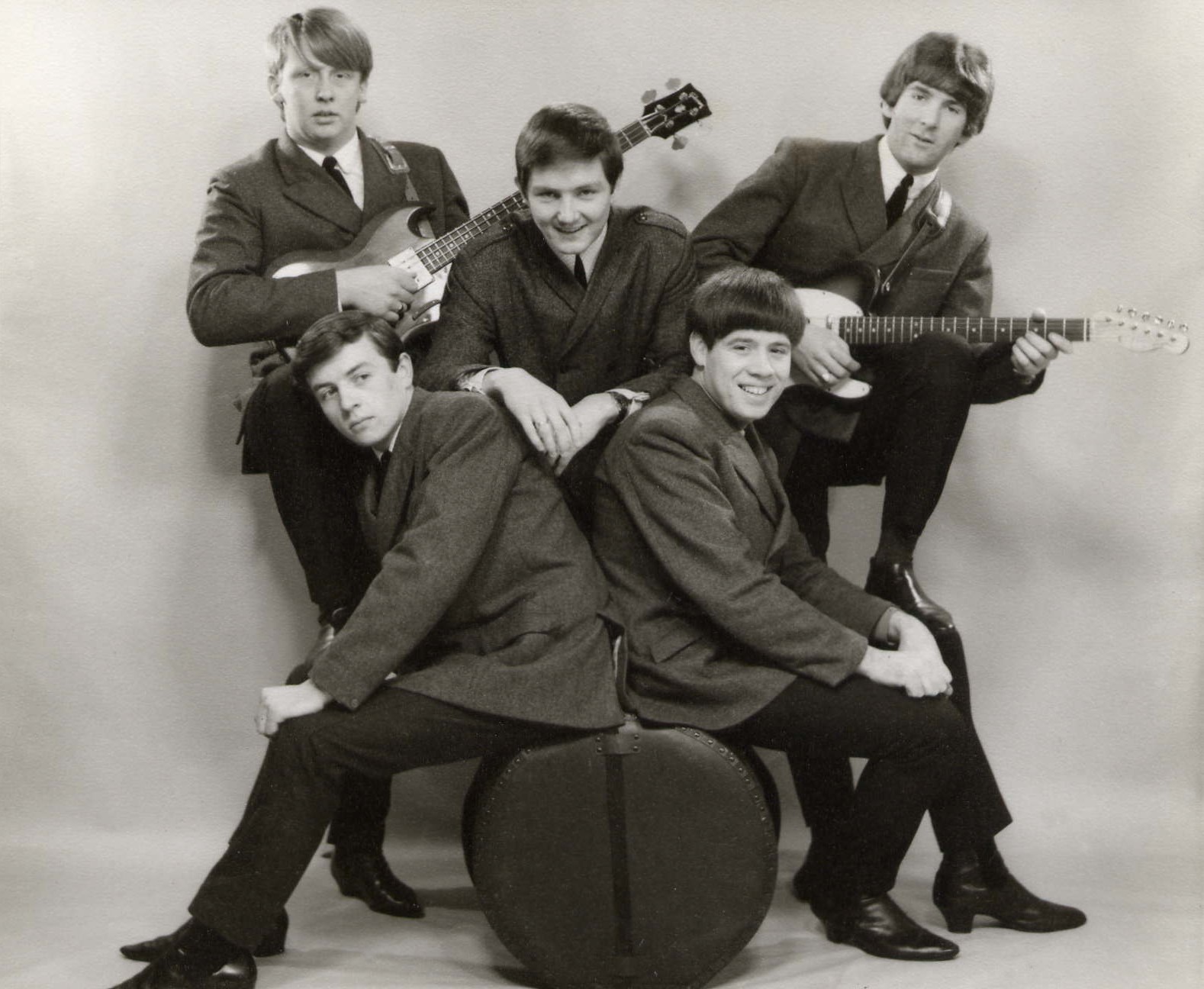
John Kirby - vocals Jim Green - drums Formed in 1962 in Leeds, The Cherokees were a 5 piece band from Leeds featuring John Kirby on vocals. Following their debut single on Decca they moved to Columbia where they scored a number 33 hit 'Seven Daffodils' / 'Are You Back In My World Now' in 1964 which they were unable to follow up with any of their three subsequent singles for Colombia between 1964 and 1966 despite backing by Mickie most, tours of Hamburg and an appearance in a comedy film with Terry Thomas called "You Must Be Joking" Acouple of years later they later changed their name to 'New York Public Library', covering The Rascals' 'I Ain't Gonna Eat Out My Heart Anymore' and The Doors' 'Love me Two Times'. They split in 1975.
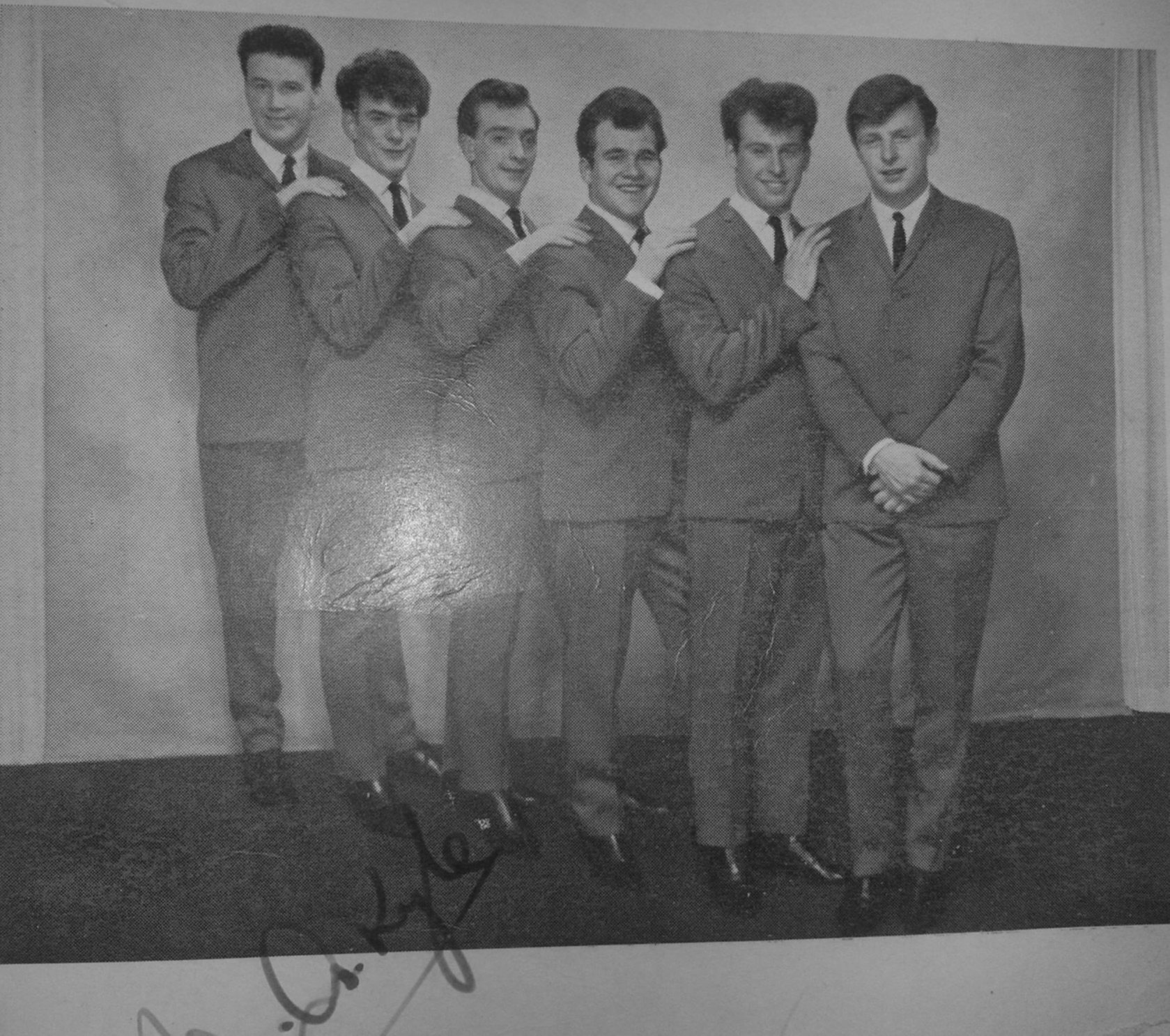
Roddy Mill - vocals, rhythm guitar, piano Formed in Fife around 1963, with a traditional two guitar, bass & drums line-up, a year later they added their two wind instrumentalists to 'flesh-out their potential repertoire. This semi-professional outfit had a Saturday afternoon residency at the Raith Ballroom in Kirkcaldy. They were active throughout the first half of the sixties and beyond. Arthur also played with Argus & Mike Satan & The Hellcats & The Nameless Ones & Curly I'm much indebted to Bill Nisbet who provided this information from a copy of 'Scottish Sounds'and to Alan Kyle for the photograph.
Stan Webb - guitar, vocal Paul Raymond - piano, organ Chicken Shack evolved from a Stourbridge based band called 'Sounds Of Blue' who were performing in the West Midlands area by early 1964. The original members included singer and pianist Christine Perfect, bass guitarist Andy Sylvester, guitarist Stan Webb, and saxophonist Chris Wood. Albums: Info from www.brumbeat.net
John Croall - lead vocal A folk quartet from Edinburgh. In 1971 they dropped the "Cleich" and were known simply as Chorda. Lead singer John Croall later helped form Jock Tamson's Bairns. Chorda Cleich came 3rd in the 1971 Scottish Folk Group Annual Championship (the dream child of Bill Houston and Watt Nicoll which was never repeated). There were an astonishing eighteen heats, with semi finals being held in Glasgow and Dundee, and the grand final in the Usher Hall Edinburgh, with The Corries as guest artists. All proceeds went to the Scottish Council for the Care of Spastics. The winners of the Championship were The JSD Band, whose prize was an album deal and contract with EMI. Chorda Cleich & the other six finalists received six-month contracts and were featured on an LP 'Folk Philosophy' performing the following songs: 'Until it's Time for You To Go' (Buffy St Marie) & 'Three Score and Ten' (trad). Info courtesy of: www.nigelgatherer.com
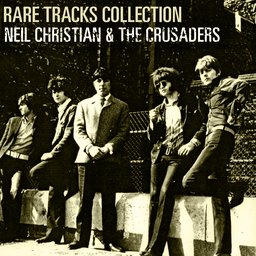
Neil Christian (& The Crusaders)
Most likely line-up for the ballroom gig in October 1966 was probably: Other line-ups included: Born in London, Neil (real name Christopher Tidmarsh) moved to Basildon , Essex where he started his first band. Over the years his backing group included Jimmy Page, Albert Lee. Mick Abrahams and Ritchie Blackmore, all of whom went on to greater fame than Christian himself ever achieved. He recorded on Columbia from 1962 to 1964 with no success and only struck lucky on Strike – a new label with ex 'Hedgehoppers Anonymous' singer Mick Dallon at the helm. He also had some success in Germany, but after 1966 he had no luck in the UK.
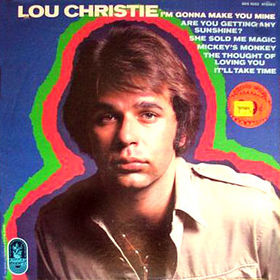
Lou was born Lugee Alfredo Giovanni Sacco in Glen Willard, Pennsylvania in 1943. He co-wrote his first American hit “The Gypsy Cried” when he was 19, but what was unusual was his writing partner was classically trained pianist Twyla Herbert who was Lou’s senior by 22 years. Whatever the age gap, the partnership worked well scoring a further American hit with “Two Faces Have I” and then there was a three year gap between hits then “Lightning Strikes” hit # 1 in the USA and gave him his chart debut in Britain. His UK follow up “Rhapsody In The Rain” suffered from lack of airplay (and accusations of being sexually explicit) and stopped short of the top 30, but Lou continued making good music and almost made the top spot in 1969 with 'I'm Gonna Make You Mine' but was denied by Bobbie Gentry and 'I’ll Never Fall In Love Again'. Still a popular live act, his web page shows he still has bookings coming in.
Bubblegum-pop band who released a single 'Oh Elaina (Black Sheep of my Mind) in 1972. If you can add any further information to this piece please contact me here.
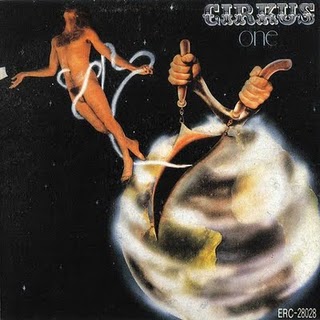
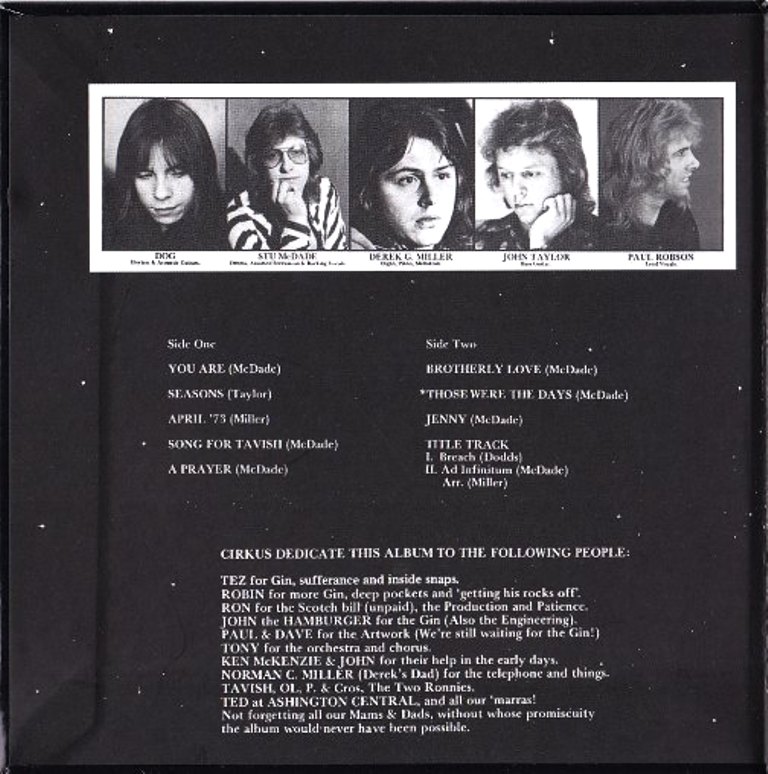
Paul Robson - vocals (This 'Cirkus' who played at the Ballroom in 1974 is not to be confused with the Glasgow band of a similar era who did not commence live performance until 1976).
John MacPherson - vocals Covers band from Alloa three of whom became 'Harry Wragg' after 1970. (John, Johnny & Jimmy). Thanks to Ann & Jim Munro from https://www.facebook.com/groups/STIRLINGSHIREMUSICSCENE50s70s/
Johnny Claes And His Clae Pigeons
Johnnie Claes was born in London in 1916, his mother was Scottish and his father came from Belgium. From an early age he and his mother travelled extensively and his schooling ranged from Brussels to the South of France, Italy, London and on to the Lord William’s Grammar School in Oxford. Whilst not an outstanding scholar he was a good rugby player, a keen swimmer and always popular amongst his classmates. It was during his final terms at Oxford that he bought his first trumpet and with little musical background began the challenging task of mastering the instrument. Master it he did, sufficiently well to be able to play as a semi-pro around London during his time at university. By Bert Booth Info from: http://www.memorylane.org.uk/previous_articles.htm
Malcolm Clarke and the Crestas
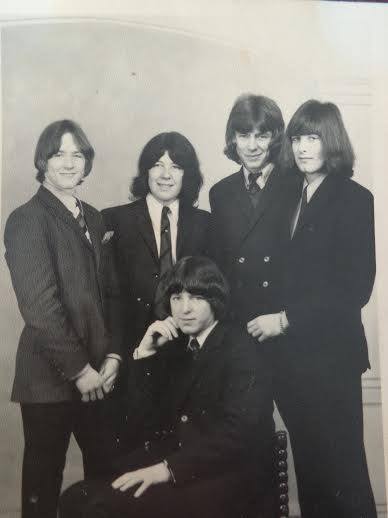
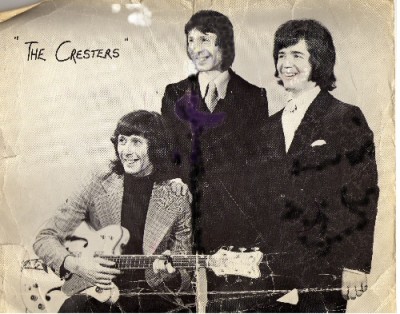
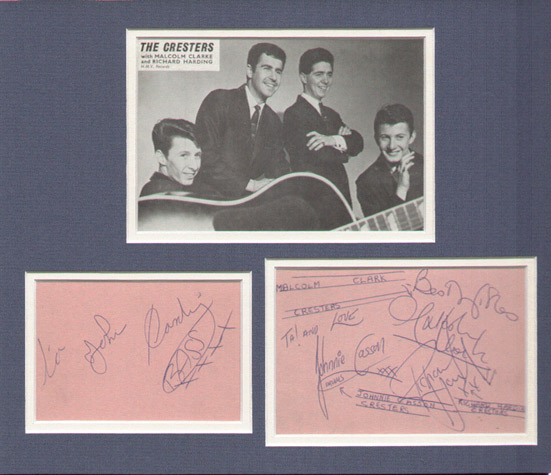
Malcolm Clarke - vocals (Not to be confused with Johnny Peters and the Crestas (from Manchester)! Originally 'The Cresters' were formed in Bramley near Leeds in Yorkshire to back-up singer Mike Sagar. They were known as 'Mike Sagar and the Cresters', 'Malcolm Clarke and the Cresters' 'The Cresters' and lastly with a subtle spelling change, as 'The Crestas'. Doubtless they will never forget supporting The Beatles in 1963 but most will remember them for Richard Harding's technical ability on guitar which was and continues to be much admired, as was his Gretsch White Falcon guitar, so far out of the financial reach of most at £700 (18 months wages for most at the time!) albeit acquiring the guitar may have had something to do with his father owning a music shop! Their last single (for Fontana Records) 'To Be Loved' / 'When I Fall In Love' as 'The Crestas' was released in 1965 before they evolved into cabaret work in the eighties with Malcolm Clarke on vocals until he died and John took over on vocals. They eventually called it a day in 1984. John Harding had a 3-year solo career following their demise and drummer, Johnnie Casson is now a successful club comedian with TV appearances under his belt, while Richard Harding is currently a member of country band, Dillinger.
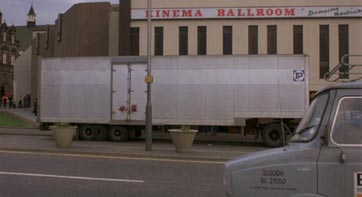
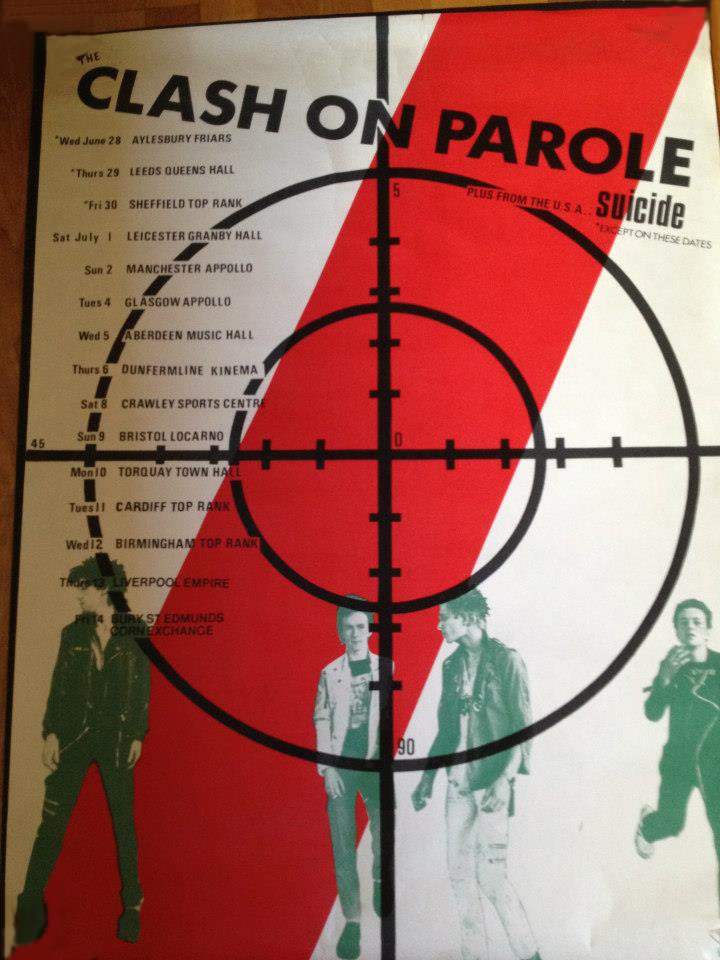
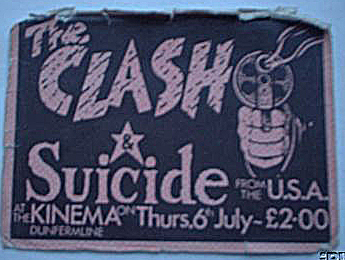
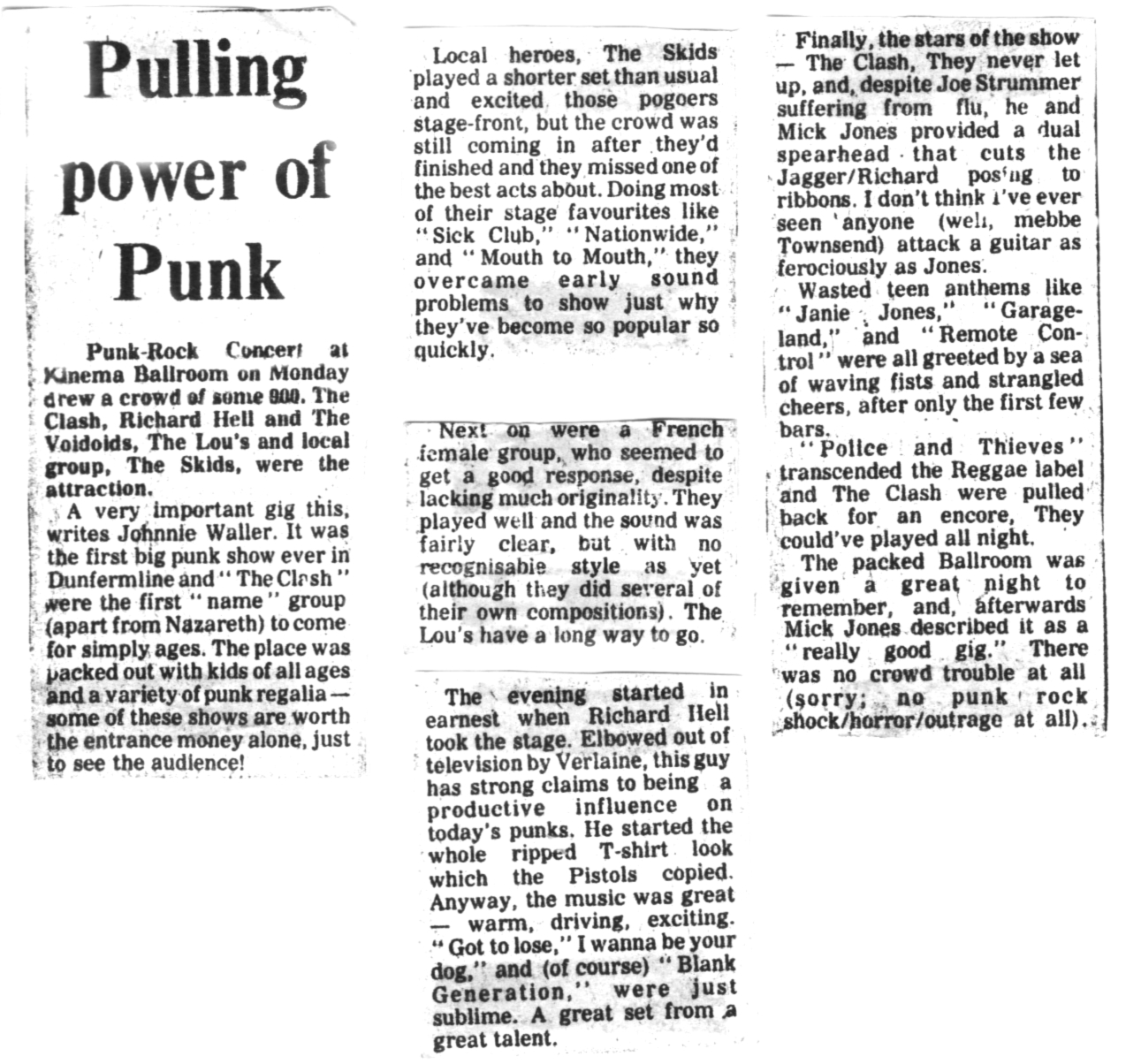
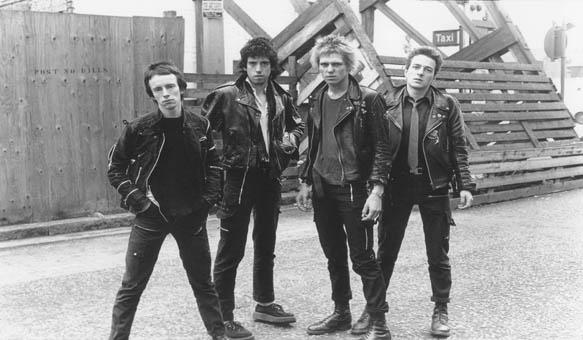
Above - The Clash's tour truck outside The Kinema Ballroom (from the film 'Rude Boy') and a ticket for the same night (Thursday 6th July 1978). They were supported by US outfit, Suicide and 'The Coventry Automatics' who later became 'The Special AKA' / 'The Specials' and all for £2! Also a gig review for the earlier gig in 1977 from 'Bruce's' record shop free fanzine 'Cripes' (probably around issue No.80?) Mick Jones' band 'London S.S.' evolved into The Clash in the spring of 1976 with Paul Simonon, Keith Levene, Terry Chimes & Joe Strummer of the 101'ers, then Keith and Terry promptly left leaving only Mick, Joe and Paul. They released their first two singles 'White Riot' and 'Complete Control', released their first album 'The Clash' and recruited Nicky "Topper" Headon all in 1977. The album just missed a top ten UK chart position at No 12 though the next two, 'Give 'Em enough Rope' (1978) and 'London Calling' (1979) managed Nos 2 & 9 respectively. 'Rolling Stone' magazine voted the latter 'The Best Album Of The 80's'. Meanwhile their singles sold respectably, though avoiding the magic top ten, however the title track of 'London Calling' came tantalisingly close at No 11. 'Sandinista!' (1980), a triple album, stalled at No 19 and shortly afterwards Headon's drug habits contributed to his exit. He was replaced by the returning Terry Chimes for a short while only to be replaced by Pete Howard in 1982. Their next album 'Combat Rock' (1982) came close to a No1 and this would be the last album before Mick Jones left the band in an acrimonious split in September 1983. Jones went on to form 'Big Audio Dynamite' with some success. Meanwhile in January 1984 guitarists Vince White and Nick Sheppard were brought in and a last 'proper ' album followed in 1985 - 'Cut The Crap' with a good chart position at No 16. The band split in November 1985 and shortly afterward Strummer would work with BAD. They played the ballroom twice. Once on Monday 24th October 1977 as part of ‘Get Out Of Control’ tour (Tickets £1.75)(supported by 'Richard Hell & The Voidoids', 'The Skids' & 'The Lous') and on Thursday 6th July 1978 on the ‘On Parole Tour’ (Tickets £2.00) supported by 'Suicide' and 'The Coventry Automatics'. The latter date followed the only other Scottish dates, The Apollo, Glasgow and The Music Hall, Aberdeen the two nights before. The Kinema gig on Thursday 6th July 1978 ended during the encore of 'White Riot' when the stage was invaded and Topper walked-off. The episode was caught on camera and a clip appears in the film 'Rude Boy'. Some footage was also broadcast on Scottish Television (STV) the next day. This episode is described in an article in 'Kingdom Come' fanzine (see above) and corroborated by a friend of mine. The disturbance fell very far short of the near riot reported elsewhere. The band became so disenchanted with the film, that by its release, they had badges made stating "I don't want Rude Boy Clash Film". The footage of 'White Riot' below is taken from this performance at the Kinema and appears as an extra in the 'Directors Cut' DVD of 'Rude Boy' (1980). The footage of 'Tommy Gun' below is taken from this performance at the Kinema on 'Rude Boy - The Directors Cut'. In another scene from the film, the western approach to Dunfermline from the Crossford road (from Urquart Cut) can be seen where anoraks like me will spot continuity errors through the window as the van must have been driven both in & out of the town as they filmed! (the Urquhart flats can be seen through both the nearside & offside windows).
Cleo's Mood Their name came from a 'Junior Walker and the All Stars' song of the same name though they had never heard the song, they just though it sounded 'cool'. They travelled the country on tour firstly in a Commer van and after an 'incident' involving their lead guitarist in 1967, in an ex-ambulance!
Climax Chicago (AKA 'The Climax Chicago Blues Band' / 'The Climax Blues Band')
Personnel who probably played the ballroom: Also: In late 1968, the Climax Chicago Blues Band was formed and comprised of guitarists Derek Holt and Peter Haycock, keyboardist Arthur Wood, bassist Richard Jones and drummer George Newsome. Colin Cooper on Sax made up the sextet. The Stafford, England-based Climax Chicago Blues Band was one of the leading lights of the late-1960s blues boom. The group debuted in 1969 with a self titled album reminiscent of the work of John Mayall. They played the ballroom on Sunday 9th May 1971 supported by 'Hawkwind'! ... and local residents 'The Change'.
A five-piece soul band (not to be confused with the new wave outfit from Coventry, also active in 1979.) If you can add any further information to this piece please contact me here.
Phillip Rae - vocals Later: Bill Robertson driver and balance engineer After a couple more years playing the ballrooms and village halls of Scotland and the north of England, Niz and Nor left to become teachers and Gus pursued his engineering career and was replaced by Merv Turnbull. The band continued until only Tam was left, Merv Roy and Colin having joined Tampa Fla. So a new Clockwork Orange was formed, played for a while....and expired in the mid '70's. Roy played session drums on various Scottish folk rock recordings of this period including Silly Wizard and Dougie Maclean amongst others. My thanks to Roy for the above
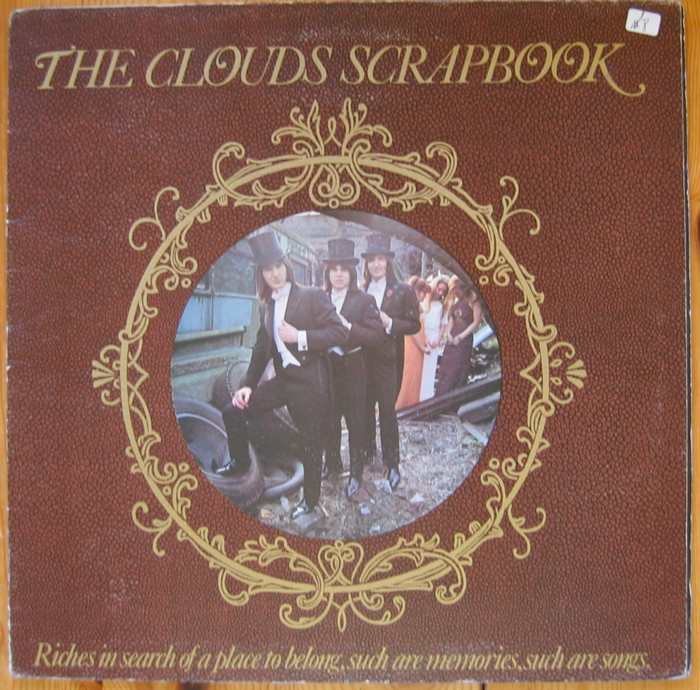
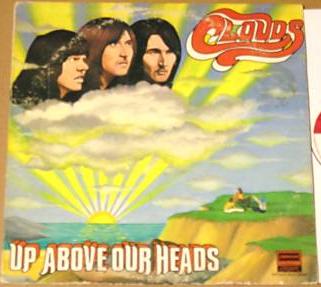
Ian Ellis - guitar, bass, vocals Later also Peter Banks - guitar, vocals In 1964, Ian Ellis and Harry Hughes were playing together in a group called 'The Premiers', who played mainly Soul and Motown music throughout the Scottish music scene. The group consisted of bass (Bill Lawrence), rhythm guitar (James ‘Shammy’ Lafferty), lead guitar (Derek Stark), drums (Harry Hughes), Vocals (Ian Ellis). Though the group was relatively popular, they hadn’t achieved any particular success, and they decided to add an organist, feeling that the extra texture of sound would be a welcome change. Howls of derision greeted Archie Colquhoun’s typically-bold statement that he knew where ‘the best organist in Britain’ was, especially when the location of this would-be genius was revealed as being in a one-horse town called Forth. But a quickly-arranged and memorable audition changed all that - Billy Ritchie joined, but the chemistry of the group had altered more than was intended. Info from http://www.cloudsmusic.com/ David Bowie once called Billy Ritchie "an unrecognised genius" in 'MOJO'. In 1996 an amalgam CD of the first & third albums appeared.
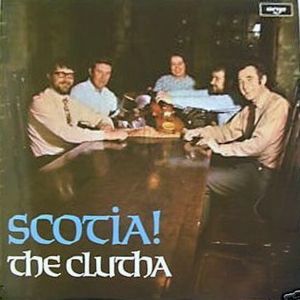
Gordeanna McCulloch - vocals Glasgow-based ensemble, 'The Clutha' formed in 1964 by three librarians from the Mitchell Library in Glasgow plus one of their former colleagues. By 1965 they had added fiddler Callum Allan and singer Gordeanna McCulloch. With this line-up they performed for at least ten years, winning the Peter Cooke Cup for Scots ceilidh bands three years in a row (1971-73). The band added piper Jimmy Anderson shortly after recording their Scots Ballads... LP. Since 1977 their piper has been Tom Johnstone. The band still perform and record occasionally. Their albums include the following titles: 'Scotia!', 'The Streets of Glasgow', 'Scots Ballads Songs & Dance Tunes', 'Bonnie Mill Dams' & 'On the Braes'. Info courtesy of: www.nigelgatherer.com Gordeanna McCulloch was a student of Rutherglen Academy and has sung with 'The Clydesiders', 'Palaver' and Glasgow's 'Euridice Choir'.
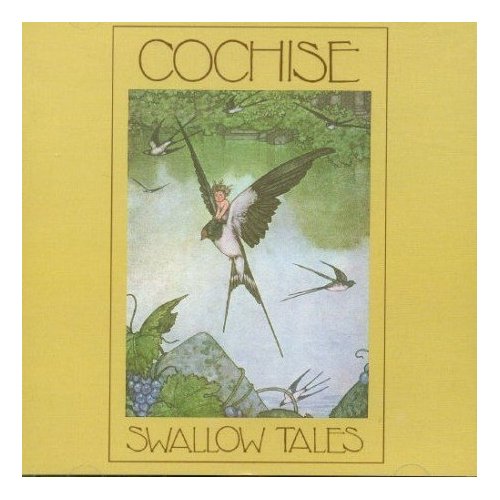
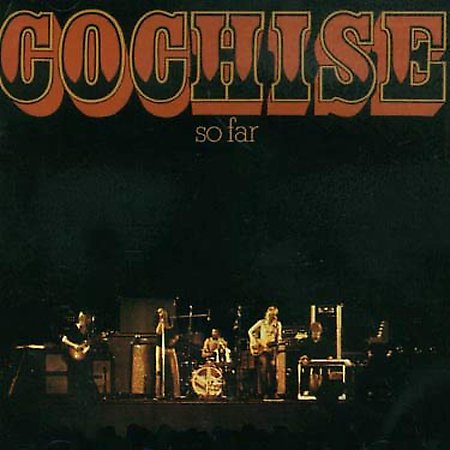
Stewart Brown - vocals, guitar Also: Formed and signed to United Artists in 1969 and split in 1972. Country-Rock band Cochise released three albums ('Cochise', 'Swallow Tales' and 'So Far') and one US top 100 hit, 'Love's Made A Fool Of You'. Mick Grabham would go on to join 'Procol Harum' while Steve Marriott would join 'The Small Faces'.
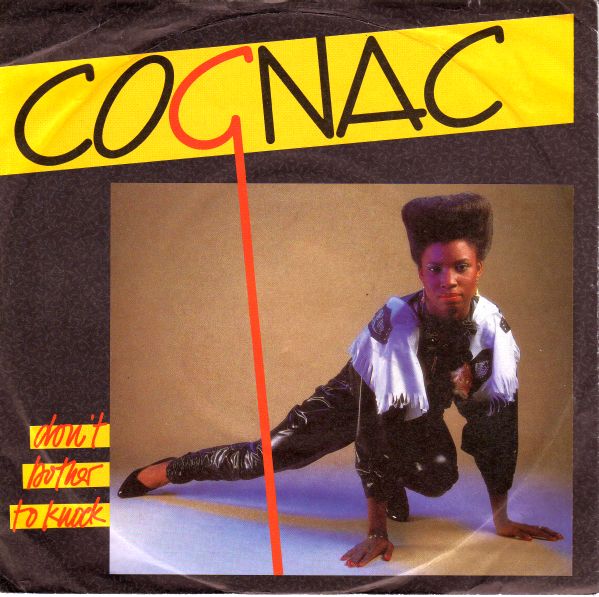
Colin Jennings Successful music producers / writers, Colin Horton Jennings & Steve O'Donnell released three singles as 'Cognac' - 'Supersonic Flight' (1978), 'How High' / 'Nothing can Change This Love' (1979) [as 'Cognac featuring the Salsoul Orchestra'] and 'Don't Bother To Knock' / 'Don't Bother To Knock (Instrumental)' (1986). They were later responsible for a number of novelty records such as 'Star Turn on 45 Pints' and 'Pump Up the Bitter' amongst many others. If you can add any further information to this piece please contact me here.
Billy Collis & His Band / Billy Collis' Swingsters 'Billy Collis & His Band' reopened the Ballroom on Wednesday 30th July 1941 after a nineteen-month period of closure and continued as the resident band for fifteen months until Saturday 7th November 1942 when their name changed to 'Billy Collis’ Swingsters'. Their residency continued for a further six months until Friday 16th April 1943. Local advertising for the Ballroom referred to them as: Billy Collis' Band, Billy Collis’ Boys & as “The Swingiest Band in Town” “Delighted Dancers Throng it Nightly, the Reason You Can Understand is Billy Collis & His Band” If you can add any further information to this piece please contact me here.
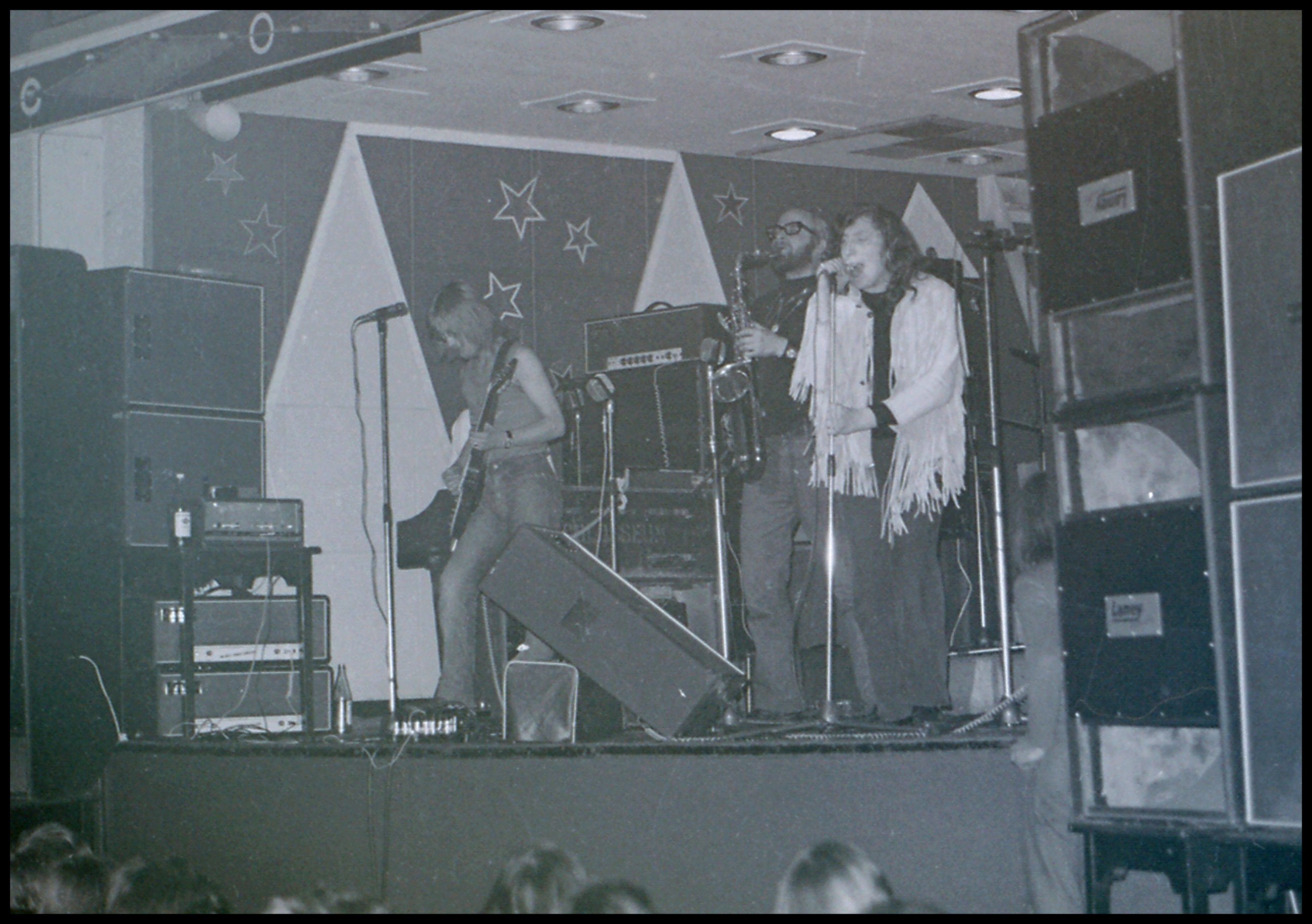
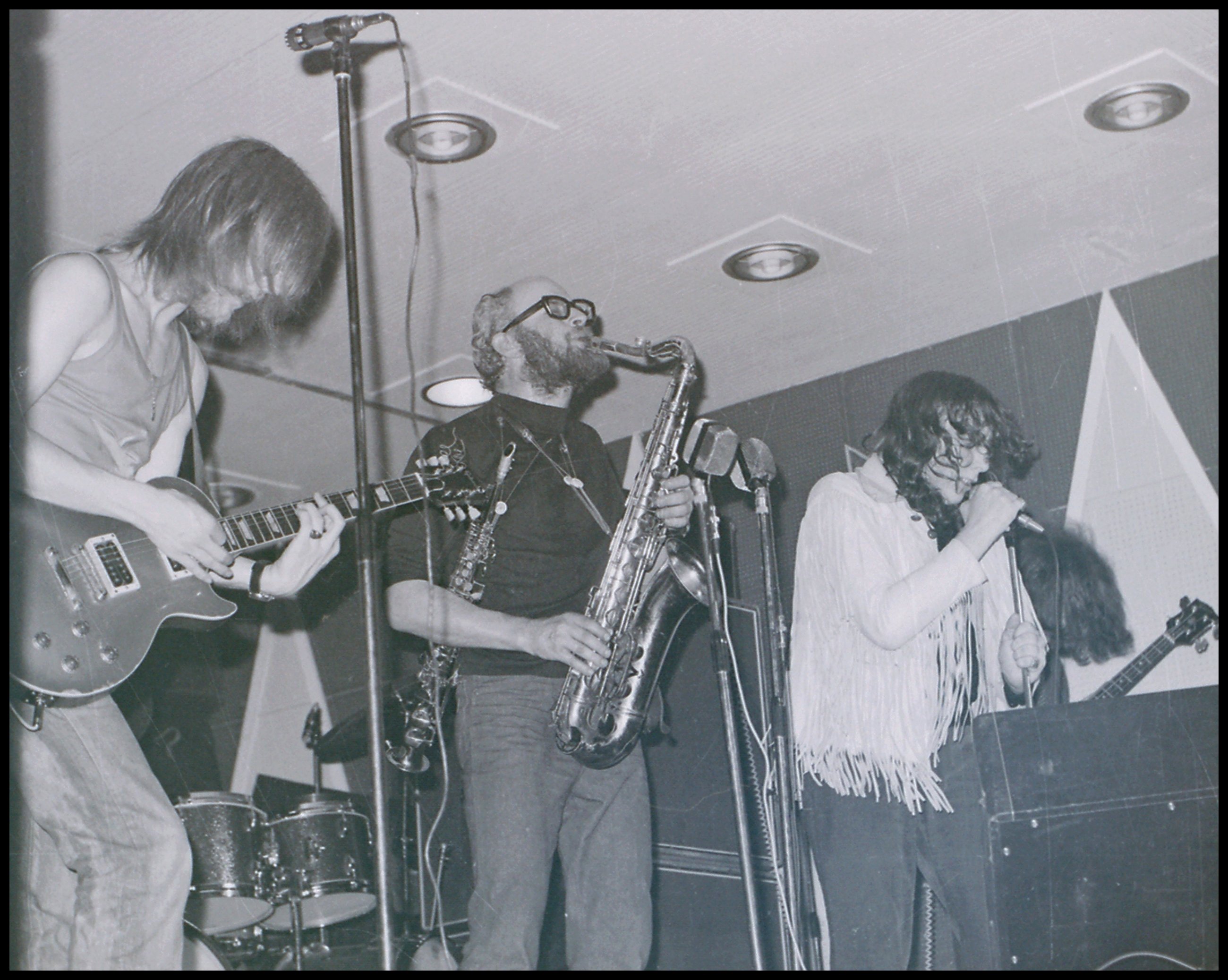
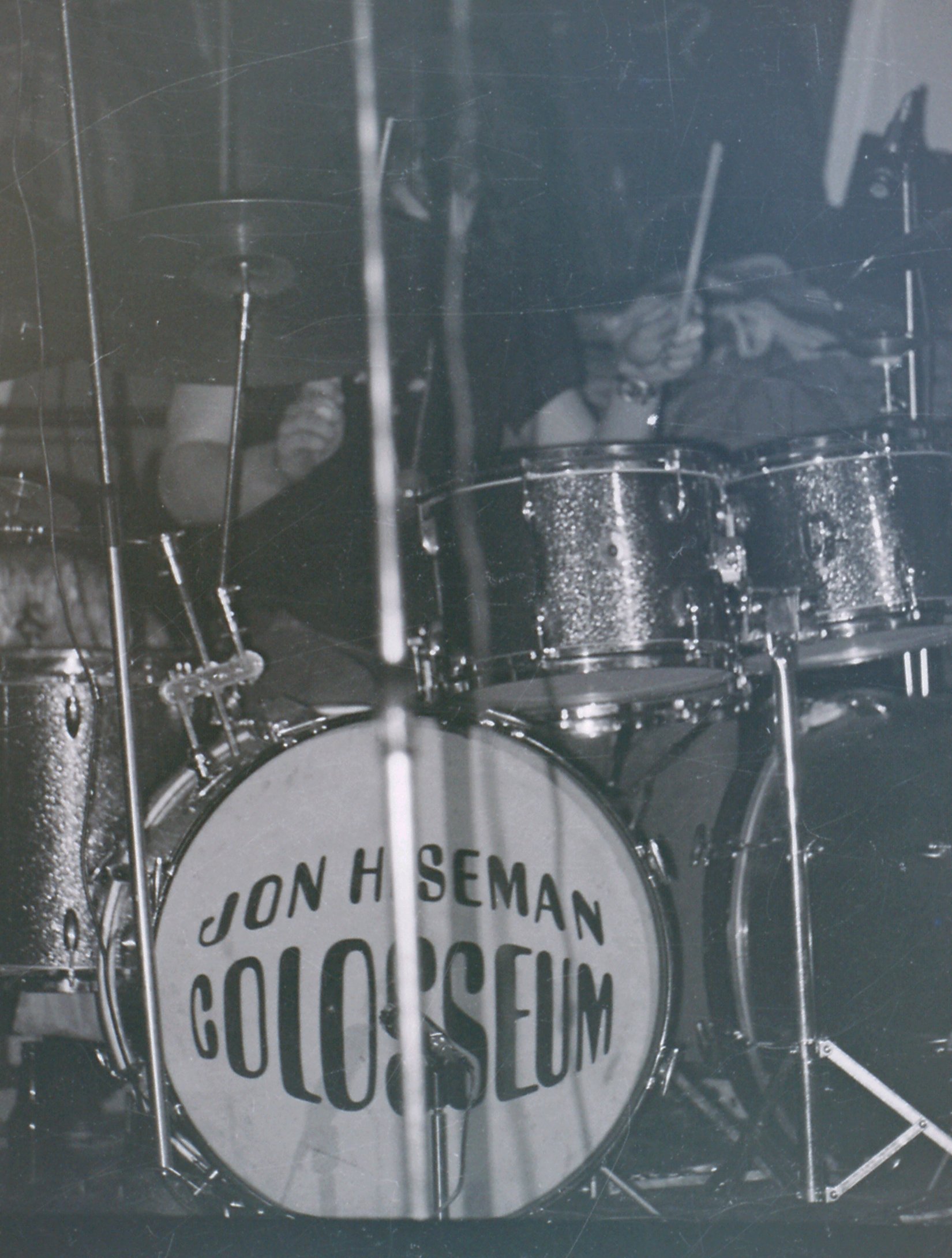
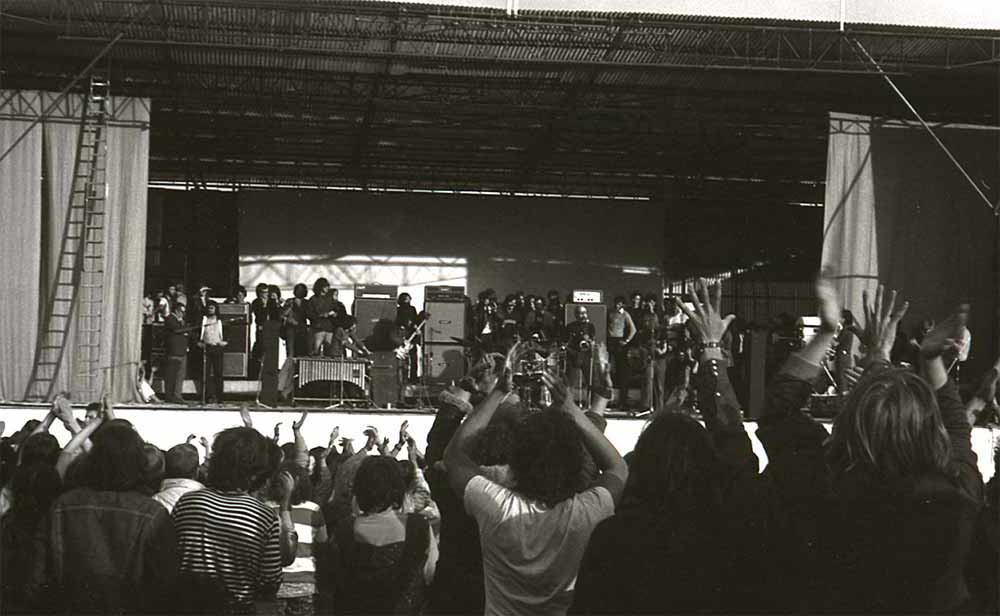
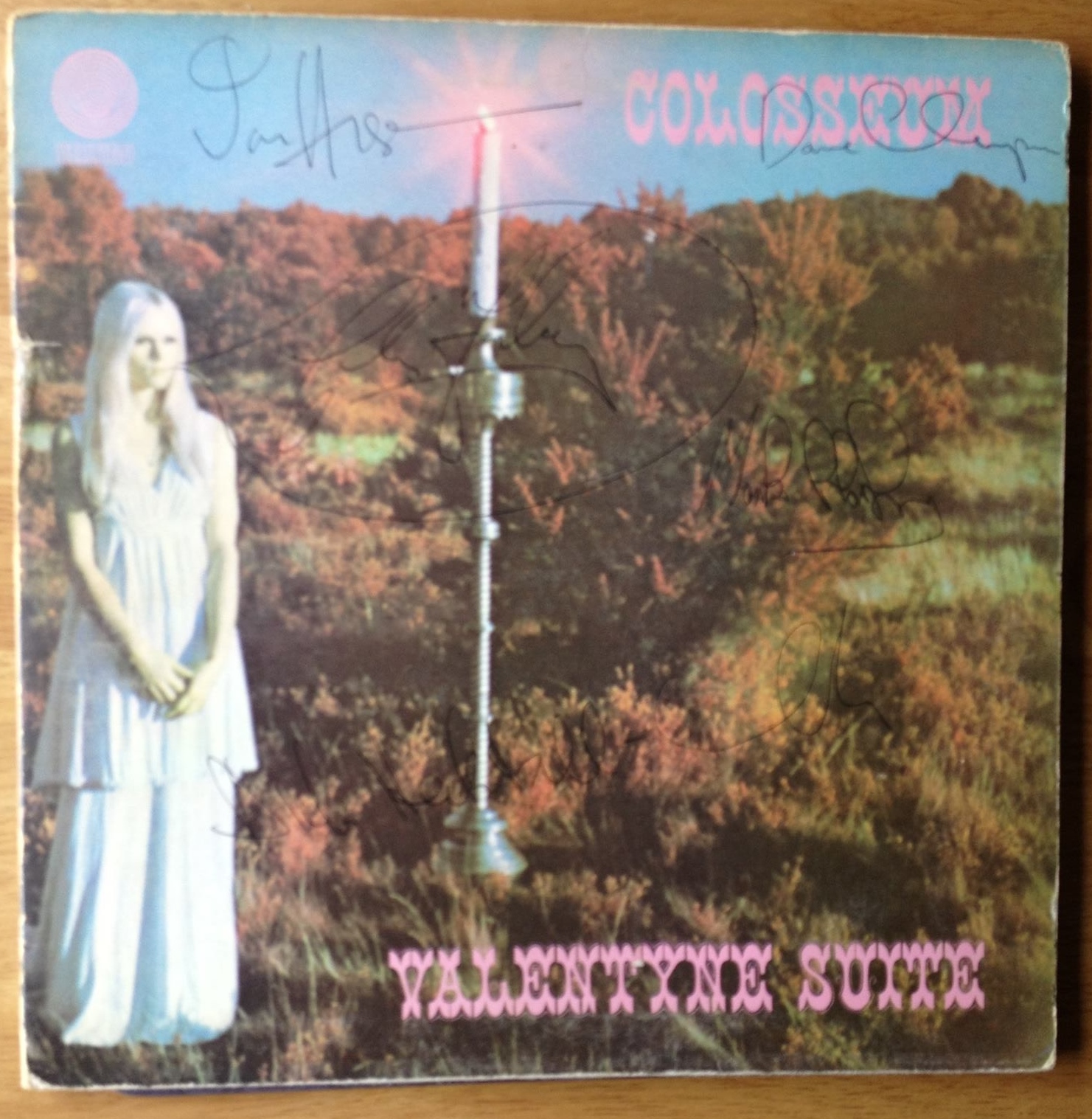
Dick Heckstall-Smith - saxophones (sometimes two at once!) Jim Roche - guitar Dave Greenslade - keyboards, vibraphone Tony Reeves - bass Later: Line-up at the Kinema 11th July 1971: Colosseum was formed by Jon Hiseman and Dick Heckstall-Smith who had both been in the Graham Bond Organisation (Hiseman replacing Ginger Baker) and John Mayall's Bluesbreakers. Formed in 1968 and signed to the Fontana label, Colosseum fused jazz, blues and rock. The debut album 'Those Who Are About To Die Salute You' even reached 15 in the UK charts. The band was less successful in the singles market. At the time, the record industry was moving away from singles to albums and 'Walking in the Park', a Graham Bond composition, was Colosseum's only release in the format. A move to Vertigo was followed by the release of 'Valentyne Suite'. This included the 16-minute title track and the album is widely seen as Colosseum's best. 'Valentyne Suite' was the first release on the new Vertigo record label which became known for its progressive rock. After the first two albums, James Litherland and Tony Reeves left to be replaced by Dave "Clem" Clempson who was previously in Bakerloo and Mark Clarke. R&B vocalist Chris Farlowe also became a member of the band prior to the 'Daughter of Time' album. Farlowe had previously been in the 'Thunderbirds' with Dave Greenslade. Colosseum now developed more of a rock approach with 'Daughter of Time' and the launch of 'Colosseum Live'. The band had established an excellent live reputation very quickly and had appeared in the film 'Supersession'. The band split after the release of the live album. Dave Greenslade reunited with Tony Reeves in Greenslade with Clem Clempson replacing Peter Frampton in Humble Pie. Jon Hiseman and Mark Clarke formed Tempest while Dick Heckstall-Smith formed a series of bands, often including the likes of Clempson and Hiseman in his recordings. Jon Hiseman formed Colosseum II in 1975 but this was not very successful despite the inclusion of Gary Moore on guitar. There was a reunion of Colosseum in 1997 with Farlowe on vocals. Info courtesy of: makingtime.co.uk
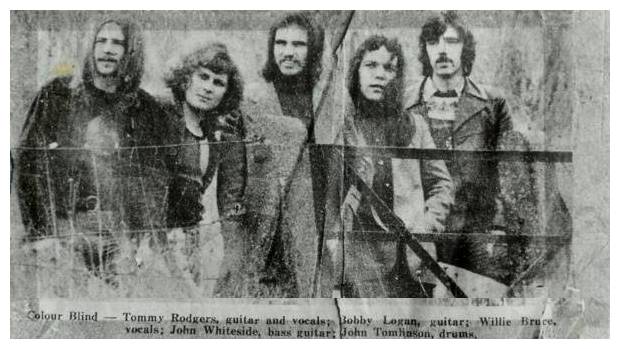
Willie Simpson - lead vocals, bass Later: Roadies: Allan Newlands, Ronnie Lawrence and Tom Kitchen Ayrshire band, Colour Blind was originally formed in 1968-69 as a three-piece; Bobby & John having come from the Steve Tomas Band (a seven-piece soul band). Later Willie Simpson was replaced by Wullie Bruce and joined by Tommy Rogers - guitar, vocals and bassist Jock Whiteside (from 'The Breeze'). They frequently played their close-harmony based hard-rock & pop covers & originals in the Glasgow area supporting contemporaries such as: Chris McClure, Salvation and Slade.
Jon McKenzie - vocals The Complete Stone Roses are now one of the UK's most well-known, most seen and most successful tribute bands. Selling out venues across the UK and Ireland regularly, they have helped to carry on the music of one of the UK's most influential bands the Stone Roses From The Official Complete Stone Roses
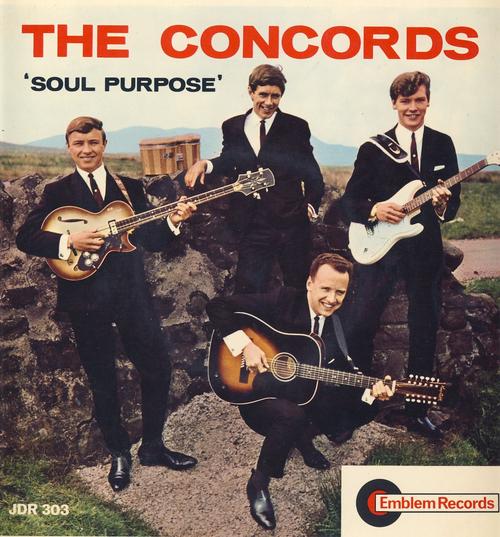
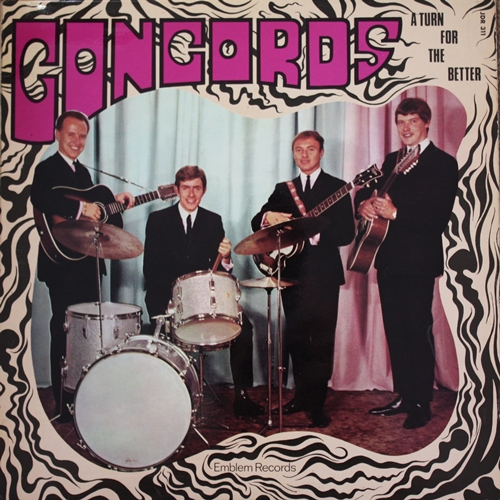
Leslie Mitchell - lead vocal, rhythm guitar 'Soul Purpose' (1966) If you can add any further information to this piece please contact me here.
Often considered to be the best slow air player on the tin whistle, Festy Conlon is a noted musician from Spiddal, the Connemara Gaeltacht, County Galway who derives many of his airs from his mother's songs. His mother was a fine singer who contributed a number of songs to the collection 'Amhra/in Mhuighe Seola'. Festy can be heard on the Topic LPs 'Breeze from Erin' and 'Grand Airs from Connemara' and on 'Totally Traditional Tin Whistles'. If you can add any further information to this piece please contact me here.
Perhaps best known world-wide for his comic monologues, Billy Connolly is a truly multi-talented entertainer. He is a stage, film and television actor, a playwright, a folk musician, an after dinner speaker and a talk show host's dream and nightmare at the same time. William 'Billy' Connolly, CBE, D.Litt (AKA 'The Big Yin') was born on the kitchen floor of 65 Dover Street (a Glasgow tenement) on 24th November 1942. Pressures of war separated his parents and both Billy and his little sister (Flo) were brought up by his father's sisters who were none too pleased about the prospect. Leaving school at 15 he had a few pocket-money jobs until old enough to work in the Clyde shipyards in 1960 when he began a five-year welding apprenticeship. He then joined the Parachute regiment of the Territorial Army, completing 17 jumps before returning to finish his apprenticeship and leaving for Biafra in Nigeria to work on the construction of an oil rig for a short time before returning home to Glasgow. He was inspired to buy and play a banjo while watching the hit comedy TV show 'The Beverly Hillbillies' and soon played with a number of folk outfits including 'The Skillet Lickers' and 'The Humblebums'. Their musical performances were tied together with Connolly's natural penchant for comedy between songs and a solid following resulted in them enjoying the excesses that can come with touring. The mix of comedy and music eventually became somewhat unbalanced and Gerry Rafferty and Billy 'had-words' resulting in the band's demise in 1971. Billy decided to stay on in London and began work on developing his, by now highly popular, style of observational humour. It was at this very early time in his career that he made his first solo appearance at the ballroom on Tuesday 23rd March 1971, in support of The Humblebums. There would be seven others until the last on Wednesday 29th May 1974. His first appearance on vinyl came with the double album 'Solo Concert' which reached No 8 in the UK chart. He followed this in 1975 with three more albums, two of which would also see the top ten and a No 1 UK single 'D.I.V.O.R.C.E.' (a spoof of the country hit by Tammy Wynette). By now he was hugely popular for his unique observations of life in Glasgow and well-known for the coarse, irreverent manner of telling the tales laced with extremely strong language. His first play, 'An' Me Wi' A Bad Leg Tae' (written in 1977) was not a success however and in 1979 Connolly made his film debut in 'Absolution' also starring Richard Burton. He found superstardom difficult to handle and soon he had an alcohol problem together with issues of privacy, especially with regards to his acrimonious divorce/custody battle with his first wife. To complicate matters further his girlfriend (Pamela Stephenson whom he met while guesting on the hit TV comedy show 'Not The Nine O'clock News') was pregnant. He was divorced in 1985 and received custody of his two children. Billy and Pamela were married in 1989 amidst a run of work in America including the American sitcom 'Head of the Class' and its successor 'Billy'. The Connollys settled in America and frequent stand-up comedy tours sat side by side with his regular TV & film work such as his highly popular BAFTA award winning TV series ('World Tour Of Scotland / World Tour Of Australia) and the critically acclaimed film 'Mrs.Brown'. They also have a home in the highlands of Scotland.
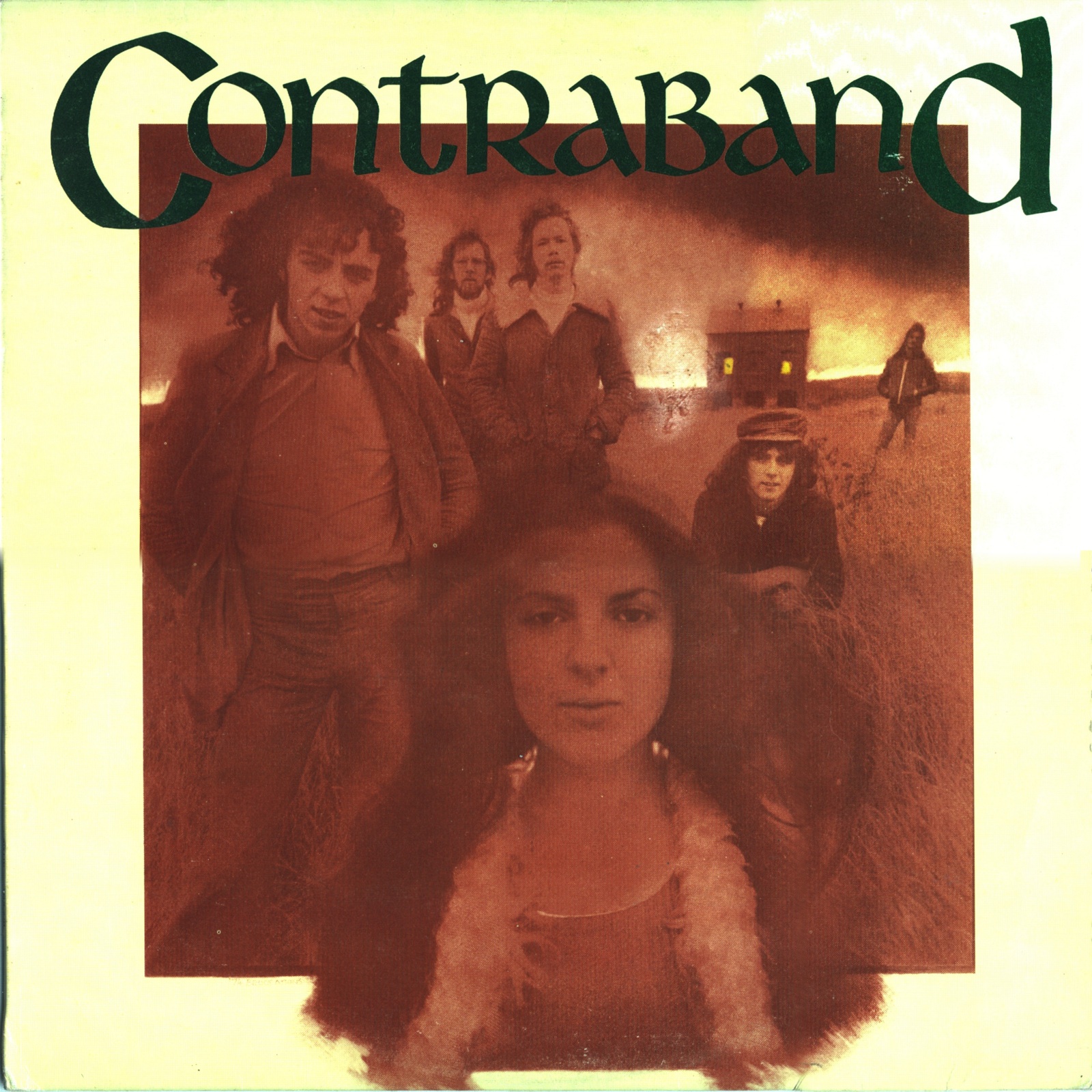
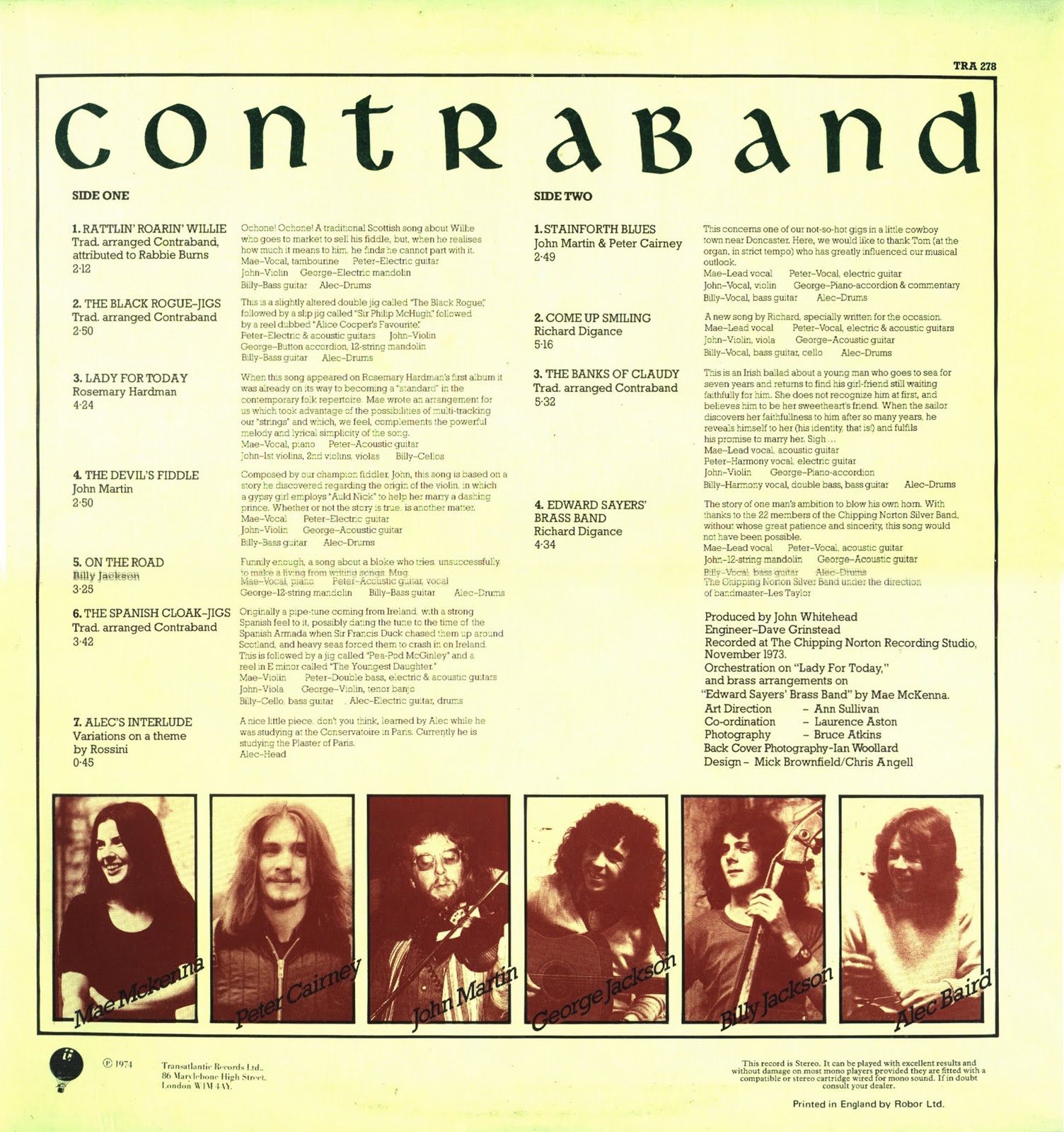
Mae McKenna - vocals, violin, viola, piano Based in the Glasgow area, Contraband's music was an exciting mixture of Irish and Scots traditional tunes, dramatic folk-rock arrangements of classical ballads and contemporary songs. They attacked their music with youthful vigour and energy. ''We loved playing together'' Mae recalls, ''We always used to play and sing on the way to gigs and coming back from them. Looking back I couldn't have wanted a better band to begin touring with''. Life on the road was an adventure and Contraband toured all over Scotland and England. Disbanding in 1975, Billy Jackson, John Martin & George Jackson would go on to form 'Ossian' while Mae pursued a solo career. Alex Baird joined 'The Jags' and played on the 1979 album 'Back of My Hand' (from which came the UK #17 hit of the same name) in 1979 - i.e. "I've got your number written on the back of my hand". John Martin would later play with 'The Tannahill Weavers'. Mae McKenna is the sister of Hugh McKenna of 'The Sensational Alex Harvey Band'. Info courtesy of: Brian Geary & www.allcelticmusic.com
Jack Jones - vocals, guitar The Controls are (at the time of writing in early 2011) an obscure new band of teenagers from Glasgow who have signed a a major deal with Columbia Records before they’d played their first gig which (was subsequently played on November 15th 2010 at The Lemon Tree in Aberdeen as one of seventeen dates they will play in support of The View on tour! They were 'discovered' by James Endeacott, who signed The Strokes and The Libertines and who is now A&R for The View. Johnny Madden and Andy O'Neill are both ex members of 'Young States' while Jack Jones is a singer, guitarist, lyricist and an ex actor (aka Jack McElhone) who has starred in movies such as 'Young Adam', 'Dear Frankie' (BAFTA Scotland nominated) and 'Nowhere Boy'.
Denny Ryan - lead vocal A soul/beat band from Birmingham. Arnold and Hopkins later reappeared in Quartz in the late seventies/early eighties. Singles: If you can add any further information to this piece please contact me here.
The Copycats
John Stewart - guitar, vocals Alex Slater - keyboards Leading members of two rival skiffle groups, 'The Saints' and 'The Sinners' amalgamated into a new project called 'The Cimmarons' in December 1962 in Buckie, Scotland. They would later become 'Johnny & The Copycats', then simply 'The Copycats' and by 1963 Alistair Ewan had left. They played mostly accessible Chuck Berry and Shadows covers and quickly came to the notice of one Albert Bonici who was the leading pop promoter in the north of Scotland at that time. They won the Scottish heat of a national beat contest in November 1963 and were placed second at the UK final because they were too young to sign the winner's prize of a recording contract. Albert, who was a very shrewd businessman, became their manager and publicist and arranged for their first single to be released through his own label 'Norco' (Scotland's first indie label!) in 1964. 'I'm A Hog For You Baby' was a cover of a 'Coasters' song while the B side 'I Can Never See You' was written by Ian Lyon and 1000 copies were sold. They toured the UK extensively and supported many acts such as The Hollies, Johnny Kidd & The Pirates. They were due to support The Beatles in Keith on the 2nd January 1963, but the gig was cancelled because of blizzards and other acts supported the remainder of the dates starting in The 2 Red Shoes, Elgin on the 3rd. However, Albert Bonici had a clause written into The Beatles contract to be the promoter of the next Beatles tour in Scotland. So, for the 1964 tour he got The Copycats to open for The Beatles shows in the ABC, Edinburgh, and the Odeon, Glasgow. Like many others they eventually ventured into Germany and toured for nine months a year for four years, cutting several records while there. Securing a deal with Parlophone brought about a mandatory name change and Albert suggested 'My Dear Watson' (which was pretty unpopular with the band especially when he dressed them in Victorian garb for publicity shots). Their single 'Elusive Face' / 'The Shame Just Drained' (1968) faired better. The A side was written by Stewart while the B side was co-composed by George Young who also co-produced the Single. (George was the elder brother of Angus and Malcolm Young of AC/DC) 'My Dear Watson' stayed in London for a while to work and often 'hung-out' with Jimi Hendrix and Noel Reading. By this time Stewart was a married man and their enforced geographical separation was taking its toll and so he left the band to save their marriage to be replaced by Alex Ziggy Slater. The band moved to DJM and recorded an album's worth of material with another DJM artist called Reginald Dwight though it was never released. Their last single, 'Have You Seen Your Saviour' / 'White Line Road' (1970) also suffered from lack of promotion as it seems DJM's energies were fully behind the young piano player Reginald Dwight - by this time known as Elton John. They eventually returned to Scotland and split. Ian Lyon became involved in a few other bands including The JSD Band. 'The Copycats'/'My Dear Watson' would reform for one-off gigs occasionally, notably on their 30th anniversary they played at a celebration gig held in their honour in the Town Hall Elgin in 1992. Singles: My Dear Watson Info mostly from 'Fit Like, New York?' by Peter Innes.
The Ed Corrie Concord Jazz Band Ed Corrie led a number of jazz outfits including 'The Ed Corrie London Jazzband', 'The Ed Corrie Jazzband', 'Ed Corrie's Jazzmen' 'Ed Corrie's Dixie band' and here, 'The Ed Corrie Concord Jazz Band." 'The Ed Corrie Jazz Band' once appeared in a short film (less than 30 mins) called 'Let's Go!' (1962) which was made for TV while in April 1963 'Ed Corrie's Jazzmen' had a spot on Brian Mathew's radio show, 'Saturday Club'. If you can add any further information to this piece please contact me here.
Roy Williamson - vocals and many acoustic instruments as below Instruments played included: guitar, mandolin, bodhran, banjo, flute, whistle, harmonica, concertina, Northumbrian pipes, bandurria, combolin, 28 String guitar, psaltery, English guitar, fiddle and probably some others! Throughout much of the sixties & seventies ‘The Corries’ were probably amongst the most prolific of Scottish folk recording artists & were certainly amongst the most popular live acts, filling every town hall in the country, sending the delighted crowds home singing & laughing. 'The Corrie Voices' were formed by Bill Smith and Ron Cruikshank after a song collecting trip to Ireland and were joined by Andy Turner on banjo. They frequently played in The Waverley Bar, in St Mary's Street Edinburgh when Ronnie & Roy were students at The Edinburgh College Of Art. They re-emerged as ‘The Corrie Folk Trio & Paddie Bell’ comprising Roy, Bill, Ron & Paddie. When Ron contracted Glandular fever he left a vacancy which Ronnie filled. In this configuration they recorded albums in 1964 and 1965 called 'The Corrie Folk Trio and Paddie Bell' and 'The Promise of The Day' then later that same year Paddie left the group to become a mother, but she continued recording as a solo artist. (Sadly Paddie died on the 3rd of August 2005 after a series of strokes. She was 74.) In 1966 Bill Smith also left, leaving the duo of Roy & Ronnie to re-badge as simply ‘The Corries’. In addition to his all too obvious songwriting, vocal & multi-instrumentalist talents, Roy Williamson was also a highly skilled instrument designer & maker probably best known for the beautiful, haunting Combolins (a unique pair of complementary stringed instruments, combining elements of guitar, mandolin and sympathetic drone strings) which were specifically designed & built by Roy for each of them. These were used in a couple of songs on every performance as they toured the length & breath of the country and abroad. Roy’s place in history may well be sealed if, as rumoured, his song ‘Flower Of Scotland’ was ever to become the official national anthem of Scotland as many have already unofficially adopted it as such. The Corries appeared many times on television and radio and were very effectively marketed with a flood of recorded work both from the studio & the live circuit where their wit & charm with the audience of all conceivable ages completed a most entertaining package. In 1970 they played at the Edinburgh Commonwealth Games and in 1983 they were awarded an International Film and Television Festival gold award for their television series, ‘The Corries & Other Folk’ screened on Scottish Television. Their twenty-eight year collaboration ended in 1990 with Roy’s premature death from a brain tumour. Roy was 54. Ronnie Browne continued to perform and record solo for some years but has been plagued with throat infections and has since retired. The Corries played the ballroom seven times between 1967 & 1970 including a BBC recording of 'The Corrie Folk' on Wednesday 5th February 1969. Note that though Roy did have a brother called Robin ... this is NOT Robin Williamson from The Incredible String Band as is often stated (though just to complicate things ... The Corries did perform & record 'October Song' which was written by Robin Williamson of The Incredible String Band
Elvis Costello & The Attractions
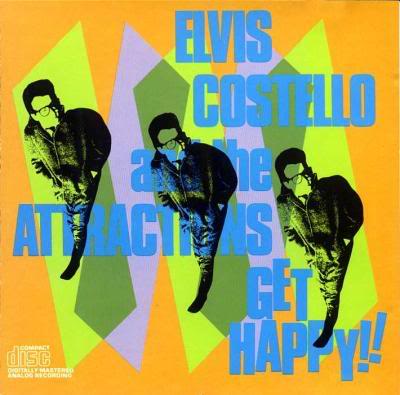
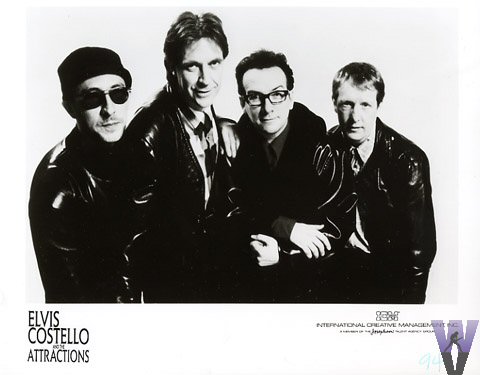
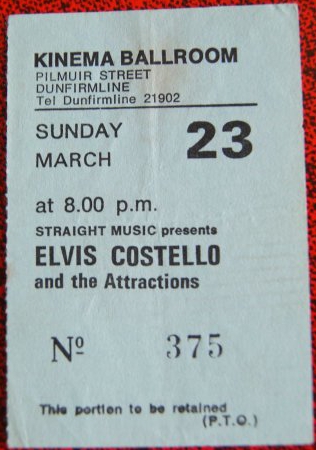
Elvis Costello - guitar, vocals Born Declan McManus on 25th August 1955 in Liverpool, Declan's father was a jazz bandleader. In 1974 he moved to London to front a country-rock band called 'Flip City' and was eventually signed to 'Stiff Records', changing his name to Elvis Costello. His first album 'My Aim Is True' was only 24 hours in recording though is often hailed as one of the best debut albums in rock. His recording contract with CBS resulted from a busking session outside a business convention where he was arrested. Follow-up singles and albums were recorded with his new backing band 'The Attractions' with which he would continue to record and perform for more than twenty years, off & on. He has recorded under the pseudonym 'The Impostor' and collaborated with various degrees of success with: Nick Lowe, Paul McCartney, Roger McGuinn, Chrissie Hynd, Chet Baker, George Jones & Burt Bacharach. When they played the ballroom on Sunday 23rd March 1980 the ticket price was a mere £3!
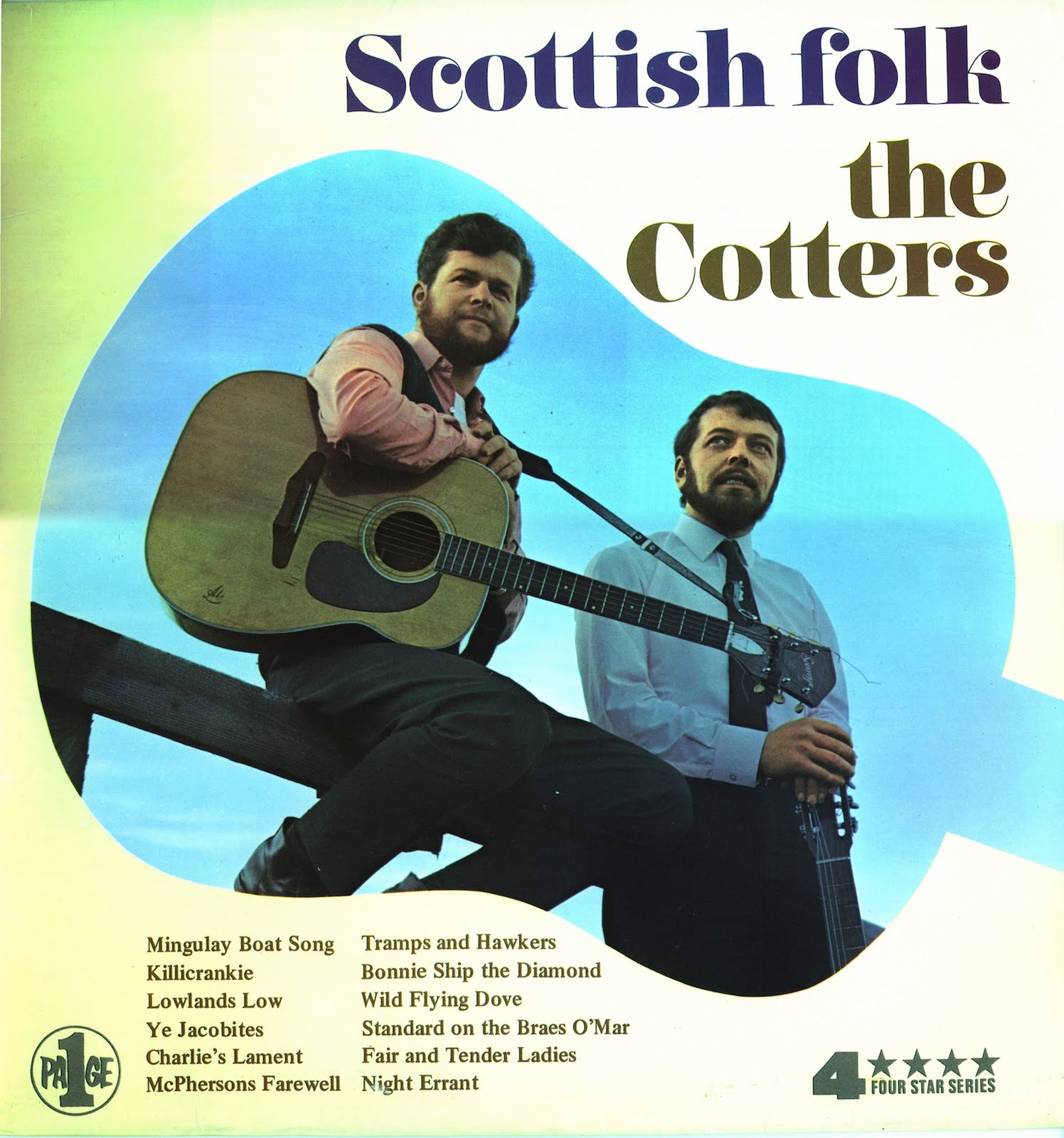
Alex Sutherland The Cotters were from Edinburgh and they got together after meeting in a folk club and later named the collaboration after a mandolin Ali bought from a friend which bore the name!. They subsequently did a TV commercial for Carling Black Label in Canada, and recorded one album. Alistair Watson left the Scottish music scene in 1980 and emigrated to Western Australia. More recently he became ill with cancer and died in 2001 having visited Scotland earlier that year. Alistair (Ali) Watson - was a blessed with a strong, sure voice and was a really nice guy. His partner in The Cotters, Alex Sutherland, also died of cancer in the mid 1980s. He was a piano-tuner to trade while Ali had had several jobs - notably a deep-sea mariner.The Cotters' main stamping ground was Royal Terrace, aka Edinburgh's Amber Mile, where they sang every Fri, Sat and Sun nights in The Arkaig and Lochewe Hotels in the late 1960s and early 1970s. A buzzin' 3 night stint with the hotels' rooms packed to bursting generally. They recorded one eponymous album 'The Cotters'. After Ali went to Australia, Alex teamed up with Ian Simpson and named themselves The Alexians or Alexian Folk Info courtesy of: www.nigelgatherer.com
Wayne County & The Electric Chairs
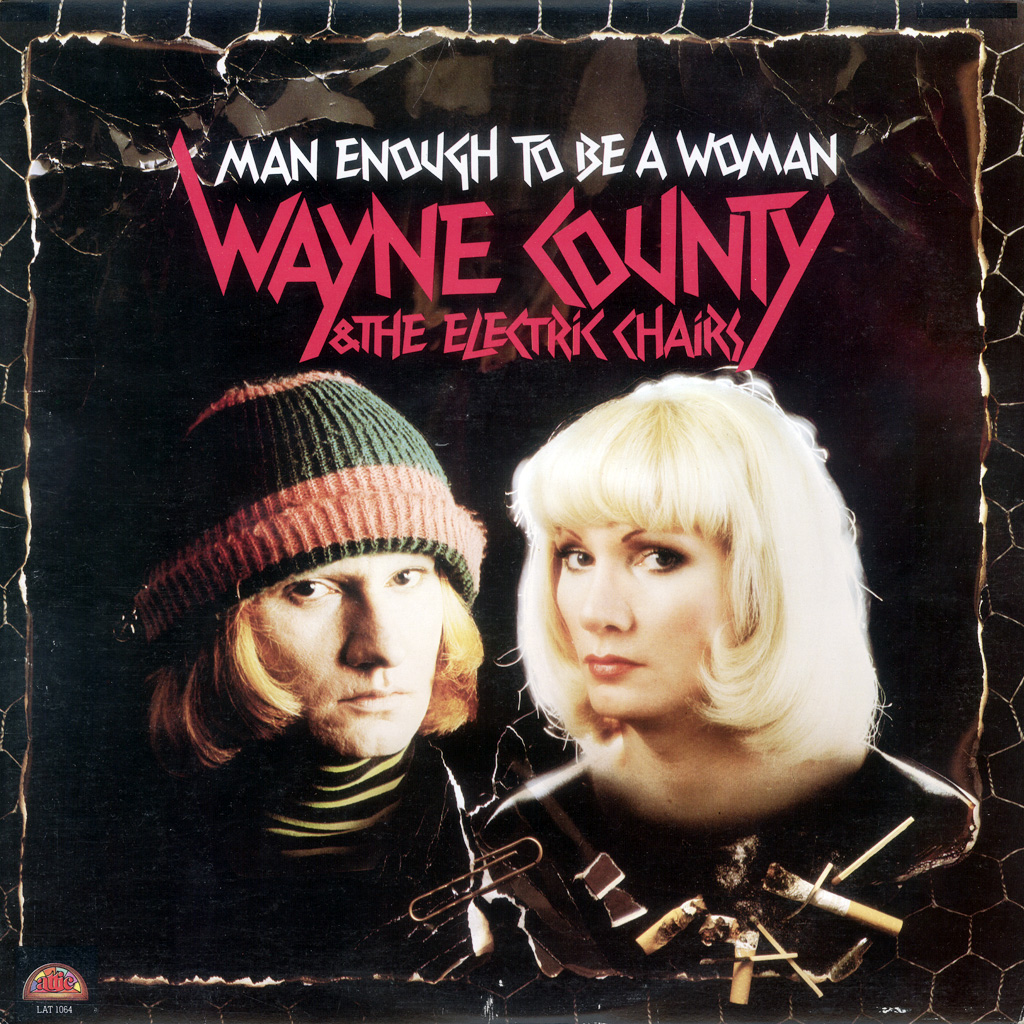
Wayne County – vocals Georgia-born Wayne County first appeared in the New York club scene in the early 1970s though with little success. After moving to England he formed a band called ‘Queen Elisabeth’. Returning to New York, he recorded the theme song for the legendary venue ‘Max's Kansas City’. In 1976 ‘Wayne County & The Backstreet Boys’ recorded an unreleased album before moving back to England once more. Wayne then formed ‘Wayne County & The Electric Chairs’, signing to Safari and gaining a reputation for basic punk rock with foul-mouthed lyrics designed for maximum shock. He appeared in Derek Jarman’s film ‘Jubilee’ (1977). Greg Van Cook left the band after the first album (‘The Electric Chairs’ - 1978) to be replaced by Henri Padovan. Jools Holland also joined for a short time on keyboards. Follow-up recordings included: ‘Blatantly Offensive’ (EP) (1978), ‘Storm the Gates of Heaven’ (1978) & ‘Things Your Mother Never Told You’ (1979). In March 1978 Wayne County and The Electric Chairs recorded ‘Evil Minded Mama’, a duet with Levi Dexter of Levi & The Rockats with whom they appeared at the ballroom on tour on Thursday 23rd March 1978. By 1980 Wayne decided to resolve his sexual anomalies and undertook a number of surgical procedures. ‘Jayne County’ took his place with a new line-up of Jayne County - vocals, Eliot Michaels guitar, Peter Jordan - bass and Sammy Minelli - drums. ‘The Best of Jayne/Wayne County and the Electric Chairs’ was released in 1982. Jayne still sings and performs as a D.J.
Scottish gospel group from Kilsyth who supported Cliff Richard in a 1000 strong sell-out concert at the ballroom on Sunday afternoon February 4th 1973. They have been described arguably, as "the most popular and influential Christian band ever to come out of Central Scotland". If you can add any further information to this piece please contact me here.
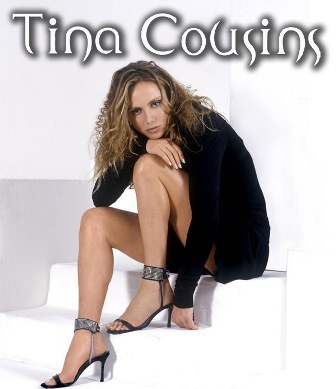
Although Tina Cousins has had UK chart successes as a solo artist, her major achievements have been with collaborations with German DJ Sash! - 1998’s ‘Mysterious Times’ (No 2) / 2000’s ‘Just Around The Hill’ (No 8) and with Steps, Cleopatra, B*Witched & Billie - 1999’s ‘Thank Abba For The Music’ (No 4), while her first album ‘Killing Time’ has peaked at No 50 in the UK.
Tina performs at nightclubs throughout the world and has performed at the Brit Awards in a silver cat suit held tight with bulldog clips! Success in the UK, Europe and Scandinavia has been matched in Australia too. If you can add any further information to this piece please contact me here.
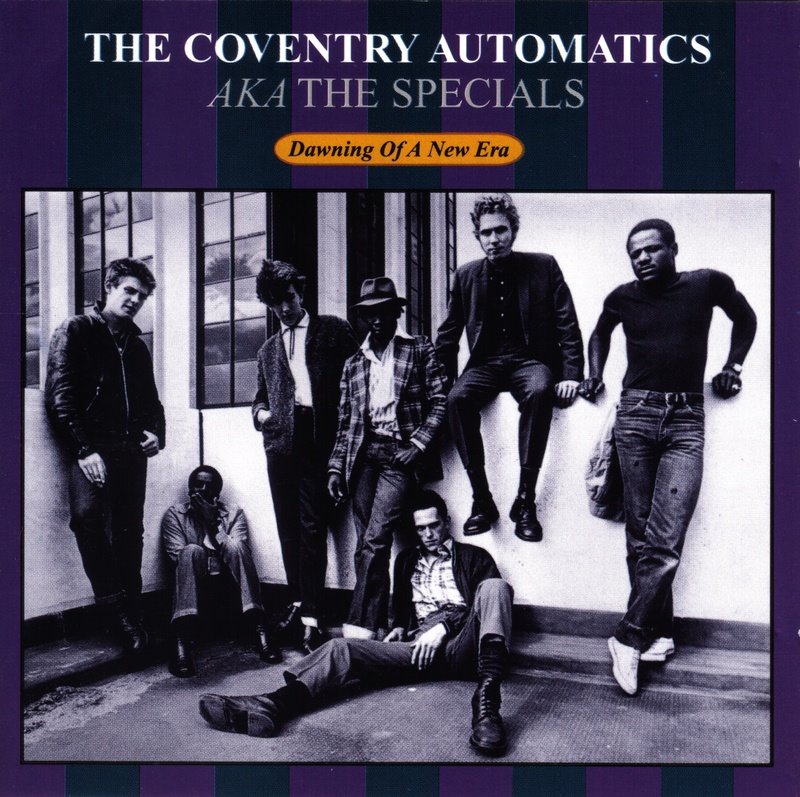
The Coventry Automatics
Jerry Dammers - keyboards Also: The beginnings of what was to become 'The Specials' as we know them, came about when Jerry Dammers, Horace Panter, Lynval Golding, Silverton Hutchison and Tim Strickland formed Coventry band 'The Automatics' in 1977. The band hit the Coventry circuit, playing a unique mixture of punk and reggae to local punters, even securing a residency at Coventry's 'Mr. Georges' club. After a while, vocalist Tim was replaced by former Squad front man Terry Hall, and soon after Jerry also recruited an old acquaintance, Roddy Byers, lead guitarist from 'The Wild Boys'. In fact, Roddy's introduction was just in time to join the rest of the band in Berwick Street Studios, London, under the auspices of Coventry DJ Pete Waterman. Jerry circulated the tape to the record companies, but they showed little interest. A tape was also sent to John Peel at Radio One, and although overlooked at the time, this tape was rediscovered in 1993 and released as 'Dawning of a New Era, The Coventry Automatics AKA The Specials'. Jerry persuaded fellow Coventry kid, and more importantly, Clash roadie Steve Connolly to introduce him to their manager Bernie Rhodes. The ensuing conversations resulted in the lads being given the support slot on the Clash's 'On Parole' tour in June/July 1978. Originally booked for just the first couple of shows, they got the whole tour thanks to Joe Strummer's interest in the band, and Jerry's persistence. By this point the band had changed their name to 'The Coventry Automatics' due to the fact that another 'Automatics' were already doing the rounds, and they again changed it to 'The Special AKA The Coventry Automatics'. It was finally shortened for clarity's sake to 'The Special AKA'. American support act 'Suicide' were well received by the Clash's crowd, but the reggae influenced brand of punk that the Special AKA played didn't fare so well, getting them spat at and pelted with cans by many of the drunken punk audiences. One positive outcome of the tour was the addition of former roadie Neville Staple to the line up. Having often heard him toasting over songs at sound check, the band invited him to join them full time on vocals and percussion. On their return to Coventry, the band locked down to some serious rehearsals in the back room of a pub, and started to experiment mixing some ska elements into their sound. Drummer Silverton was increasingly absent from rehearsals, both disinterested in the bands new direction and more importantly looking for a paying job to keep his family fed. Bernie Rhodes was back on the scene, this time advising the band to think about an image to go with their sound. Jerry, influenced by Paul Simenon of the Clash's off stage look, drew from the looks of the West Indian rude boys and the mods, and settled on what was to become the definitive ska look. Info from: www.thespecials.com where the rest of the story is told.
Eddie Cox (& The Woodchoppers) Eddie Cox was described as England's most versatile bandleader. He performed with with Roy Dexter & Jean Inglis. If you can add any further information to this piece please contact me here.
Ian Crawford - vocals Later: Ces Mosley, Alby Sayers, Ray Arnfield & Bernie Byrnes had been, until October 1962 with Johnny Peters, as 'The Crestas' aka 'Johnny Peters and the Crestas'. (Not to be confused with The Crestas (from Stockton) or Mike Sagar and the Cresters (from Leeds)! Ian Crawford had emigrated to Australia as a 15 year old, got into the music business, had a couple of hits over there, been on a few Aussie TV shows and returned to Britain to further his career. The Crestas had been so impressed by Ian Crawford’s scrapbook that they left Johnny Peters and became Ian's backing group. Their career together commenced with four weeks at the Savoy Club in Hannover, Germany, which grew into several more until they could finance the return trip in February 1963. They released two UK singles: ‘Rockin Robin’ / ‘Don't Let Her Be Your Baby’ (1964) & ‘Another Tear Falls’ / ‘Fun Fun Fun’ (1965) and ‘Venus in Blue Jeans’ in Germany. Info courtesy of Bernie Byrnes at: www.manchesterbeat.com
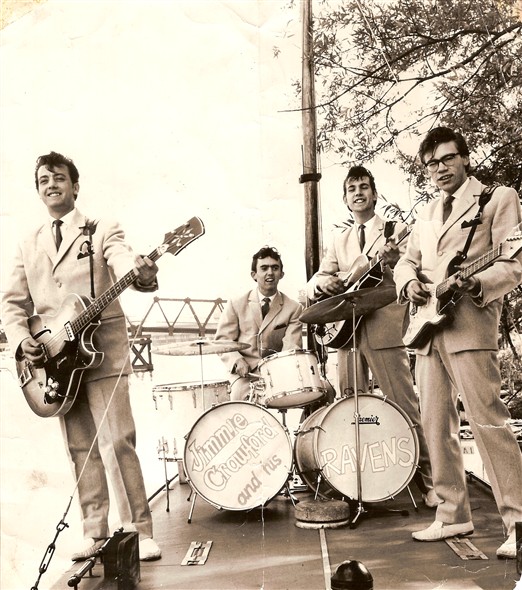
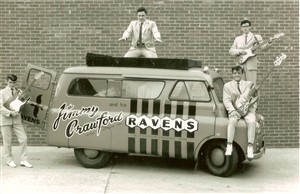
Jimmy Crawford (Ron Lyndsay) - (1960 - 1963) Sheffielder Jimmy Crawford (real name Ron Lyndsey) was born in 1937 and formed his first band, ‘Ron Lindsay and the Coasters’ with bass player Art Jacobs and guitarist Frank White. He was the blonde contemporary of Dave Berry and Joe Cocker and had represented Sheffield as a champion competitive swimmer after conquering a childhood fear of water during his time in the British Army. He released a handful of singles as a solo artist with two chart successes: ‘Love Or Money’ in June 1961 (No 49 UK) and ‘I Love How You Love Me’ in the following November (No 18 UK). Also ‘I Shoulda Listened to Mama’ was released in May 1962, all for the Colombia label. In 1962 Jimmy appeared in pop film 'Play it Cool' alongside Billy Fury and Shane Fenton. He then formed ‘Jimmy Crawford and the Ravens’ and performed at the ballroom on Wednesday 5th December 1962 supported by 'The Red Hawks'. His next venture was with ‘Jimmy Crawford and the Messengers’ with he formed in early 1963. This too was to be short-lived as they split in September of the same year. Jimmy then took up with Jim Ryder to form ‘Jimmy Crawford with the Chantelles’ and other groupings over the years included ‘The Jimmy Crawford Four’ and ‘The Jimmy Crawford Blend’. In 1977 he went to Australia for a six month tour with Big Jim Ryder on guitar, Gary Lawson on keyboards and Barry Page on drums. Sadly, Gary died around 2002 in Blackpool aged only 39 and Big Jim died in February 2005 aged 65. Jimmy and his wife, Maureen, were involved in a serious car accident in March 2005 but have recovered well and he is expected to return to performing.
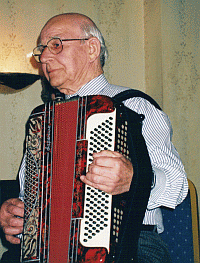
(By Grant Crawford) When we’re not feeling too good we generally take a trip to the doctor, or the dentist if toothache is the problem. When an accordion starts sounding unwell the road into Freuchie seems to be a natural remedy. Freuchie is the home village of expert accordion tuner and repair mechanic John Crawford. At the recent Domino Coupler Morino Day organised by the Button Key Club at Windygates, John gave an interesting talk on the qualities and mechanics of the famous Hohner accordion popular with so many players. Such is John’s knowledge of the accordion I thought it would be interesting to find out a little more about background so I arranged to meet with him. I initially thought I would probably spend an hour or so with him. After nearly five hours with him I had still barely scratched the surface of this living encyclopaedia of accordion information. Info from: http://boxandfiddle.com/john_crawford1.htm
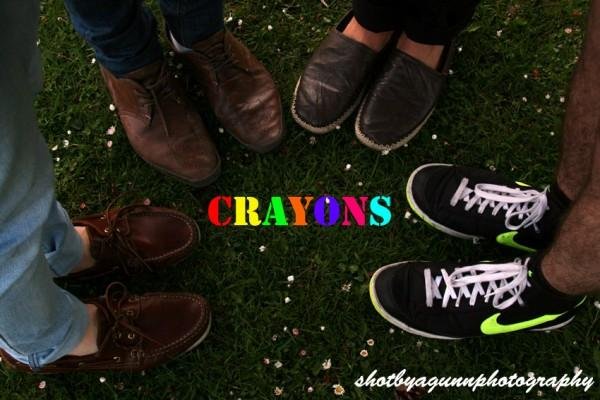
Sean Defrancesco Crayons are four confident teenagers from Dunfermline who play "awkward pop". Their first demo included titles ‘Planet Waves’, Andandand' and ‘Follow The Yellow Brick Road’. They've been described as resembling a kind of angst-ridden, jangly, angular, Talking Heads with Fife accents (well by me anyway - Ghoulz) If you can add any further information to this piece please contact me here
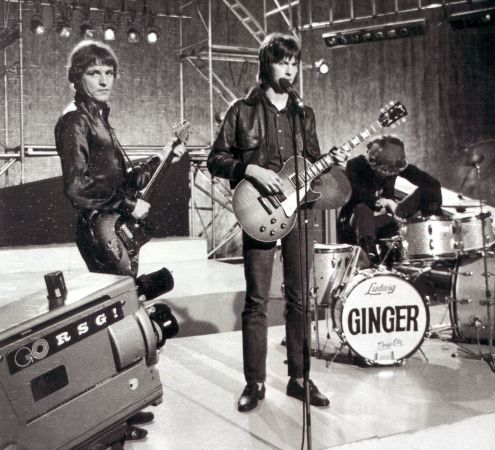
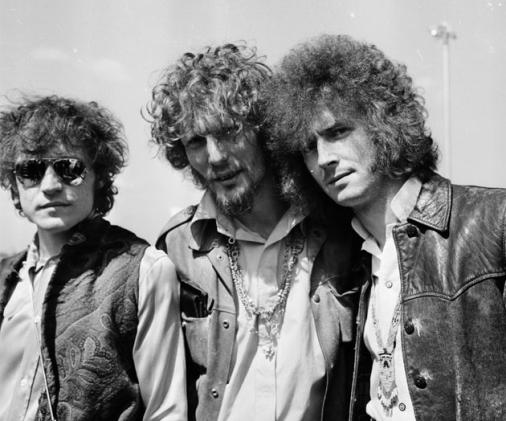
Ginger Baker - drums, vocals Seminal super-blues power trio of incalculable influence, held in such affection that their brief reformation in May of 2005 would fill The Royal Albert Hall on four nights, some thirty seven years after they split. You may well ask, "Why bother writing yet another biography of a band who are already so well known?". Well, they are as much a part of the collective modern musical experience in the western world as 'The Beatles' or 'The Stones' and many would argue, just as important, though this is true only for those of us of a 'certain' age. Also their product was perhaps not as accessible to the general public as some of their more 'pop' contemporaries and has permeated down through less visible channels. As a result their name is not so well known amongst the young. These then are my excuses, such as they are! The well-publicised friction between Jack Bruce (John Symon Asher) & Ginger Baker (Peter Baker) during their membership of The Graham Bond Organisation came to a head when Baker pulled a knife on Bruce and Bruce left the band. They were not apart for long though because when Baker approached Eric Clapton (Eric Patrick Clapp) with the idea of forming a 'Supergroup', Clapton liked the idea but determined that a prerequisite of his involvement would be that Bruce play bass! So keen was Baker that he swallowed his pride and asked Bruce to join personally and history was made. They truly were the cream of the musician body at the time. Jack and Ginger had a more jazz influenced background and it was largely within that sphere that they were known, while Eric had morphed from the pure blues of John Mayall into the realm of pop with the Yardbirds. He had been more widely exposed and been declared 'God' by some of his disciples. The threesome had wandered in the wilderness of the jazz/blues underground for long enough and now wanted the recognition they so richly deserved. Their first forays on to vinyl were a bit of a shock for the faithful as they were a very much a watered-down sanitised version of their expectations. However, Cream were never too comfortable in the studio, much preferring the live experience as over 300 shows in less than 30 months testifies. Their early shows were relatively short as the repertoire was limited and at the National Jazz and Blues Festival in Windsor England on 31st July 1966 they realised that the more they stretched out the improvisational elements of the song's structure, the more rapturous was the applause. It was in this improvisational jamming that they found their essential 'stamp'. Something to brand the product and at the same time, showcase their virtuosity, loose their competitive streaks, massage their egos and exercise the individual jazz based talent they had worked hard to acquire. In doing so, each one pushed the others harder and further than could any of their colleagues hitherto and the extreme nature of their style grew. Their appearance at The Kinema Ballroom Dunfermline on Sunday 9th July 1967 was sandwiched between the New York recording sessions for 'Disraeli Gears' in May and the album's release in November. So even without the benefit of a set list, it can be reasonably guessed that tracks from the album would feature prominently, together with previous work from the first album 'Fresh Cream'. Incidentally, 'Disraeli Gears' contains 'Tales of Brave Ulysses' (the 'b' side of the 'Strange Brew' single) which features the first recorded use of the wah-wah pedal. Their influence was immediate, massive and irreversible to musicians and audiences alike, worldwide. They continued to tour extensively, especially in the states and one could determine an underlying respect, even from the most disparaging of critics, some of whom just didn't 'get it'. Eventually the shine wore off for the trio and the punishing grind of constant touring began to cause painful cracks to re-emerge. By late 1968 they were arriving at the gigs in separate cars from separate hotels and it was beginning to look as though they had taken the format to its extreme limit. It had all been too intense. They packed a normal band's lifetime career into a couple of years and the very fiery competitiveness that fuelled the machine ultimately consumed them all, leaving an immeasurable legacy that still stuns today and can be heard in the subsequent careers of so many, including Led Zeppelin. They played the final two 'Farewell' shows at The Royal Albert Hall on 26th November 1968 and returned thirty seven years later in May 2005 for the reunion shows. Sadly Jack Bruce died of liver disease on Saturday 25th October 2014. Ghoulz:
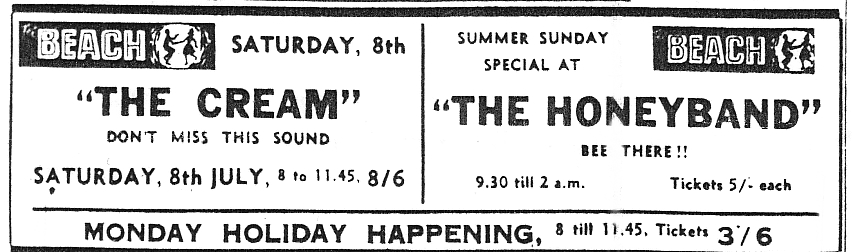
Cream's Scottish performance dates. This web site (KinemaGigz) came about as a spin-off from research I undertook to find Cream's Scottish performance dates. Cream played at The Kinema Ballroom Dunfermline on Sunday 9th July 1967 (supported by The Shadettes) as part of their, now legendary, 'Lost Scottish Tour' & I have been able to track down and prove some of the venues and dates through a considerable number of phone calls, emails & letters over a number of months. Full story here. So then, ... in chronological order: 1. Saturday 8th July 1967 - 'The Beach Ballroom' Aberdeen
2. Sunday 9th July 1967 - 'The Kinema Ballroom' Dunfermline
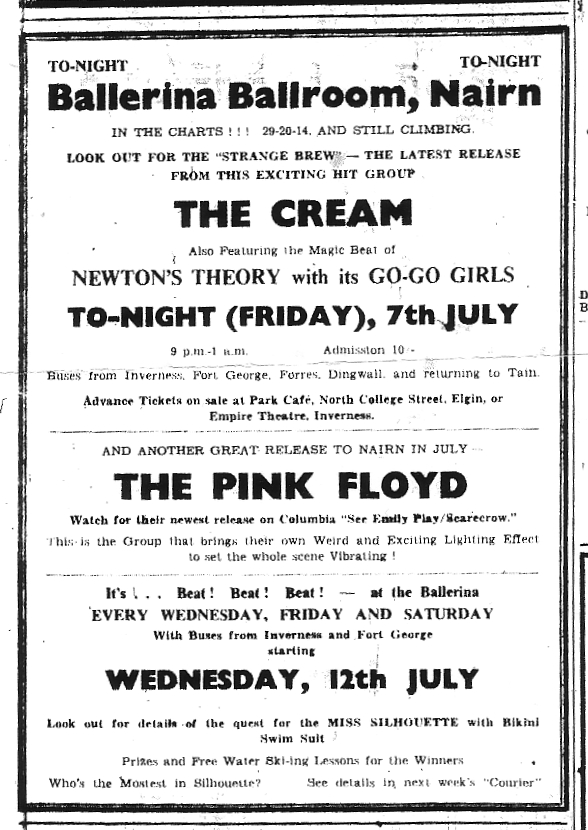
3. Monday 10th July 1967 - 'The Ballerina Ballroom' Nairn
As you will see in both adverts above, this performance was booked & billed for Friday 7th July 1967. However it was postponed until the following Monday 10th July as the van containing their instruments etc broke down on route to the gig on the A9. Like true professionals however, they appeased the disappointed crowd by signing autographs outside the venue. Another often suggested performance on Saturday 15th July 1967 in Inverness (perhaps in a cinema) - Did not take place. 4. Friday August 4th 1967 - 'Perth City Hall' Perth
5. Sunday August 6th 1967 - 'McGoos' Edinburgh
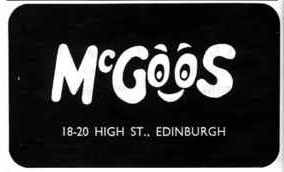
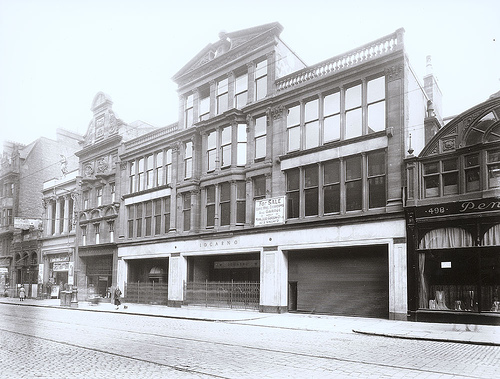
They were supported by 'The Jury' who would later become 'The Writing On The Wall'. James Waugh (a KinemaGigz visitor) remembers walking home to Penicuik after the gig! McGoos was located at 18-20 High Street Edinburgh (the former 'Palace Picture House' opposite John Knox's House). The frontage of the McGoos building is still there today, though the structure behind it is a new sheltered housing complex. I understand that this was amongst the last gigs there as the venue closed shortly thereafter when local gangsters pressured the owner (Mr. Crolla) for protection money, and rather than bow to them he closed the club after only around two years of activity. Shame on them! 6. Monday August 7th 1967 - 'The Locarno Ballroom' Glasgow
I'm indebted to Bob Elliot for his assistance in finding the latter three dates.
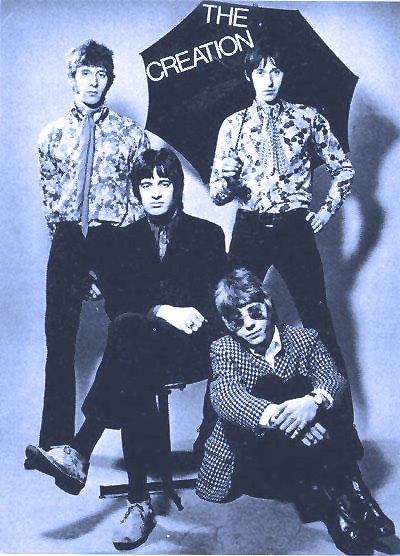
Kenny Pickett - vocals John Dalton - bass The first line-up of this group from Hertfordshire was called 'The Mark Four' and consisted of Pickett, Phillips and Jones with John Dalton on bass guitar. They built up a good following on the mod circuit and released four singles between '64 and early '66 before losing bassist Dalton to 'The Kinks'. The change of name occurred when Garner was recruited as Dalton's replacement. Aurally similar to 'The Who' with whom they shared a producer (Shel Talmy), they had two minor hits in the UK but were always more popular in Europe (where they released two albums) than in their home country. An innovative group (guitarist Eddie Phillips was the first to play his instrument with a violin bow), who were also excellent live performers, they toured with 'The Rolling Stones' and 'The Kinks'. Ronnie Wood replaced Phillips shortly before the band's demise in 1968. Info courtesy of: www.geocities.com/SunsetStrip/Villa/9500/contents.htm Their second hit from 1966 'Painter Man' was covered by 'Boney M' and peaked at No 10 in 1979. Incidentally, 'The Creation' (in their earlier guise as 'The Mark Four' have sometimes been confused with 'The Mark V' form Scotland. In fact both sides of 'The Mark V's single 'Baby What's Wrong/'Tango' were mistakenly included on a compilation album ‘The Mark Four' / 'The Creation' (Eva 12005).
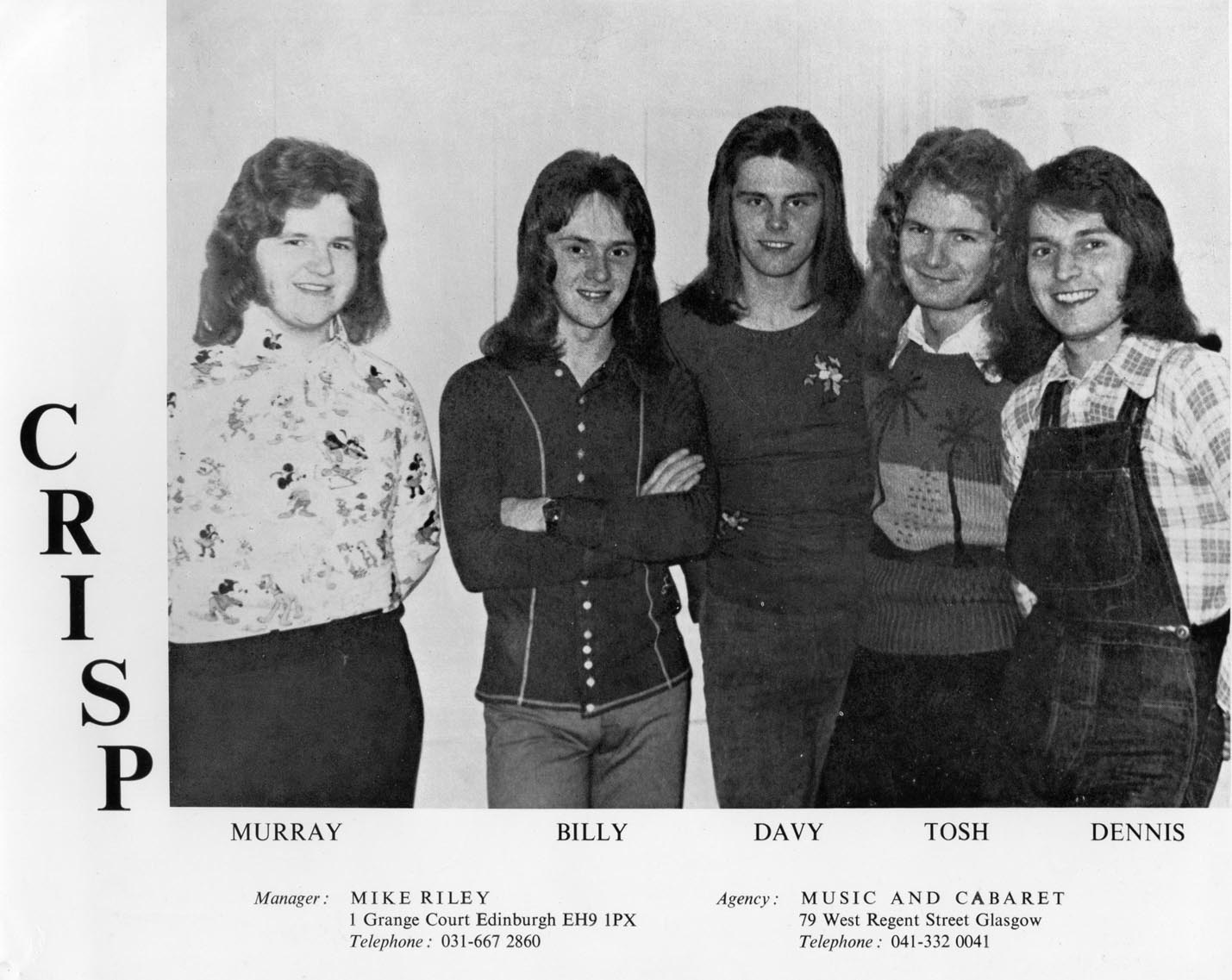
Dennis Gray - vocals Alex 'Niz' Nisbet - guitar Bassist Billy McGhee later joined Scottish band 'RAF' in the early eighties. My thanks to Billy McGhee for the information above,
Bill Christie The Crofters were a folk trio based in the Aberdeen area. They released an eponymous album in 1969 'The Crofters' on Beltona Sword Records. They played at the ballroom on Tuesday 13th March 1973 with 'Causeway Folk'. If you can add any further information to this piece please contact me here
Sandra Cross began singing in the Pentecostal Church and by the age of nine was the choir leader. Her first recording was made in 1979 at the age of fourteen as 'Love & Unity'. "I Adore You" was a number one on the UK reggae chart for four consecutive weeks and three more top five hits followed before they split. Sandra then joined the short-lived 'The Wild Bunch', releasing only one album in 1984 and touring Europe extensively. Returning to her solo career in 1985 and a familiar chart position, 'Country Living' sat atop the UK reggae chart for 10 weeks in 1985 as did 'You're Lying' for another four. She won the 'Best Female Singer' category at the British Reggae Awards six times from 1985 to 1991 and appeared at the ballroom on Saturday 26th April 1986 in support of Steve Carlton.
The legendary Scottish dance band leader played the ballroom on Monday 6th January 1975 as a guest of The Dunfermline & District Accordion & Fiddle Club and again with 'His Broadcasting Band' on Tuesday 1st April 1980. If you can add any further information to this piece please contact me here
Scots sisters Liz & Maggie Cruikshank were a folk-singing duet. Sadly Liz is no longer with us, however her sister Maggie continues to sing & record.
Arthur Owen - guitar, vocals Arthur joined Curly in 1979 when Argus split. Arthur also played with The Nameless Ones & Argus & Mike Satan & The Hellcats & The Chessmen If you can add any further information to this piece please contact me here
Tom Currie The Currie Brothers are a popular vocal and multi-instrumental group based in Milngavie, Glasgow, Scotland. All three brothers have long been regarded as accordionists 'par excellence' and accomplished on other instruments, being individual Scottish champions and collectively winners of a Scotstar Award for 'Best Ensemble'. They have performed for HM The Queen and played on several major TV & Radio stations. Their range of music includes Scottish, Irish, Folk, 60's-90's Pop, Country, Bluegrass, Rock & Roll etc. Instrumentation includes Keyboards, Electric & Acoustic Guitars, Banjos, Clarinet, Fiddle etc....and of course, the Accordion. Info courtesy of: www.curriebrothers.com
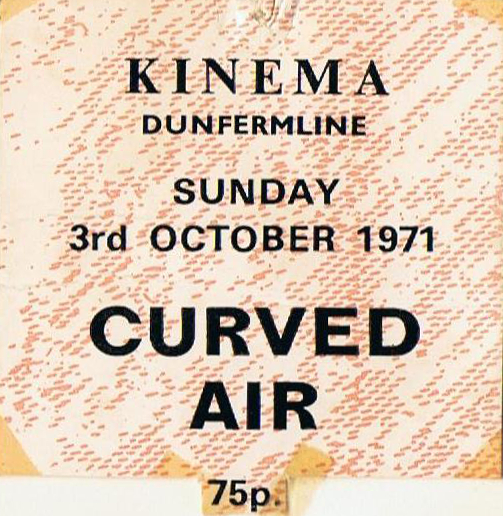
Florian Pilkington-Miksa - drums Ian Eyre - bass Early in 1968, drummer Florian Pilkington-Miksa and bassist friend Rob Martin were introduced to guitarist and keyboard virtuoso Francis Monkman, who was studying at the Royal Academy of Music. The trio jammed together and played cover tunes at local parties. Info from: www.curvedair.com Kinema Ballroom Manager, Cecil Hunter, said that 'Curved Air' were the loudest band to play the ballroom in his experience. Drummer Stewart Copeland would of course go on to international stardom with 'The Police'.
The Cyclones (aka The New Cyclones)
Kathryn Kate Mulraney - vocals Band from Blackheath near Birmingham who played the ballroom in 1965 (therefore not to be confused with the more local Perth band of the same name who featured Evie Beatson and broke up in late 1963). If you can add any further information to this piece please contact me here
|
|