Press Press & other media articles of interest are reproduced here in chronological order (Newest First): 
Velocity to go Under the Hammer Again Dunfermline Press
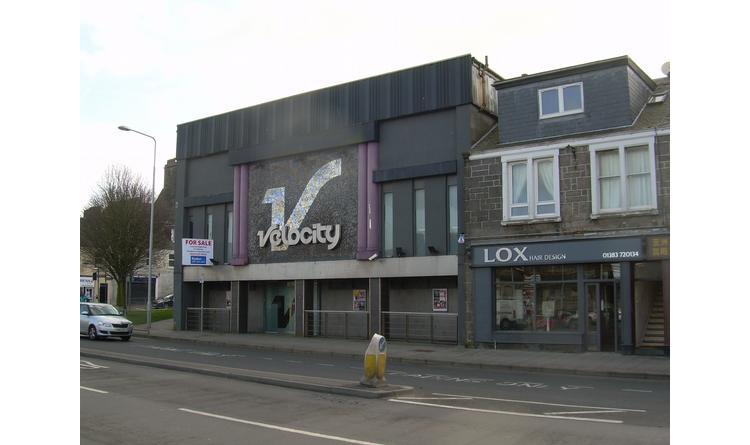
Published: 30 Mar 2016 / Nicola Scrimgeour THE FORMER Ballroom nightclub in Dunfermline will go up for auction again next month while plans continue to turn it into an indoor skate park and youth hub. The nightclub on Carnegie Drive, latterly known as Velocity, has lain empty since 2009 with the only interest seemingly shown by Heart and Sound, an organisation set up by local youth workers and musicians. Its value has plummeted over the years and it went up for auction in February last year, where it was sold with Sinky’s Bar, the Jamjar venue and a two-bedroom flat. Now, Wilson Auctions has listed the nightclub by itself on April 14, with a guide price of just £150,000. Heart and Sound has since secured a ten-year lease on Sinky's and the Jamjar, which are currently undergoing refurbishment to transform them into youth work offices and workshops including a music studio. The organisation has been assigned grants officers in their bid to land the nightclub too and secured money through crowdfunding for a feasibility study to transform it into an indoor skate park and youth work hub with media studios, cafes, training suites and more. They are currently in the process of obtaining a certificate of lawfulness as well as in discussions with a major funder to purchase the building. The once-popular nightspot has, over its 77 years, been the Kinema Ballroom, Night Magic, Hollywood Boulevard and, most recently, Velocity and was at the centre of Dunfermline’s entertainment scene. It was also one of Scotland’s most important venues for live music but, after a major renovation by owners Castle Leisure Group in 2007, it closed two years later
Kinema/Velocity For Sale Once More! http://www.s1homes.com/Plots-for-sale/2016032315154915.shtml "Property Details
If walls could talk - Velocity would be able to tell a story or two – from cinema, to ballroom to a night club this property has formed part of Dunfermline's nightlife for years. The future uses are endless, possibilities including gym, skatepark, nightclub, bar, restaurant, art space, live music venue, retail shop or warehouse.
Take a walk down memory lane - this grand and commanding building was opened originally in 1938 as the 'Kinema Ballroom,' whether you danced like Ginger Rogers and Fred Astaire or rocked your socks off to bands like The Clash and Siouxsie and The Banshees, there is no doubt about it, this venue has made memories and much more.
This building has the WOW factor. The magnitude of the space is only fully appreciated when you step inside. The nightclub is modern following a £2m refurbishment in 2007, the main entrance is on Carnegie Drive through a set of double glazed doors past two ticket entry desks leading to the main foyer. Located off this foyer is a large cloakroom, office, staff area and large fully tiled male and female toilets leading to the main stairway up to the nightclub. There is also a passenger lift off the foyer.
The nightclub has a large central dance floor, stage and various raised seating area around this dance floor with a stainless steel bulustrades. There are also two bar serveries and a DJ booth and male, female and disabled toilets.
Located on Carnegie drive this property is conveniently located a short walk from Dunfermlines town centre. There is a car park directly across from the entrance of the property and a large Texco Extra close by.
The scope for this venue is limitless – a budding entrepreneur will see it's potential.
EPC Rating – G
Rateable Value – to be reassessed
Rates Payable - to be reassessed"
Property did eventually sell in late July 2015 and the Skate Park seemed likely ...
SVA Property Auctions Ltd (25th February 2015)VELOCITY AUCTION -
NIGHTCLUB, 45 CAREGIE DRIVE/ 19 PILMUIR STREET, DUNFERMLINE KY12 7AJ Note: The venue did not sell Former Nightclub on Substantial Site With Development Potential  LocationDunfermline (population 50,000) is strategically placed in Fife just to the north of the Forth Road Bridge and is close to the M90 and just ten miles to the outskirts of Edinburgh. The property is located at the junction of Carnegie Drive and Pilmuir Street opposite a large public car park. The location of the property is extremely good; having a particularly prominent position. There is a large volume of traffic along Carnegie Drive (A907) which acts as a by pass around the northern edge of the town centre. To the rear of the property is the new Dunfermline Bus Station and about 100 metres to the east is the recently expanded Kingsgate Shopping Centre. Dunfermline High Street is just 150 metres down Pilmuir Street. A retail park and The Carnegie Leisure Centre are a similar distance across Carnegie Drive. DescriptionThe property comprises structures of varying ages and construction, though the majority would seem to have been constructed in the mid 1960’s. It is essentially a two storey building which is steel framed with brick walls. There are three distinct interconnecting areas of the building. The former nightclub, most recently called Velocity, comprises the vast majority of the property with its main entrance off Carnegie Drive. The second part are the bars known as Sinkys and Jamjar Bar with their main access from Pilmuir Street. The final part of the property is a ground and attic flat above a shop trading as Val- U-Blinds. Please note this shop is not part of the property being offered for sale. The property has a wide range of potential uses on this large prominent site. There is of course the potential for an experienced operator to resurrect its current leisure use as a nightclub or similar. Alternatively, subject to all necessary consents, the site would lend itself to many other uses such as retail, restaurant, offices, hotel or residential use. 
Site Area
0.13 Ha (0.32 Acres) Approx – Please check title.Accommodation
Velocity Nightclub a modern nightclub with a large central dance floor, stage and raised seating areas. There are two bars a DJ booth and toilets. There is also VIP members lounge area at a raised level overlooking the dance floor. On the ground floor is the main foyer, an office, cloakroom, staff facilities and male and female toilets.Sinky’s and Jamjar Bar Sinkys Bar is on the ground floor with seating for over 60 people with ladies and gents toilets, it has commercial kitchen. The Jamjar is above Sinkys which has its own bar. Residential Flat – This is at first floor and attic levels. This two bed former managers flat has not been lived in for many years and would require a significant investment to bring it back in to habitable condition. Planning
Interested parties should make their own enquiries of Fife Council Tel 03451 551 122 to discuss any proposed changes to the use or physical changes to the property.Rateable Value
Nightclub £65,000, Public House £27,800. EPC
Band G.Tenure
Owner with vacant possession.Viewing
By arrangement through SVA Property Auctions Ltd or the Joint Auctioneers. Please be particularly careful when viewing as there is water ingress in the nightclub in particular causing surfaces to be slippery and some deterioration to the fabric. A good torch is recommended.Joint Auctioneers
Ryden LLP, 46 Castle Street, Edinburgh EH2 3BN. Tel 0131 473 3382 or email alan.herriot@ryden.co.uk (Alan Herriot)
Dunfermline ballroom goes up for auctionDunfermline Press
Published: 13 Feb 2015 THE FORMER Ballroom nightclub in Dunfermline will be put up for auction in two weeks while plans continue to turn it into an indoor skate park and youth hub. The premises on Carnegie Drive has been at the centre of the city’s entertainment scene for decades but is set to be sold to the highest bidder on Wednesday 25th February. Latterly known as Velocity, the nightclub has lain empty since 2009 with the only interest seemingly shown by Heart and Sound, an organisation set up by local youth workers and musicians. Founder Steve Chalmers told the Press, “It almost feels like the last chance for the building as it’s going up for auction very soon. “The estate agents said people have been in to look at it but said no, it’s way too big for what they wanted and walked straight back out again. “I think if we got it and brought it to life again, it would help young people round here to dream bigger.” Heart and Sound hope to get lottery funding to turn the building into “a massive indoor skate park, live music venue, cafe and youth work centre”. More than 1100 people have signed a petition backing their plans “to build a unique, fun and safe environment that young people can enjoy and give an alternative to sitting about the parks getting drunk at the weekends”. The vision includes office space for social enterprises and charities, as well as numerous youth work agencies all working together under one roof. They held a consultation event last week to gather support and opinions for the ambitious venture, ahead of applying for lottery money for a feasibility study. Steve said, “We have to provide evidence that people want it and back it up with statistics to show the funders it’s viable. “They’ll want to know that it will keep going and we won’t be stuck with a giant skate park that no-one wants to attend!” He added, “We’re waiting to hear if the grant comes through so we can check if the building is safe and the project is feasible. “If they say it’s falling apart we’ll look at an alternative site.” The sale will include the nightclub, Sinky’s Bar, the Jamjar venue and a two-bedroom flat and will be conducted by SVA Property Auctions in Edinburgh. The rateable value – the valuation of a property based on annual rental values – of the nightclub is £65,000 and the pub £27,800. In the description, commercial property consultants Ryden said the property “has a wide range of potential uses”. They said, “There is of course the potential for an experienced operator to resurrect its current leisure use as a nightclub or similar. Alternatively, subject to all necessary consents, the site would lend itself to many other uses such as retail, restaurant, offices, hotel or residential use.” In its 77 years, the venue has been known as the Kinema Ballroom, Night Magic, Hollywood Boulevard and Velocity. A major renovation was carried out by owners Castle Leisure Group in 2007 but it closed two years later. Steve said, “We haven’t come up against much negativity and money isn’t really the issue. “We really want to make a difference for young people and their families in Dunfermline and West Fife. “With the fire station opposite as a community arts centre, it’d be a really nice place with a great community vibe.” The chair of the City of Dunfermline area committee, Helen Law, said, “I would absolutely welcome development of this site, it’s heartbreaking to see it lying unused for such a long time. “Lots of folk have fond memories of the Ballroom and many will have met their future partners there. “It has an absolutely fantastic history, all the big names played there, and it’d be great to see a new use and people excited about it again. “Across the generations it’s always attracted young people, it may not be the same but you have to move with the times. “It would be great to see all these empty buildings come back into use, the High Street shops, Walmer Drive, Pilmuir Works, it could only benefit Dunfermline.”
Dunfermline's Ballroom could become indoor skate parkDunfermline Press
Published: 2 Feb 2015 THE FORMER Ballroom nightclub in Dunfermline’s Carnegie Drive could be turned into an indoor skate park and youth hub. Heart and Sound, an organisation set up by local youth workers and musicians, hope to get lottery funding to transform the empty building and bring it back to life. They’ve already got more than 1000 signatures backing their vision for Velocity – the venue’s last name – and will hold a public consultation event tomorrow (Tuesday). Heart and Sound youth worker Ross Caldwell explained, “A few of us went to view the premises and it’s chockful of potential. “It’s been shut for years and the price has dropped in that time, it’s offers around £250,000 and I think it started around £750,000. “We were advised to put in a small application for lottery money, about £9000, to cover architect fees, quantity surveying, the design of the skatepark and structural engineers ahead of a feasibility study. “Once we have that and well-formed plans we can then hopefully go forward from April for a larger lottery application to buy the building.” The once-popular nightspot has, over its 77 years, been the Kinema Ballroom, Night Magic, Hollywood Boulevard and, latterly, Velocity and was at the centre of Dunfermline’s entertainment scene. It was also one of Scotland’s most important venues for live music but, after a major renovation by owners Castle Leisure Group in 2007, it closed two years later. The petition, which can be found via Heart and Sound’s Facebook page, states, “Our dream is to see the massive venue that was formally Dunfermline’s Velocity transformed into an indoor skate park and youth hub. “By creating a place in the centre of Fife that is a massive indoor skate park, live music venue, cafe and youth work centre, we hope to build a unique, fun and safe environment that young people can enjoy and give an alternative to sitting about the parks getting drunk at the weekends. “There are several aspects to the project from community cafes, office space for social enterprises and charities, not to mention the benefits of mulitiple youth work agencies working from one building and a captive audience for detached youth workers to build relationships and pioneer a Fife Skate team.” Heart and Sound are based at Create at Cloud, in New Row, and their stated aims are to “capture the heart and sound of a generation of young people through media, music and the arts”. They hope the organisation will be run “completely by young people with fully functional recording studio and TV media centre with green screen, editing suites and multimedia training facilities”. The purchase of Velocity would include the adjacent Sinky’s Bar, the Jam Jar and a two-bedroom flat. The consultation takes place from 6-8pm at Create at Cloud, 16 New Row.
From www.heartandsound.co.uk
Ryden Sales Brochure - Velocity Nightclub and Sinky’s Bar/Jamjar Date of Revision: November 2014 Price significantly reduced to £250,000
Dunfermline's Ballroom could face demolitionDunfermline Press
Published: 21 Aug 2014 DUNFERMLINE’S most famous nightspot, the Ballroom, popular with generations of West Fifers but now lying disused, is not expected ever to re-open. With no offers made for the derelict building, the possibility is growing that the Carnegie Drive site will be cleared and shops built in its place. Known over its 76 years as the Kinema Ballroom, Night Magic, Hollywood Boulevard and latterly Velocity, the site also takes in the former Sinky’s pub. For decades the complex was at the centre of Dunfermline’s entertainment scene and one of Scotland’s most important venues for live music. It boasts an illustrious roll of acts who played there including David Bowie, Elton John, The Who, Cream, The Clash, Thin Lizzy and Billy Connolly. Despite its current desolate look, the location could be seen as a prime retail opportunity in a busy part of the city centre. It is situated next to the bus station, close to the Kingsgate, Carnegie Leisure Centre and opposite the soon-to-open Tesco store and Fire Station Creative arts centre. Most recently operating as Velocity but now closed for several years, the property has been up for sale at a much reduced price of £475,000 but there have been no takers. Andrew McPherson, agent with Ryder commercial property consultants, said, “It’s still on the market at the moment. We’ve had a few viewings but no firm offers yet. “I don’t think it will ever open again as a nightclub. That’s my personal view but for some form of development, yes it would be perfect for that given what’s going on in the area. “That’s where we see the potential as some form of development, probably retail. “You could either clear the site or try to convert what is there. It might be just as cheap to clear it and start from scratch to be honest. “You could conceivably convert it into a retail development as it stands. “Any prospective developer would have to do that appraisal on whether it’s viable to convert or whether to start from scratch. “That’s one of the possibilities. It would be very suitable for that obviously. “The fact that it’s such a large building means that people would have to think very carefully about what they would do with it. It would need quite a lot of money put into it but it does have possibilities for redevelopment.” In the disco era of the 1980s, it was transformed into a laser light show extravaganza as Night Magic and later it was popular under the name Hollywood Boulevard. In 2007, new owners Castle Leisure Group carried out a major renovation programme on the nightclub before re-opening as Velocity. However, despite a successful series of concerts by bands such as The View and Glasvegas, operations at the venue were scaled down just two years later and it eventually closed completely.
End of the road looms for the Ballroom Dunfermline Press
4th April, 2014 by Gary Fitzpatrick Alternative uses are being considered for the Ballroom site, Dunfermline's most famous nightspot for over 75 years IT could be the end of the road for Dunfermline’s most famous nightspot - the former Kinema Ballroom - after 76 years as an entertainments venue.
The derelict complex - which also includes the former Sinky’s bar - could now end up being turned into shops or food outlets after a lack of interest from nightclub operators.
Property agents Ryden, on the instructions of liquidators, have put the building on the corner of Carnegie Drive and Pilmuir Street up for sale with the price cut by half to £475,000.
However, given the length of time the venue has been lying vacant and its deteriorating condition, the agents believe the site could require a complete change of use. New signs have gone up on the building carrying the message, “Alternative use development potential”. The venue has been the place where generations of West Fifers couples have met, under its various names from the Ballroom days, to Night Magic, the Hollywood Boulevard and latterly Velocity.
Andrew Macpherson, of Ryden, said, “We’ve been instructed by the liquidator to market the premises for sale. “It’s not in the best of conditions as you can probably appreciate and accordingly the price has been reduced quite substantially. “It was up towards the million mark when it was still trading but now obviously it’s closed and there’s no equipment in it whatsoever. It’s just the property. We’ve just started marketing it so it’s early days for us.
“We felt there was a bit of potential there as a development property. Maybe somebody could use it as a big restaurant complex. It would cost a lot of money to refurbish again but it’s still got its possibilities in its existing use. “Dunfermline has grown in importance as a leisure town over the last few years with the influx of population so we might get interest from that side of it. “Hopefully we’re starting to see some green shoots and are coming out of the recession. That in itself might create a bit more interest.
“There are things happening around about with the new arts centre and new supermarket opening across the street so it’s going to be a much busier corner. “We’re marketing it quite extensively. We’re circulating it to operators but also we’re sending it to various agents and developers, looking at all options. “It would be subject to detailed planning to get alternative use but we think there’s potential there to complement what’s happening already. “It could be retail, it could be various things, a mixture of things. It’s a big enough property to do that. It’s a big footprint.”
The Ballroom’s glittering entertainments past includes gigs by David Bowie, Elton John, The Who, Billy Connolly, Thin Lizzy and The Clash. In the disco era of the 1980s it was transformed into a laser light show extravaganza as Night Magic and later it was popular under the name Hollywood Boulevard. In 2007, new owners Castle Leisure Group carried out a major renovation programme on the nightclub before re-opening as Velocity.
However, despite a successful series of concerts by bands such as The View and Glasvegas, operations at the venue were scaled down just two years later and it eventually closed completely. Top Ryden Sales Brochure - Velocity Nightclub and Sinky’s Bar/Jamjar
Nightclub and Public House with Alternative Use Potential
City centre local on busy arterial route
Public car park opposite
Excellent business opportunity
Alternative use development potential
Price: offers in excess of £475,000 LOCATION
Dunfermline is one of Fife’s principal commercial centres and has benefited from a rapidly expanding residential population which now exceeds 50,000 and having a further immediate catchment area of 100,000 persons within a 5 mile radius. The town is the principal shopping town servicing west Fife and is the region’s second largest town in terms of floor space. The Kingsgate Shopping Centre is located on the pedestrianised section of the High Street giving Dunfermline a mix of modern and traditional shops.
Other retail areas within Dunfermline include the Carnegie Drive Retail Park, located north of the town centre and Halbeath Retail Park located to the east. The Fife Leisure Park, built in 1999 is located close to the M90 and incorporates a leisure park with large cinema, health club, bowling alley and restaurants including McDonalds, Pizza Hut, Frankie & Benny’s and Bella Italia. In recent years due to the influx of new population, Dunfermline has increased in prominence as a social centre with a number of new licensed projects within the town.
The subject premises are located in a prominent location on the corner of Carnegie Drive and Pilmuir Street with a public car park located on the opposite of Carnegie Drive. Carnegie Drive is the busiest traffic route through the centre of town. The premises are linked to the High Street (approx. 200 yards) by means of Pilmuir Street and are also close to the main Kingsgate Shopping Centre. DESCRIPTION
The subjects comprise a fairly modern 1960/70’s two storey building which is steel framed with brick walls which have been rendered externally.
Internally, the subjects are arranged to provide a nightclub/entertainment venue comprising a bar (Sinky’s/Jamjar) and nightclub (Velocity) with ancillary areas including office, staff areas, toilet, kitchen, cellar and storage. There is also a residential flat over the first floor and attic. This has been previously used for storage purposes. ACCOMMODATION
The subjects provide the following accommodation: NIGHTCLUB Ground Floor The main part of the operation was Velocity which comprises a modern nightclub. The main entrance is on Carnegie Drive through a set of double glazed doors past two ticket entry desks leading to the main foyer. Located off this foyer is a large cloakroom, office, staff area and large fully tiled male and female toilets leading to the main stairway up to the nightclub. There is also a passenger lift off this foyer area. First Floor
The nightclub has a large central dance floor, stage and various raised seating areas around this dance floor with stainless steel balustrades. There are also two bar serveries, a DJ booth and male, female and disabled toilets. Mezzanine Floor
This is accessed by means of a stair with stainless steel banisters leading to the VIP members lounge bar area with bar servery, and separate male and female toilets. SINKY’S/JAMJAR BAR
Ground Floor
Located on the ground floor of the building and comprising a traditionally decorated and furnished bar with seating for over 60 people and standing room for around the same number. It has a traditional dark oak bar counter and gantry and ladies and gents toilet. To the rear of the bar servery is a small office. A separate door leads to a small, but fully fitted commercial kitchen with full extraction and extensive cellar and storage accommodation, with separate cellars serving both the nightclub and the public house First Floor
The Jamjar is located on the first floor above Sinky’s and is accessed via a set of stairs to the right hand side of Sinky’s. This area is served by its own bar servery and stage and was a popular venue for live bands. It was also used for private functions. RESIDENTIAL FLAT
The residential dwelling is accessed from Pilmur Street and comprises a maisonette style flat with living room, WC and kitchen at first floor and two double bedrooms with a further toilet on the second floor. The premises comprise a stone construction under a pitched slated roof with single glazed window fitments throughout.
Historically the premises have been latterly been used as a store with staff areas for the adjoining premises and require an extensive refurbishment. Floor plans of the night club and public house can be provided upon request. RATING
We understand from the local Assessors website that the subjects have the following rating assessment: Nightclub
Rateable Value £65,000
UBR (2012/13) £0.53
Rates Payable £34,450 (exclusive of water/sewerage) Public House
Rateable Value £27,800
UBR (2012/13) £0.45
Rates Payable £12,510 (exclusive of water/sewerage) TRADING INFORMATION
The premises are currently closed. We are not in receipt of any trade information relating to the business which can be relied upon by any prospective purchaser. Purchasers therefore, are asked to assess their own opinion of likely sales and profitability for the business. THE OPPORTUNITY
Dunfermline has undoubtedly performed much better than other towns in Fife and better than most towns in general over the past 10 years within the licensed trade
sector, no doubt partly caused by the new influx of population from the substantial new housing developments on the edge of town, Accordingly the town has increased in prominence as a social centre with a number of new licensed projects within the town and the Velocity and Sinky’s are excellently placed to take advantage of that. There is an excellent business opportunity for an experienced operator to maximise the potential of the site and bring the property back to its previous prominence. In addition to the existing use, the premises may have some potential for alternative use, with the main options being showroom/retail or restaurant. LICENCE
We understand that both Velocity and Sinky’s hold a current premises licence and further information on opening times is available upon request. PLANNING
We have been advised verbally by the Local Planning Authority that the property has permission for the existing use. TENURE
Outright ownership. PRICE
We are seeking offers in excess of £475,000 exclusive for our client’s heritable interest. ENERGY PERFORMANCE CERTIFICATE
Velocity Nightclub EPC Rating = G
Sinky’s Bar EPC Rating = G LEGAL COSTS
Each party will be responsible for their own legal costs incurred with an ingoing tenant/purchaser being responsible for any Stamp Duty Land Tax, recording dues and VAT as
applicable. VALUE ADDED TAX
Unless otherwise stated, all prices, premiums and rents are quoted exclusive of Value Added Tax (VAT). Any intending purchaser or lessee must sasfy themselves independently as to the incidence of VAT in respect of any transaction. VIEWING / FURTHER INFORMATION
Strictly through the sole letting agents: Viewing strictly by appointment with letting agents.
Andrew Macpherson
Mobile 07785 951090
andrew.macpherson@ryden.co.uk
Alan Herriot
Direct Dial: 0131 473 3382
Alan.herriot@ryden.co.uk
Date of Publication: March 2014 Top
Kinema Ballroom - top five gigs(The Dunfermline Press - 17th January, 2013) THE doors may be closed at Dunfermline's most famous nightclub, but that doesn't stop the memories... As the former Kinema Ballroom (latterly known as Velocity) approaches its 75th anniversary, We asked Colin Gourlay, the man behind kinemagigz.com, for the top five gigs he witnessed at the venue. Here they are in chronological order. 1. Tuesday 14th March 1978 - Wreckless Eric / The Skids / The Rezillos
"The local bands were incredible, Wreckless could hardly stand up!" 2. Sunday 25th March 1979 - The Skids / Trax
"Probably my favourite gig there ever for personal memories of working with both bands!" 3. Tuesday 12th June 1979 - The Damned / The Ruts / Activan / Auntie Pus
"Outrageous fun ... as far as I remember!" 4. Sunday 30th September 1979 - The Revillos / Trax
"I roadied for both bands and Fay Fife bought me a pint!" 5. Friday 18th December 1987 - Big Country / The Gift (First home gig since 1982) £7.
"Outstanding performance and crowd and first gig I took my wife to."
Ballroom faces uncertain future
(The Dunfermline Press - Friday, 11th January, 2013) by Gary Fitzpatrick THE doors remain firmly closed at Dunfermline's most famous nightclub, the former Kinema Ballroom, as its 75th anniversary approaches. The Carnegie Drive venue was the number one meeting place for generations of West fife couples since it opened in December 1938.
The popularity of the Ballroom - under its various names - waned in recent years and after briefly opening up again at the start of last year, it was closed again soon afterwards. "There's been bits and bobs of interest but nothing more. Hopefully when we get into the spring interest will grow," said Beverley Mortimer, of chartered surveyors DM Hall. The owners are looking to lease out the 1100-capacity venue for around £125,000 a year but may sell with a valuation of around £1 million.
The Ballroom's glittering past includes gigs by David Bowie, Elton John, The Who, Thin Lizzy and The Clash. In the disco era of the 1980s it was transformed into a laser light show extravaganza as 'Night Magic' and later it was popular under the name 'Hollywood Boulevard'. In 2007, new owners Castle Leisure Group carried out a major renovation programme on the nightclub before re-opening as 'Velocity'.
However, despite a successful series of concerts by bands such as The View and Glasvegas, operations at the venue were scaled down two year later and it eventually closed completely.
Fay Fife heading back home
(The Dunfermline Press - 13th January 2012)It's a home town re-union at the Alhambra on Saturday night when Nazareth are joined by Fay Fife and her band The Rezillos. IT promises to be a night to remember when Dunfermline punk singing star Fay Fife returns home with her band The Rezillos to support Nazareth at the Alhambra tomorrow. Naz's Pete Agnew said, "It's great to have the Dunfermline connection and we thought Fay Fife was the best stage name ever. We nearly wet ourselves when we first heard it all those years ago." Fay, real name Sheila Hynde, grew up in Parkneuk and was a pupil of Milesmark Primary and Queen Anne High. The Rezillos burst through as part of the punk explosion and enjoyed chart hits such as 'Top of the Pops' and 'Can't Stand My Baby'. They split but have been back together for about 10 years. Since re-forming they have played in West Fife twice, the first being in Rosyth in 2007. Fay spoke to the Press at the time and recalled it was a part-time bar job that nurtured her interest in music. "I worked in the Ballroom cleaning tables when I was younger and so I got to see loads of live bands which was great," she said. Success came swiftly after she joined the band when a student at Edinburgh College of Art. "It was a blast. Great memories but you couldn't mention them in a family newspaper," she laughed. Her famous stage name was part of a fashion for comic monickers and other band members included Gayle Warning, Luke Warm and Hi-Fi Harris. Fay was soon back starring at the home town venue where she used clean the tables. "I think the Skids started a year after us and we played at the Ballroom together one time. "There were a lot of good bands came out of Dunfermline at that time for some reason." Tomorrow's concert is in aid of the Mary Leishman Foundation. There are a few tickets still remaining on sale at the box office.
DM Hall Press Release (30 November 2011) Velocity is up to speed again as DM Hall completes deal over Dunfermline's famous nightclub.
Strike up the band! One of Dunfermline's most popular night spots is about to go live again following a brisk and successful marketing campaign by DM Hall, one of Scotland's leading firms of chartered surveyors. The Velocity night club in the town centre, which has been closed since it was put up for sale or lease earlier this year, has been taken on by local entertainment entrepreneurs Darran Taylor and Douglas Inglis of D2 Leisure.
The businessmen plan to continue to use the venerable building as a club and live entertainment venue. In fact, they plan to re-open the doors on Friday 2nd December as a Winter Wonderland for 12-16 year old from 6pm – 9.30pm. The official re-launch will be in January 2012 under the original Ballroom name. They have leased the property for five years.
The 15,000 sq ft building, situated north of the High Street on a prominent road frontage, has been a cornerstone of Dunfermline's night life since it was opened by Provost Hoggan as the Kinema Ballroom two days before Christmas in 1938. In that festive period just before the war, it promised a simple form of gaiety: a Gala Dance, a Novelty Night, a Snowball Carnival and, finally, Hogmanay Revels, all for two shillings or half a crown - that's 10p or 12.5p in today's money.
It was managed from 1959 to 1973 by Cecil R Hunter, "Mr Kinema Ballroom", who famously cancelled a booking by the Beatles because his wife had seen them on TV
and "didn't like the look of them".
The venue hosted Sixties acts such as Gerry and the Pacemakers and Eighties bands such as the Clash and Siouxsie and the Banshees before becoming a disco and winning Disco of the Year award as Hollywood Boulevard. Following a £2m refurbishment in 2007, it was launched as Velocity and operated as a dance venue until May this year. In recent years, popular music acts including Olly Murs, The View and Glasvegas have all performed at the venue.
Beverly Mortimer, of Business Sales at DM Hall's Edinburgh Commercial office, said: "Velocity is a major component of Dunfermline's social scene and it was unfortunate that it was lying empty over the earlier part of the year. "It is very gratifying to have been instrumental in bringing it back into operation and we expect it will see many more years as an important entertainment venue." Top
It's back to the Ballroom!
(The Dunfermline Press - Thursday, 25th November, 2011) by Gary Fitzpatrick DUNFERMLINE Ballroom - more recently known as Velocity - one of Scotland's most famous night-spots over its 73 year history, is re-opening next week and re-claiming its old name. The new operators are local entrepreneurs Darran Taylor and Douglas Inglis, of 'D2 Leisure', who have taken a five-year lease on the premises. Both men have a background in the licensed trade in Dunfermline bars. They plan to continue as a club and live entertainment venue with the official re-launch of The Ballroom coming in January but they will be open every Friday and Saturday from next weekend. It is also planned to have regular evenings for 12 to 16 year olds after the re-launch. The night club in Carnegie Drive has been closed since it was put up for sale or lease earlier this year but the Press reported last month that it was ready to bounce back. Following a £2m refurbishment by Castle Leisure in 2007, it had been launched as Velocity and operated as a dance and live music venue until May this year. Acts including Olly Murs, Stiff Little Fingers, The View and Glasvegas have all performed at the venue over the past two years. However, the Stirling-based Castle ran into financial difficulties and went into administration earlier this year leaving the 15,000 sq ft landmark building needing a new operator. Beverly Mortimer, of business sales at DM Hall's Edinburgh Commercial office, said, "Velocity is a major component of Dunfermline's social scene and it was unfortunate that it was lying empty over the earlier part of the year. "It is very gratifying to have been instrumental in bringing it back into operation and we expect it will see many more years as an important entertainment venue." The Ballroom has been a cornerstone of Dunfermline's night life since it was opened by Provost Hoggan as the Kinema Ballroom two days before Christmas in 1938. It was managed from 1959 to 1973 by Cecil R Hunter, 'Mr Kinema Ballroom', who famously failed to book The Beatles. However, bands who did play the Ballroom during the '60s and '70s included The Who, Elton John, David Bowie and The Clash before the venue became an award-winning a disco under the names Night Magic and then Hollywood Boulevard. Top
Buzzcocks Venue Switch(The Dunfermline Press - Thursday, 11th November, 2011)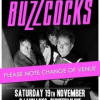
PUNK rock pioneers Buzzcocks' gig in Dunfermline will now be at PJs, switched from Velocity with the original tickets still valid. Guitarist and vocalist Steve Diggle has been speaking to the Press about his 35 years with the iconic band. He talks about the Sex Pistols / Buzzcocks gig in Manchester which marked the birth of punk, breaking new territory in Chile recently in front of 3000 fans, what he thinks of the X-Factor generation and his mate Kurt Cobain. Steve's interview will be in the Press next week. Buzzcocks play PJ Molloys on Saturday 19th November. Top
Modern Faces launch debut EP with hometown gig
(The Dunfermline Press - Thursday, 25th March, 2010) by Gary Fitzpatrick DUNFERMLINE band Modern Faces have made a big impact in their short time together, earning the praise of some top names in the music business such as Alan McGee and former Oasis guitarist Bonehead. Now they are set to launch their debut EP with a hometown gig at Velocity next Saturday (3rd April) which is well on its way to being a sell-out. Since forming a year past Christmas, the group has supported acts such as Sergeant, The Law and the Complete Stone Roses and are now ready to grab centre stage. They have already impressed Alan McGee, the man who discovered Oasis at King Tuts and later managed The Libertines.
He organises gigs in London and Manchester clubs and has had the band appearing at both. Modern Faces, who rehearse upstairs in the Bruce Tavern, have a long list of influences including The Beatles, Paul Weller, Small Faces, The Who, The Kinks, Ocean Colour Scene, Kasabian, Stone Roses and The Verve. Looking ahead to Velocity, lead singer Monty told the Press, "This time, it's all about us. "As a band I think we've got a bit of attitude and a bit of spark that's maybe missing from the music scene just now. "We've played all across Scotland and Fife has got one of the best music scenes at the moment. "Edinburgh's not great, Glasgow's okay and Dundee was good a couple of years ago but Fife is where it's happening just now. "We've already sold over 650 tickets for Velocity and we're hoping we can sell it out. "There's not many unsigned bands could attract nearly 900 people to a gig." Manchester band The Vortex, with Bonehead, will be coming to Dunfermline for a second time to support their friends. Monty said, "We didn't ask them to come up, they offered to do it and that says a lot for them." The groups first played on the same bill at McGee's Death Disco club night in London. "It was just a fluke that The Vortex were playing that night," Monty explained.
"They watched us and said we were hot and said they'd help us. "After that we went down to Manchester to support them at Alan McGee's new club night there. "We're still learning all the time and our songs have improved a lot. "We wanted to raise the bar. We'd sold out PJs so this time we went for Velocity. "You've got to set your sets high. "We feel the music's good enough and you've got to get out, let the right people hear it and get a bit of luck. "It's about making the right connections and learning from people who have been there and done it, like Bonehead." The band will go on a tour of Scottish dates to promote the four-track EP and hope to earn prestigious slots at this summer's festival season. The new tracks include "See How They Run', 'Break Off' and 'Other Side of Tomorrow'. An after-show event is being held at PJ's featuring two bands, Revival and the Manikees. Top
Reverend prepares to give Velocity sermon
(The Dunfermline Press - Thursday, 4th March, 2010)
by Gary Fitzpatrick JON MCLURE brings his band Reverend and the Makers to Velocity for an eagerly anticipated gig on Saturday - and then afterwards in a nearby car park. Jon, AKA the Reverend, is one of the most outspoken front-men in music, delivering fire and brimstone sermons on a range of controversial issues which most of his contemporaries prefer to duck. He has gone on TV to oppose the BNP, is heavily involved in Love Music Hate Racism, criticised the war in Iraq and has called on other bands to stop navel-gazing and take a long hard look at the world around them. He has just returned from Ethiopia, where he and other musicians went to an event organised by Blur singer Damon Albarn. However, too much politics leaves anyone with a thirst for a good time and Jon, a friend and collaborator on several projects with fellow Sheffield mates the Arctic Monkeys, is planning to have a party in Dunfermline. Jon told the Press, "I've done my political bit for now. "There's only so much one person can do and now I'm looking forward to having some fun on this tour.
"Fun is what it's going to be all about. "I'm a musician and I have to get back to concentrating on that for the moment." After playing in front of huge audiences last year supporting Oasis on the final tour before their infamous bust-up, Jon is looking forward to getting back to the grassroots. "We've played some really big tours over the last year supporting Oasis and Kasabian but personally I like to do gigs at smaller venues, not just these huge arenas," he said. "Some of the best gigs we've had are in places like Aberdeen, Stockton-on-Tees, Wakefield and I find people connect with our music more at smaller venues. "We're playing in Carlisle, where I have relatives, and I take it as a great honour to play there. "I'm also really looking forward to Dunfermline and I'll be playing at a car park near you soon." Some of Jon's strongest criticism has been for those big name stars who have only found their voices to speak out about an issue directly affecting their own pockets, namely illegal downloads. "Lily Allen gets her t**s out in GQ then starts going on about illegal downloads," he argued. "With all the things that's going on in the world, the only thing she's got to say is about some kid sitting in their bedroom in Dunfermline or wherever downloading 'Smile'. "Muse as well. These bands are playing arenas and stadiums like Wembley. "They should shut up and just count their money." This gig is yet another sign of Dunfermline being now firmly established on the UK music circuit and promoters Weekend Revolution deserve great credit for enticing another top act. The only downside for local music fans is that the Skids re-union gig was scheduled for the same night at the Alhambra. However, there were no hard feelings from Jon who said, "The Skids were a great band. "We could do with something coming along today in the same way that punk did in the '70s. "Music needs a shake-up so we need more bands like The Skids coming through now." Reverend and the Makers are appearing at Velocity on Saturday, supported by local band Crayons. Doors open at 7.30pm and tickets are £12. Top
Mancunian four-piece play Dunfermline's Velocity The Dunfermline Press
30th October 2009 MANCUNIANS Twisted Wheel play White Riot@Velocity, Dunfermline, as part of a headline tour this Sunday. The four-piece released their critically acclaimed debut album earlier this year on Columbia Records. The band will also support Paul Weller in November as part of the former Jam man's UK tour and have already played with the likes of Oasis, Ian Brown, Friendly Fires and Kasabian. Support comes from Val Verde and the upcoming Crayons. Tickets £7.50. Over-14s (under- 16s to be accompanied by an adult). Doors 7pm.
The Kinema Evolution
(The Dunfermline Press - Thursday, 14th May 2009) by Ghoulz NOW in its 71st year, the fascinating story of the ‘Kinema Ballroom’ has its origins in the opening of a new cinema – the Palace Kinema – in Pilmuir Street on 23rd December, 1915. Coincidentally or conveniently, exactly 23 years later on 23rd December 1938, its owners, The Palace Kinema (Dunfermline) Ltd, opened the city’s first purpose-built dance hall, the Kinema Ballroom, with its original frontage at 19 Pilmuir Street. The Kinema Ballroom has played a huge and varied role in the lives of so many in Dunfermline, in Fife and indeed all parts of Scotland and the UK since the opening ceremony was conducted by Provost James Hoggan and his wife. On the subject of the then increasingly popular activity of dancing, he said, “The public will have ample opportunity of engaging in this healthy exercise in beautiful surroundings and by the careful discriminating employment of the latest features of the modern dancehall, a fine spring floor and the very latest in lighting effects.” So, cutting-edge lighting effects in the Kinema are nothing new. More of this later! Evidence that the Kinema Ballroom – or ‘The KB’ as it was soon to be known locally – proved to be an instant success can be found in the weekly Dunfermline Press advertising which soon carried a notice to ask patrons to respect the ‘House Full’ sign! No doubt many locals and Royal Navy sailors on shore leave from Rosyth Dockyard, only five miles south, were disappointed to be refused entry to the new hall, having read the variety of enticing advertising slogans on offer. Described in its early advertising variously as “The Dancer’s Mecca,” “The Rendezvous of all Discerning Dancers” and “Fifeshire’s Super Dance Hall,” patrons were invited to “Follow the Dancers” and most famously to “Dance and be Gay the KB Way” long before the word’s contemporary application! The fun was short-lived, however, when one year later, on Saturday 30th December 1939, the doors were closed to dancers for 19 months. The reason for this remains a mystery given the hall’s popularity but one may speculate the closure was imposed as part of the early war effort, perhaps to billet some of the many foreign soldiers we were host to at that time Perhaps you know the facts and can tell me? In any case, the dancers were back on Wednesday 30th July 1941, and the hall was packed almost every night thereafter with dancers who were ‘kept in line’ by popular host, Cherry Grant. This was the era of American Swing and the Big Band / Jazz sound, so capably reproduced by local bands such as those led by Billy Collis or Jack Richardson and, of course, The Top Notchers, who were by far the most prolific performers at the Kinema, having played on some 3779 occasions between 1946 and 1958! The hall also hosted many talent and beauty pageants and wrestling matches too, but gradually by the early sixties, traditional ballroom dancing had given way to rock’n’roll and the first beat groups.But in 1963 ‘Mr. Kinema Ballroom’, Cecil R Hunter, famously declined a booking for The Beatles! … Ouch! It soon became clear that the venue was simply bursting at the seams and so in 1964 the Kinema’s footprint was extended out to the two-storey frontage we all know now in Carnegie Drive. This helped to accommodate every genre of live act on the road from then to now, such as: The Hollies, The Who, The Kinks, Cream, The Bay City Rollers, David Bowie, Deep Purple, Genesis, Elton John, Billy Connolly, Slade, Thin Lizzy, Cliff Richard, The Clash, The Stranglers, Ultravox, The Damned, Iron Maiden, The Supremes, Leo Sayer, Atomic Kitten, Boney M, Boy George, The Three Degrees and, of course, locals such as our own Barbara Dickson, The Skids, Big Country, The Rezillos and, most recently, The Draymin. The saddest event in the Kinema’s history occurred on Saturday 9th September 1967, when a 17 year-old boy from Lochgelly was assaulted and murdered on the dance floor by two Lanarkshire boys of similar age who were later sentenced to life-imprisonment. To keep pace with contemporary tastes, in 1980 the dancehall/venue was transformed – at a cost of £250,000 – into one of Europe’s most innovative and sophisticated discothèques and renamed Night Magic. It was claimed that there were so many possible lighting permutations, it was impossible to see them all in one evening and news reports from the opening night suggested that some of the £2 tickets changed hands for £20! In 1988, £750,000 was reputedly spent to restyle the hall again into Hollywood Boulevard and, by 1990, it was voted ‘Scottish Disco of the Year’ by Disco Mirror. Despite hosting six sell-out recordings of the popular TV show ‘The Hit Man & Her’ and landing first place in the Disco Club & Leisure International ‘Club Image Award,’ Hollywood Boulevard closed its doors for the last time quite suddenly on Saturday 9th November, 1991. Seven years and £1m later, it re-opened without the balcony at the south end but with a new VIP suite and lift and was re-named The Ballroom, though local opinion of the external pink/purple colour scheme was divided! The Ballroom and Sinky’s bar next door was bought by the Stirling-based Castle Leisure Group in July 2007, and after an extensive programme of modernisation, re-opened on Wednesday 13th December, 2007 as ‘Velocity’ where 1100 clubbers can enjoy the most contemporary of discothèques with regular themed entertainment. Probably their biggest success story so far has been that of the ‘Recess’ 12 to 16yrs events, where parents are happy to send their youngsters in the sure and certain knowledge that they’ll come home happy and safe from a club which was recently awarded the only Best Bar None Gold award in Fife by a committee of senior police and fire officers. But the evolution continues as in 2008 the live music venue emerged once more, popularly retro-branded 'Kinema Live', under the careful guidance and enthusiastic leadership of operations manager John Gallacher and general manager Ritchie Blackwood, who are determined to return the venue to its glory days when all the latest bands played there regularly on their way to the top of their game. So far, Kinema Live has hosted gigs by bands such as The Bluetones, The View, The Music, The Complete Stone Roses, Attic Lights and, most recently, the triumphant return of The Rezillos after an absence of 30 years. Nostalgia also now plays a huge part in current entertainment trends, with the popularity of tribute bands and re-formed acts going back out on the road to meet fans old and new. At a flexible 850 capacity for live acts, the Kinema is a perfect size for this market, being intimate enough to let fans get up-close, yet large enough to attract popular well-known performers without the risks associated with that of a larger venue. When I first met the new owners, I expressed the desire for Velocity/Kinema Live to be a favourite hang-out for both my teenaged daughter and for music lovers like me. Well, quite frankly...“Mission Accomplished,” and with six times more gigs than Glasgow’s Apollo so far, here’s to continued success with live bookings and events in 2009 and beyond. Every conceivable detail of the Kinema’s history can be found at: www.KinemaGigz.com – The Whole Story of the Kinema Ballroom Dunfermline. Top
Velocity Changes Direction
CLG Press Release 09/01/09 After considering the last year and the venue’s strengths and successes we have decided that Velocity will take a new direction for 2009 with the venue becoming event led only. This essentially means we will only open for events such as Live Gigs, Dance Events, and U16s etc and no longer operate as a 'typical nightclub'. This will allow us to focus solely on this area and spend more time in working with promoters and agents to bring the best entertainment to Dunfermline and enhance Velocity’s already excellent reputation for event based entertainment. We are excited about this new direction and with confirmation already of acts such as Styles & Breeze (U16s), Eddie Halliwell, N-Dubz (U16s), Hue and Cry and with many more live gigs in the pipeline; we have much to look forward to. It is also our aim this year to establish Velocity fully as a live venue and bring some the of the UK’s best acts to Fife. Watch this space for confirmation of more events and thanks to everyone who has supported us throughout our first year in Fife :) Top
Velocity Wins Gold!
(CLG press release & Fife Constabulary Notice - November 2008) 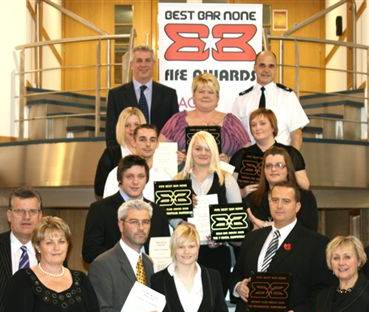
Velocity was confirmed as the ONLY CLUB in FIFE to collect the coveted GOLD Award at the Fife Best Bar None awards in Glenrothes. Velocity beat off a host of other venues to claim the award at the presentation ceremony on 11th November 2008.
The Velocity Team are delighted to collect this prestigious award at the first time of entering and will continue to ensure they operate a safe environment for customers to relax and enjoy their evening.
Fife Police have launched the annual awards scheme to recognise and reward town centre licensed premises in Fife which are run to the highest standards.
The 'Best Bar None' Scheme is also supported by Fife Fire and Rescue Service, Fife Drug and Alcohol Action Team, Fife Council’s Environmental Services, Scottish Licensed Trade and BEDA (Bar Entertainment Dance Association) Scotland.
The scheme was developed to encourage best practice in public safety and customer care.
It is divided into gold, silver and bronze categories. Each establishment which enters is inspected and judged on a range of criteria including the new Licensing Bill, prevention of crime and disorder, public safety, the policy on drunkenness and staff training.
“Best Bar None is a coveted award, wholly recognised by Fife Police and the licensing board. To members of the public going out in Fife, the award represents quality and safety. Top
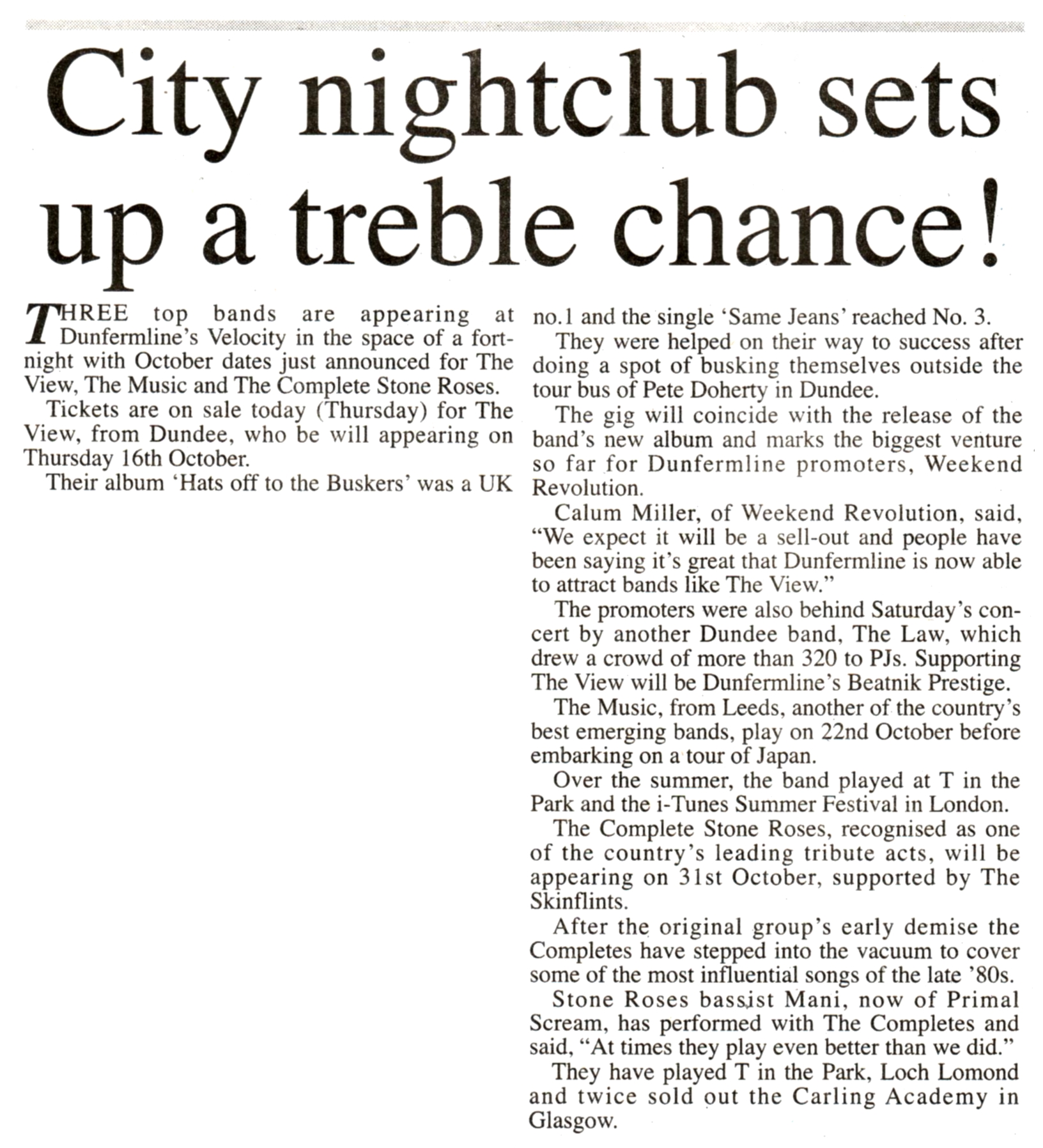
City Nightclub Sets up a Treble Chance!
(The Dunfermline Press - Thursday, 4th September, 2008) 
Top
Star band lined up to enhance venue's reputation
(The Dunfermline Press - Thursday, 21st August, 2008) OCEAN Colour Scene, one of Britain’s most popular live bands, are coming to Dunfermline. The group will play at Velocity, the former Ballroom, during the festive season. Tickets are now on sale for a band who were one of the main attractions at the recent Loch Lomond Festival and regularly sell out venues across the world.
They will appear in Dunfermline on Sunday 14th December on a Christmas tour which will also take in the Glasgow Barrowlands and Hammersmith Apollo. Velocity operations manager John Gallacher told the Press, “It’s great news for the venue and also for Dunfermline to attract a band of the stature of Ocean Colour Scene. “Their Christmas concerts have become much anticipated over the years and it should be a fantastic night for everyone who makes it. “It’s also good that our name is starting to appear on tour schedules alongside the likes of the Barrowlands.” The Birmingham band came to prominence during the Britpop era and their album Moseley Shoals produced four hit singles including ‘Hundred Mile High City’ and ‘The Riverboat Song’. The group appeared on the bill alongside Oasis at Britain’s biggest ever concert at Knebworth in 1996 and played three sell-out gigs at Stirling Castle two years later.
The concert is a major coup for Velocity, which as the Kinema Ballroom was one of Scotland’s most famous venues for live music through the ’60s and ’70s. Castle Leisure Group vowed to bring back bands and has formed a partnership with Ironworks in Inverness and Fat Sam’s in Dundee to attract top names to areas which are often seen as off rock music’s beaten track.
“I’d say Ocean Colour Scene must be one of the biggest bands to come to Dunfermline for a good few years,” said Mr Gallacher. Tickets for the concert cost £22.50 and are available through ticketweb.co.uk.
Meanwhile, top dance DJs Darren Styles and Mark Breeze will be the star attractions at the next Velocity under-16s night. The first event for youngsters was attended by over 500 people and the initiative is supported by Fife police. Aimed at the 12-16 age group, tickets for the event, to be held on Saturday 30th August, cost £6 and all those attending will be breath-tested to make sure they have not been drinking. Top
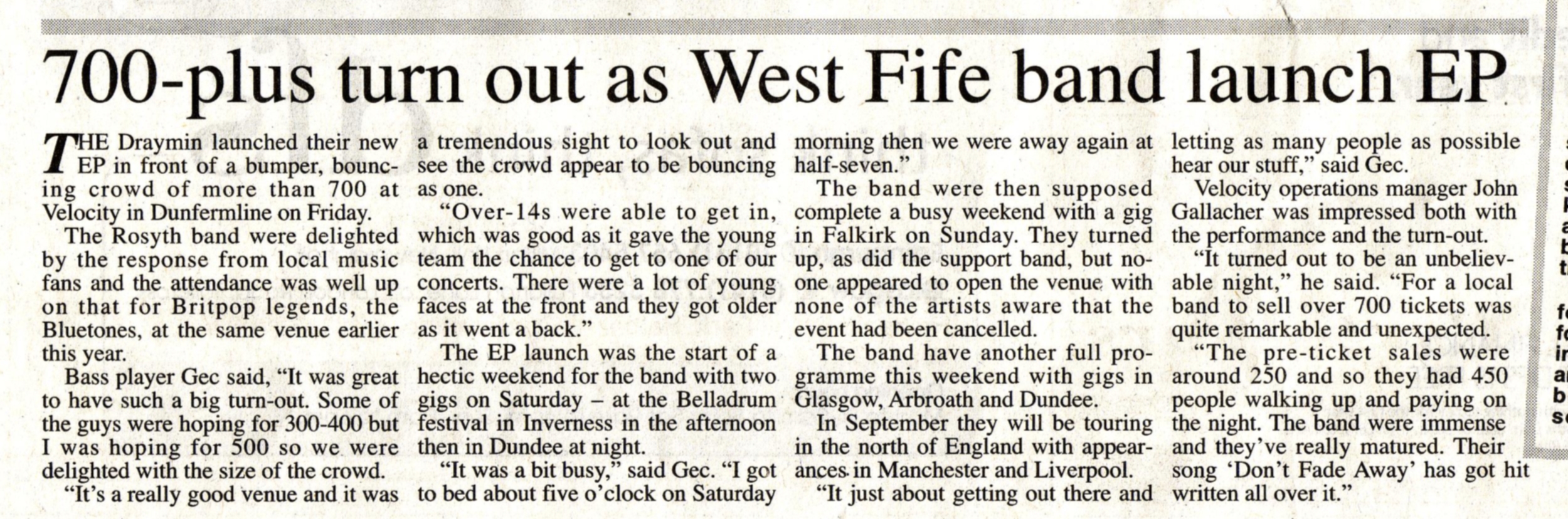
700-Plus Turn Out as West Fife Band Launch EP
(The Dunfermline Press - Thursday, 14th August, 2008) The Draymin almost sell-out Kinema Live! 
Top
Forth One host the 1st Velocity under 16s Disco 
Approximately 500 young people enjoyed the first ever Forth One under 16s event to be held outside Edinburgh, at Velocity on Friday 20th June. Hopefully this will be the first of many alcohol-free events parents can be confident in. Top
Why the Ballroom said Hello, Goodbye to The Beatles
(The Dunfermline Press - Thursday, 24th January, 2008) by Gary Fitzpatrick Live Music returned to the old Kinema Ballroom at the weekend when The Bluetones played Velocity. Reporter Gary Fitzpatrick looks back through the annals of the city's famous venue to the time when the biggest band in music history came within an ace of playing there. THE return of live music to the former Kinema Ballroom has sparked interest in the great names who played there in its heyday and renewed debate over just why Dunfermline missed out on seeing The Beatles.
In 1963, the year the Fab Four made their big breakthrough, they made approaches to play the Ballroom but a concert never materialised. In the event, the band’s only Fife appearance was at the now-demolished Carlton Theatre in Kirkcaldy in October ’63 .
The question that has exercised Dunfermline music fans ever since is, “What happened to keep John, Paul, George & Ringo from coming here?” The man who could provide the answer, the late manager Cecil Hunter, known to generations of revellers as ‘Mr Kinema Ballroom’, died in 1993.
However, the Press embarked on its own ‘Magical Mystery Tour’ through the myths, fables and rumours to try to get to the truth.
Colin Gourlay (aka Ghoulz) founder of the highly-rated KinemaGigz web site, believes it may have been a case of Cecil’s opera singer wife “not liking the look” of the Liverpool mop tops. “The accepted version locally was always that the Ballroom manager Cecil Hunter wouldn’t pay £350 for a beat band, which were quite new at that time,” said Colin. “However, Cecil’s granddaughter contacted me and then I spoke to John, Cecil’s son. “He said that the reason The Beatles didn’t come to the Ballroom was that Cecil’s wife, Sally – who seems to have ruled Cecil’s head – didn’t like the look of them when she saw them on television.
“There are other people, however, who don’t agree with this version. Trevor Forster, of The Falcons, who played at the Ballroom in the ’60s and was close to Cecil, says that it was simply a case of Cecil not wanting to pay the fee. “Another factor is that The Beatles manager Brian Epstein decided at that time that they would stop playing ballrooms because some kids had been badly injured because of crushing. “The Kirkcaldy concert was initially to take place at the Raith Ballroom but was moved to the Carlton Theatre, a seated cinema because of these safety reasons.”
The Falcons had the residency at the Ballroom in the early ’60s and Trevor said, “I was there at the time and from speaking to Cecil it was simply a case of them wanting too much money. “It was £800 they wanted and Cecil wasn’t prepared to pay that. “The only big names at the time who didn’t come to the Ballroom were The Beatles and the Stones and in both cases it was down to money. “That was late ’62, early ’63 and by the time they played at Kirkcaldy they were too big for anyone to afford. They must have pre-signed a contract for Kirkcaldy before they became so big and that’s how they went there.”
Local entertainment historian Brian Nobile believes he has the definitive version of events having interviewed Cecil Hunter on the topic. “I know exactly what happened because I got it from the horse’s mouth when I interviewed Cecil for hospital radio,” he said. “The Beatles came to Scotland twice in 1963 and it was on the first occasion in January that Cecil was offered The Beatles. “A lot of people think it was on the October tour, when they went to Kirkcaldy, that they could have come here but that’s not the case. “The reason for it not happening was because the police would not grant permission on safety grounds.
“You also have to remember that the Ballroom was a lot smaller at the time, only holding about 250. It was not until 1964 that it re-opened with three or four times that capacity. “It’s also true that Cecil went to his grave thinking that all pop bands were rubbish. “He had been a big band leader himself and his personal preference was for people like Kenny Ball and Acker Bilk. He also brought the televised ‘Come Dancing’ programme to the Ballroom.
“At the time The Beatles were making their breakthrough, Cecil had only been putting on middle of the road artists like the Barron Knights and Anita Harris. “He would quietly shake his head sometimes and couldn’t understand the huge queues to buy tickets for bands like The Who and Cream with Eric Clapton. “Even though The Beatles didn’t come, the other bands in Brian Esptein’s stable like Gerry and the Pacemakers and Freddie and the Dreamers appeared at the Ballroom.”
Meanwhile, growing interest in the venue’s history is reflected in the popularity of the KinemaGigz website which has received a remarkable 255,000 hits since its launch in September 2006 and is currently listed at No. 9 on the Top Scottish Websites Directory.
“The interest continues to be amazing,” said Colin, a Draughtsman at Rosyth Dockyard. “I was contacted by someone whose band had played at the Ballroom in the ’60s and he had seen the website. “He noticed we didn’t have any background on the group and so he spent an hour on the phone giving me unique material. “Then another band member got in touch to ask me about his old friend who he hadn’t seen for about 40 years. “It ended up they met up again and their wives met for the first time. “ It was great that the site could help in that way.”
Not surprisingly, Colin (46), is delighted to see the venue again being used for live music. “It’s tremendous and I hope it’s the start of another successful chapter in the story. “It’s another sign of Dunfermline recovering after a period when it was on its knees.”
Live music returned to the venue, now named Velocity, on Saturday when Rosyth band The Draymin supported Britpop band The Bluetones. Top
Live music returns to Velocity
(The Dunfermline Press - Thursday, 24th January, 2008) by Gary Fitzpatrick BOSSES at Velocity, the former Ballroom, were delighted with the response to live music returning to the venue on Saturday night. A crowd of over 600 saw local band The Draymin support indie favourites The Bluetones.
Operations manager John Gallacher said, “We’re very happy with the way things went. We outsold the venues the Bluetones played in Edinburgh and Glasgow. “The bands really liked the venue and found the audience warm and welcoming.
“We’re now planning to build on this and bring other top bands to Dunfermline.”
One artists who will not be coming to Velocity is X-Factor winner Leon Jackson, who pulled out of the venue’s Hogmanay party. There had been plans to reschedule the gig but these have now been dropped. Top
Rival emerges for city-centre revamp
(The Dunfermline Press - Thursday, 24th January, 2008) THE OWNERS of Dunfermline nightclub Velocity have dismissed as “pathetic” a mystery group’s proposal to demolish the premises as part of a £20 million revamp of Carnegie Drive.
Castle Leisure Group owns the former Ballroom and said plans to build a supermarket, car park and offices just yards from the site of a proposed Tesco store were a “flight of fancy”.
Managing director Paul Smith hit out at the secretive local businessmen for tabling plans to knock down buildings they don’t own without even talking to Velocity bosses.
“This is completely risible,” he said. “It’s a pipe dream by some local businessmen who are miffed at the thought of Tesco coming to town. “Far be it for me to pour the cold water of reason on their dream but they haven’t got this property owner’s consent and there’s no chance of that happening.”
A spokesman for the Town Centre Regeneration Company, which says it wants to “save the town centre”, said they wanted their identities kept secret so the plan would be “judged on its own merits”.
It includes turning the fire station into a pub/club, building a supermarket and food court on the adjacent car park and erecting a multi-storey car park and four-storey office block on the other side of the station. But it also includes demolishing 9-43 Carnegie Drive, 11-19 Pilmuir Street and 14-14a Chapel Street to make way for a two-storey retail unit.
However, not all the buildings or land are owned by the company – Fife Council owns the fire station and car park while Castle Leisure Group are adamant they’ll never sell.
Mr Smith hit out, “They wouldn’t have enough money to buy Velocity and it’s not for sale anyway. Nor would they have the legal remit to buy it as only the council can do a compulsory purchase order.
“It’s not a real prospect, it’s a PR stunt to try to derail the Tesco store and it won’t work. It’s pathetic.” The long-awaited planning application for a Tesco store has been delayed over access and parking issues which has opened the door for the rival application to get in first.
The Town Centre Regeneration Company made no bones about wanting to get in ahead of the supermarket giant. Their spokesman said, “There is major concern among town centre traders over Tesco’s proposed plans to build a massive 8023 square metres store on the site of what was Thomson’s World of Furniture.
“Given this could sell everything from food and clothes to large electrical goods, it would be in direct competition with the existing town centre.” He said the new proposals would provide “an excellent fit and better balance with the town centre, enhancing its overall retail base and providing much needed central office space”.
“They also provide a basis for us to fight to save the town centre as we know it because if Tesco is given planning permission outside the town centre it will divert trade away from the current retail businesses based there,” he added.
A company statement said there was “considerable support” for their plans, which were “produced following consultation with local businesses to ensure that the development complements the activities of existing town centre traders”.
Property developer Alf Stewart, who owns some of the properties in question, said “I’m retired. I received neighbour notification about this but I’m not involved. “From what I’ve seen it looks like a very good project but that’s all I can say about it.
“I’m happy to co-operate with anyone that takes Dunfermline forward and I’m sure Fife Council will support it.” A spokesman for Tesco said the company knew of the rival application but wished to make no comment.
On their own plans, he said, “Our application has been with Fife Council for a while now but we’re working with their officials to tweak elements of the design.”
It is anticipated the Tesco application, which has dragged on for some years, could come up for consideration at March’s planning committee. Councillor Willie Sullivan, who owns Cafe Fresh and is chair of the City Centre Business forum, said, “It’s good that there is competition to site retail and supermarket units in Dunfermline and we should welcome as many applications as possible.
“It bodes well that people are actually competing to locate here as before we struggled to attract businesses into Dunfermline.” Dunfermline and West Fife MP Willie Rennie added, “The secretive nature of the proponents of this plan and their desire to remain anonymous is intriguing but we’ll have to uncover them at some point so we can engage in a proper discussion.
“Overall it’s great that so many people are interested in Dunfermline town centre and it shows there’s huge potential here.” Michael Maloco, of Dunfermline Town Centre Management, said, “It would appear to be very speculative but we don’t know much about it at this stage. “Is this really someone looking for meaningful development in the town?
“There will always be competing applications coming in, this one would compete with Tesco, and we’d have to look at it on its own merits but we need to know more first.” Businesses on the south side of Carnegie Drive were all sent recorded delivery letters about the plans.
Mo Ahmed, branch manager of Swinton at 11 Carnegie Drive, said, “We lease this and it would obviously affect us as it would make us homeless and we’ve been here 15 years. “But we’ve heard these rumours for at least five years, there have been plans before so whether it goes ahead is totally different. “If we have to relocate we will but this is a good spot for us. “Overall, for the town, it might be good but there’d be a lot of disruption in the short term.”
John Baillie, a self-employed senior stylist at Greens The Hairdresser at 43 Carnegie Drive, said, “It’s the first I’ve heard of it and I think there’s enough going on in Dunfermline as it is. “I can’t see them getting support from other businesses and I don’t know if anyone would want a new nightclub here either.”
Colleague Claire Paterson added, “We work for ourselves so we would lose our job and we’d lose a good location too.” Top
X-Factor winner Leon pulls out of city gig
(The Dunfermline Press - Thursday, 3rd January, 2008) 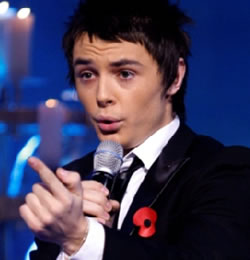
by Gary Fitzpatrick X-FACTOR winner Leon Jackson pulled out of his sell-out Dunfermline Hogmanay concert just hours before he was due to go on stage. The singer issued a statement saying he was suffering from tonsillitis.
He was scheduled to open the Edinburgh Hogmanay street party, then bring in the bells at Dunfermline’s Velocity nightclub before finishing the night off with another appearance in Falkirk. At around noon on Monday he pulled out of all three events saying, “I’m really poorly.” “I’ve had to cancel because I’ve got tonsillitis.” “It just came on two days ago and I’ve been trying to doctor it up.” “My tonsils are the size of golf balls.”
It was widely reported that he had been celebrating his 19th birthday on Sunday with a private party at an Edinburgh nightclub. The singer is currently still UK No. 1 with his debut single, ‘When You Believe’. Velocity operations manager John Gallacher said on Monday afternoon, “Everybody’s very disappointed because interest from the public has been amazing.” “The phones have never stopped ringing for days.” “However, these things happen and we’ll still have a great night for Hogmanay.” “We look forward to Leon’s gig being rescheduled for later in the month.” Top
X Factor winner to sing at city nightclub on Hogmanay
(The Dunfermline Press - Thursday, 27th December, 2007)
by Gary Fitzpatrick LEON Jackson, the X-Factor winner and now the Christmas No. 1, will be bringing in the New Year in Dunfermline at Velocity’s Hogmanay party. The nightclub has pulled off a spectacular coup by securing Leon’s first live public performance back in Scotland since his shock TV win. The former shop assistant from Whitburn became the first Scottish winner of the hugely popular talent show, with an audience of more than 12 million watching the final. On his way to the title, his highlights included singing a duet with Kylie Minogue and he was part of her sister Dannii’s team. He won the race for the coveted Christmas No. 1 with ‘When You Believe’ hitting the highest weekly total of downloads for any song in the UK in 2007.
As if Leon does not have enough to celebrate at the moment, his birthday is on Sunday when he turns 19. The next day he will be making a TV appearance during the evening before heading for Dunfermline with tickets already in huge demand.
Leon will be singing four numbers and will be on stage for the bells with his mum Wendy in the audience. It promises to be a special night for the family at the end of an amazing year for Leon. When 2007 started, he was working in a Livingston clothing shop and had just started singing in pub karaoke competitions. Velocity operations manager John Gallagher said, “As you would expect, Leon’s had lots of offers to appear at other venues so we’re delighted he’ll be making his first appearance since winning X-Factor here. “He’ll be meeting his fans, singing some songs and maybe we can get him to do a Scottish one for the New Year coming in. “Having him coming here days after winning the X-Factor then taking the Christmas No. 1 is great for Velocity and great for Dunfermline.”
The former Ballroom re-opened its doors a fortnight ago and John said, “The opening has gone very well and it’s been very hectic, as you can imagine. “We are delighted to exclusively secure Leon for both these shows and a night to remember is certain for those lucky enough to be there. “Demand has been incredible and we are looking forward to a very special night.”
To cater for Leon’s younger fans, the event will be open to over-14 year-olds. Under-16s must be accompanied by an adult. The star will be meeting fans and signing autographs after his performance. Top
by Gary Fitzpatrick Some hot acts in the music world are heading to Dunfermline this Christmas to mark the opening of Velocity nightclub, formerly the Ballroom. The new-look club will re-open its doors on Thursday 13th December for a weekend of partying including the visit of top Radio One DJ Dave Pearce on the Sunday.
Other dance events already confirmed are Hed Kandi on 29th December and Slam the following night.
Female fans of Hollyoaks will be looking forward to a personal appearance by Jamie Lomas who plays bad boy Warren Fox.
He will be at Velocity on 27th December and also in the plans for the near future is an appearance by a star of the current X Factor series.
Live music is a main part of the entertainment programme and talks are still going on to try to land a top band for a festive gig.Admission over the launch nights are by invitation only and not surprisingly these have all been quickly snapped up. However, Dunfermline Press readers will have a chance to win the last tickets available in the 6th December issue of the paper.Top
by Gary Fitzpatrick THE Ballroom in Dunfermline is set to re-open in time for the festive season, under new management and with a new name – Velocity. The new owners of the famous nightclub, where generations of West Fife couples have met, want to attract a wide audience by offering a range of events, including live music. One of the firm’s other venues, Fubar’s in Stirling, regularly attracts top names – Franz Ferdinand played there recently – and has now linked up with DF Promotions, who stage T in the Park. As the Press reported in July, the nightclub has been taken over by the Stirling-based Castle Leisure Group, which owns some of the country’s top clubs. The company closed down the Carnegie Drive nightspot for extensive renovations and it is expected to re-open early in December. The new owners are keeping to their promise of reviving the venue’s live music tradition, which has seen concerts by David Bowie, The Who, The Clash, Elton John and Thin Lizzy. CLG operations manager John Gallagher said, “We’ve opened up the interior of the building more and it can be used as a nightclub, live music venue, for product launches, fashion shows, a wide range of uses. “In the six months we’ve had live music at The Fubar, it’s really taken off in a big way and we now have a tie-up with DF Promotions who do T in the Park". “When we started I wouldn’t have thought we could have attracted a band like Franz Ferdinand to The Fubar but we’ve made good contacts with agents and bookers". “Dunfermline should see the benefit of that and can piggy-back on The Fubar so that when we’re trying to get a band to come to Scotland we can now offer them two dates instead of one.” A Bebo website for Velocity had 550 hits in its first three days and the nightclub’s opening weekend will be free entry for those who can get their hands on tickets, which will be given away through promotions. “Excitement is building and many local people will know us already from Fubar’s and the City nightclubs in Perth and Edinburgh,” said Mr Gallacher. “We’re planning a series of special events in December so it’s a case of watch this space.” CLG managing director Paul Smith has also vowed to end cheap drinks promotions at the club. He told the Press after taking over, “The situation with drink promotions fuelling drunkenness and bad behaviour in Dunfermline is the worst I’ve seen in Scotland.” Mr Gallacher said, “We’ll have sensible bar prices and sensible admission charges. It’s true we were shocked about the £8 or £10 entry, drink-all-you-want nights. “We’re looking to attract a wide range of customers. It won’t be a case of just concentrating on dance music or pop music. There will be different nights for different audiences.” The new-look club will provide 50 part-time jobs, already has a general manager in post and is looking for two more full-time staff. After the festive season is over, the club will initially open from Wednesday to Saturday with some special events on Sundays. Top It’s last orders for cheap booze offers
(The Dunfermline Press - Thursday 26 July 2007) by Gary Fitzpatrick BALLROOM: New owner to ban promotions and says city’s a shocker for drink-fuelled bad behaviour. THE new owner of the Ballroom has been shocked at the level of “drunkenness and bad behaviour” in Dunfermline fuelled by cheap drink promotions. Paul Smith, joint managing director of the Stirling-based Castle Leisure Group (CLG), said the situation in Dunfermline was the worst he has witnessed in the U.K. The company closed down the Ballroom this week for the time being to assess the local market before drawing up plans for it. No date has been set for its re-opening but it will be some time before the end of the year. The new look could mean a return of some live music to a venue that once hosted Elton John, David Bowie, Cream and many other legendary acts. One definite change will be an end to cheap drink promotions at the Ballroom where customers have been able to pay £12 admission and then enjoy ‘free’ drinks for the rest of the night on Wednesdays and Thursdays. CLG owns some of Scotland’s top venues, including the City nightclubs in Edinburgh and Perth, Fubar’s in Stirling and Rosie’s in Falkirk. It also has the Sportsters chain of bars, Cheers nightclub in Dumbarton and a new City club is scheduled to open in Falkirk later this year. “I’ve been in this industry for 26 years and the Ballroom is an institution,” said Mr Smith. “It’s had a reputation as a top nightclub across Scotland. “It’s quite sad to see how things are in Dunfermline at the moment. I was shocked to see drink promotions with all-night drinking for £10 and we hear cases of £8 and even £6. “I don’t think that serves Dunfermline well in terms of being socially responsible". “The situation with drink promotions fuelling drunkenness and bad behaviour in Dunfermline is the worst I’ve seen in Scotland.” Indeed, Mr Smith’s work with the Bar Entertainment and Dance Association (BEDA) takes him throughout the UK and he says he has not come across a situation as bad as in Dunfermline. However, Mr Smith is sure that both Dunfermline and the Ballroom can look ahead to better times – even though the famous nightspot may not be called that by then. “We’ve still to decide about the name and we’re right at the start of the process of looking at the local market,” he told the Press. "It’s a huge venue with a great history. The website about its gigs shows it’s had more bands there than the Glasgow Apollo.” The issue of cheap drink promotions has been raised regularly in the past by West Fife councillor Gerry McMullan, a member of the licensing board and chair of the regulation committee. “For too long Dunfermline’s suffered from these cheap booze promotions where the aim seems to be to get as much drink down your neck then act like absolute morons,” said Mr McMullan. “It’s setting a terrible example to kids of 17 and 18 to encourage them to drink like this and it can be a terrible waste of young lives. “I understand the new owners of the Ballroom have a strict policy on things like drunks and bad behaviour and I welcome any initiative that will improve Dunfermline in this regard. “This is a great place but we’ve got to tackle issues like this and change the culture of binge drinking.” CLG was set up by Mr Smith and his brother Stephen in 1981 when they were both still in their teens and it now employs over 500 people. The firm bought the Dunfermline venue, which also includes the Sinclair Arms pub, from Kirkcaldy-based Dean Entertainment. The closure of the bar, previously known as Sinky’s, has upset Rosyth man Richard Finlay. He wrote to the Press to express his “anger and utter disbelief” that his favourite pub had closed. “All the local musicians used to meet up every Thursday for jam sessions, which went down extremely well. “We all enjoyed it immensely. I, for one, used to look forward to these weekly sessions and it was a good way of letting off steam. “Now that it has gone, where else are we going to go? However, there now seems to be some light at the end of the tunnel for music lovers like Mr Finlay as CLG stages live events featuring some of the country’s top bands at Fubar’s in Stirling and could soon be expanding that to the Ballroom. FIFE police have welcomed the Ballroom’s plan to ditch cheap drink promotions. Community Inspector Fraser Downie said has was “ delighted” to hear of the news and added, “This is an example of the kind of responsible approach we are keen to promote in all the town centres of Fife.” He continued, “The licensing industry is a competitive one and nowhere more so than in Kirkcaldy and Dunfermline, where I think many people would probably now agree with the concerns Fife Constabulary have made in the past about the ever-increasing number of licensed premises". “We are working hard with our colleagues in the licensing trade to promote safe and responsible drinking. “A growing number of licensees are coming to realise that, over the long-term, most of the paying public don’t want to be in the kind of environment that some of the more irresponsible drinks promotions can encourage.” Inspector Downie said the Ballroom was not alone in the city centre in starting to move away from this type of marketing and added, “I hope we can continue to work with the trade in the area to bring about a similar response throughout Dunfermline.” Top CLG Acquires Historic Fife Venue
(Official CLG Press Release 4th July 2007)
We are pleased to announce the purchase of "The Ballroom" in Dunfermline from Dean Entertainments.
Concluded Monday 2 July this latest acquisition for CLG adds a 1300 capacity venue to a stable of Scotland's best bars and venues. The legendary premises incorporates The Ballroom and Sinky's public house (operated under tenancy).
From an early dancehall through to the present day, The (Kinema) Ballroom has an impressive history, indeed so impressive is the history it has its own dedicated website (A Scottish Top 100 site) where the full rundown of previous events is listed.
For more info visit http://www.kinemagigz.com
This signals the start of a new era for the venue and the good people of Dunfermline...and we are delighted to be at the helm.
More info to follow.
When we were Skids
(The Dunfermline Press Thursday 15th March 2007) by Gary Fitzpatrick NOW a successful property executive, Bill Simpson still has fond memories of his wild punk days in The Skids, when he gloried in the stage name Alex Plode.
The revival in interest in the Dunfermline band has received another boost with the release of two albums celebrating their ’70s heyday.
This follows the accolade of U2 and Green Day covering ‘The Saints Are Coming’ for a high-profile charity recording.
Bill, now 49, has been talking to the Press about the days when The Skids stormed the charts with hits like ‘Into the Valley’.
The roots of the band were in Bill’s friendship with Stuart Adamson, then living in Crossgates, when both attended Beath High School.
“We liked the same music and Stuart had a band playing covers of Roxy Music, Bowie, Status Quo among others,” said Bill. “When the bass player left they asked me to step in even though I hadn’t pick up an instrument in my puff.”
In the punk era, of course, lack of musical experience was never seen as a barrier to getting involved.
Soon Bill and Stuart were playing gigs, often in RAF bases in the north of Scotland, and then had a spell in Amsterdam.
When they came back to Fife, they met up with Richard Jobson, who would go on to be The Skids’ all-action stage performer and distinctive vocalist.
“We didn’t know him but I think Stuart must have met him somewhere and he came along and the next thing he was our singer,” said Bill.
“We then put an advert in the Dunfermline Press, I think, for a drummer. We wanted them to know it was a punk band and so Richard put ‘Hippies need not apply’.”
Tom Kellichan proved he was up to the job and wasn’t a hippy, completing the line-up under his alias, Tom Bomb.
The band – all still in their teens – practised in an old building at Broomhead and afterwards enjoyed a pint in the Castleton bar but soon the lights of London were beckoning.
“Looking back, the success maybe came too quickly for us. Within a year of the band starting out, we were recording albums and appearing on Top of the Pops,” said Bill.
“We were a bit immature and perhaps didn’t realise about people being different and respecting each other. We drifted apart and I regret that.”
Having hit the heights so soon, Bill didn’t have the appetite for going back to starting up another band. “I thought ‘I’ve had my 15 minutes of fame’ and moved on.”
He turned his attention to property – rather than anarchy – in the UK and now has a successful career in Edinburgh but still lives in Dunfermline with his fiancee Tracy.
Over the years, his music background sometimes came up during conversations at work but Bill said colleagues “showed no great sign of interest”.
There was a one-off appearance on ‘Never Mind the Buzzcocks’ but it was when U2’s The Edge chose ‘The Saints Are Coming’, a favourite of his, to raise money for New Orleans hurricane victims, that a new generation of music fans started asking about The Skids.
“It’s humbling really for two of the world’s biggest groups to cover one of your songs. I think we now realise more than before that we inspired people with our music.
“I look back with pride on those great times. Stuart was a musical genius and it took the tragedy of his death to bring us back together to play in tribute.”
Thirty years on, Bill admits his memories are “getting a bit hazy” and certainly not up to the standard of the band’s fans who beat him in quizzes in The Skids conventions.
Tom Kellichan now runs a music bar in Tenerife and Bill paid him a surprise visit last year.
“I hadn’t seen him for years and when I called in at the bar he wasn’t there. I called him on his phone and said ‘Is that Tom Bomb, it’s Alex Plode here’. He didn’t believe it at first.”
EMI have responded to the renewed interest by releasing a 21-track ‘Best of’ compilation and a live album ‘Masquerade Masquerade’ recorded at the Glasgow Apollo and Hammersmith Odeon.
Their first ever gig was at Dunfermline’s Belleville Hotel in August 1977 and they played the Kinema Ballroom eleven times.
They had 10 British hits and their biggest chart success was ‘Into the Valley’ in February 1979.
Richard Jobson writes in the notes to the live album, “During the halcyon days of 1979 and 1980, The Skids had arrived at a special place as a live band.
“For me it was what we were about, the rush, the energy, the audience, the sound of Stuart Adamson’s guitar and the two of us flying through the air on stage passing each other mid-flight, smiling with joy.” Top
Bid to mark Folk Club milestone
(The Courier 12th July 2006)
WEST FIFE entertainment historian Brian Nobile is hoping folk fans will help celebrate a milestone this year.
November sees the 40th anniversary of Dunfermline Folksong Club, which from its Tuesday base in the town’s Kinema Ballroom became one of the biggest venues for folk music in the country.
It helped now famous entertainers, including local singing star Barbara Dickson and comedian Billy Connolly, take the first steps in their careers.
Resident artistes at the club, which continued at the KB on a regular basis until 1975, included Barbara, John Watt, Jack Beck, Tommy Bonnar, Jack Brennan, Kenny Slavin and Cilla and Artie Fisher—now perhaps better known as The Singing Kettle.
“It was a real who’s who in the folk music scene,” said Mr Nobile. He added that the crowds on opening night had been “unbelievable” and the audiences continued to turn up in their droves to hear some of the biggest names on the scene.
Uniquely for that time, the organisers even flew one of the top acts, The Young Tradition, from down south to perform.
“John Watt, who was the social convener at the club, contacted them and asked them to appear on a Tuesday but they couldn’t physically get from another gig they were playing down south so John said he’d fly them up and they thought he was joking—it seems commonplace now but it was a big deal back then,” said Mr Nobile.
Also appearing were The Big Yin with The Humblebums, Gerry Rafferty and Gallagher and Lyle. Both John and Tommy Bonnar remember that well—they were paid £100 to cover travelling expenses and performance.
“It continued in the KB from 1966 to 1975 and the club still continues in some form today,” added Mr Nobile. “What I would like to do would be to have a reunion, involving the likes of Jack Beck and John Watt and all the other friends who performed there.
Wouldn’t it be great if we could go back to the Kinema on a Tuesday for that?” Mr Nobile organised a similar concert a few years ago for the Kinema’s 40th anniversary, which was a great success and raised funds for charity.
“I’d also like to put on an exhibition to run alongside what would be an informal evening to bring the memories back.
“And I would welcome help from Courier readers who participated in the opening night or who remembered the club in general who would like to share their memories.” Top
Nostalgia Gig to Recall Kinema’s Glory Years
(The Courier November 2004) A charity concert to mark the 40th anniversary of Dunfermline’s Ballroom will be held on Sunday November 28. With the likes of David Bowie, Elton John and Cliff Richard on stage in its glory days, local entertainment historian Brian Nobile wanted to mark the milestone. So he and Wattie Robertson have pulled together musicians from the ballroom’s resident bands to stage the evening at Sinky’s in Pilmuir Street in aid of local charity Children with Learning Difficulties. This month sees the 40th anniversary of the re-opening of a revamped Kinema Ballroom. It first opened in 1938, then in 1964, amid an upsurge of pop stars touring the country, it expanded to become a top Scottish venue. It also hosted events for Dunfermline Folksong Club – regular performers were Barbara Dickson, John Watt and Jack Beck – and supported local bands, including The Shadettes, who evolved into Nazareth. It was from these local bands Brian hoped to enlist help and he said the response from them and the public had been “absolutely brilliant.” Playing will be musicians from The Red Hawks, The Nameless Ones, The Change, The Hurricanes, Argus, The Shadettes, The Hellcats and The Crusaders. “It will be a night of pure nostalgia to celebrate the 40th anniversary,” said Brian. Tickets for the evening, at £2.50 can be obtained by calling Brian on 01383 612076. Top
Reunion Plan to Mark 40 Years of the Ballroom
(The Courier and Advertiser 23rd July 2004) With the likes of David Bowie and Elton John taking to it’s stage, it’s no wonder local entertainment historian Brian Nobile wants to celebrate a milestone for Dunfermline’s Ballroom. November will see the 40th anniversary of the re-opening of a refurbished & extended Kinema Ballroom, a birthday Brian would like to see celebrated by a reunion of local bands and singers who have performed at the venue over the last four decades in a charity concert. Brian explained the original Kinema Ballroom opened in 1938, however it was in 1964, due to an upsurge in popular recording artists touring the country, that it expanded. It went from a small town dance hall to one of the biggest and most popular in Fife if not Scotland as people came from all over. “Top chart bands came because it was on the Scottish circuit,” he said, "So the likes of Cliff Richard, David Bowie, Elton John, Eric Clapton, The Kinks, Lulu and Sandie Shaw all performed to massive crowds at The Kinema, but the venue also supported local bands." One such outfit was ‘The Shadettes’, who evolved into Scottish legends ‘Nazareth’. “There were also ‘The Red Hawks’ who were one of the resident bands for six or seven years and local groups from Glasgow and Edinburgh got the chance to play live.” “It was a great time for music, there was something on most nights of the week. There were also private functions held there and it was very much a community venue so it was a great environment to grow up in.” said Brian. One huge difference was that there was only a licensed bar in the upstairs lounge. “In those days the bar was upstairs, so 12 and 13 year-olds were quite happy to go along and dance and see the bands without any bother. Now the whole premises sells alcohol so you have to be 18 or 20 to get in.” “I was six years into listening to live bands before I was 18.” he added. One of Brian’s earliest memories is as a Queen Anne pupil queuing up – unsuccessfully – to buy a ticket to see ‘Herman’s Hermits’. It quickly became one of the biggest and best folk music venues in the country when Dunfermline Folksong Club opened in 1966. Regularly on the bill were Barbara Dickson, John Watt and Jack Beck. “It was a Who’s Who of folk music and was so popular that they flew international folk musicians up here which had never been heard of before,” Brian said. Bands such as Slade, Elvis Costello & The Attractions and Deep Purple continued to play at the Ballroom into the 70s and 80s, but the advent of disco changed the emphasis of the entertainment. It became ‘Night Magic’ then Hollywood Boulevard’ before it closed for some time. It reopened several years ago renamed ‘The Ballroom’. Now Brian would like to mark the milestone with a charity concert this November. “It would be nice if we could pull together all the singers and various pop groups in the area to perform again.” Brian is appealing for Courier readers to write to him with memories of nights at the Ballroom, good or bad. He can be contacted at 88 Windmill Knowe Crossgates. Top
Revamped Nightspot to Re-open This Month
(The Dunfermline Press Friday 6th November 1998) One of Dunfermline’s most famous buildings will re-open to the public in just three weeks time. The owners of 45 Carnegie Drive – known first as ‘The Kinema Ballroom’ and then as ‘Night Magic’ and ‘Hollywood Boulevard’ – will unveil the new-look venue on Friday 27th November. Clubbers will be able to get their first glimpse of the new interior when door open at 9pm. And the area manager, for owners, Dean Entertainments, Dean Melville, is confident guests will be stunned by the £1 million revamp. He said, “We’ve had a few people from Dunfermline inside the building and they couldn’t believe the transformation. “It is a whole new design concept and we believe it has the potential to be one of Scotland’s best nightclubs.” Mr Melville is keeping the name under wraps for now but has revealed more details about the entertainment on offer. For the first time since the 1970s there will be live performances. ‘The Pasadenas’, a soul group with hits such as ‘Riding on a Train’, singer-songwriter ‘Leo Sayer’ who penned classics such as ‘When I Need You’ and ‘Tony Hadley’, former lead singer of ‘Spandau Ballet’ have already been lined-up to appear”. The club is expected to attract party-goers from across the Kingdom and Fife Police Chief Inspector Alan McIlravie acknowledged that it would have an impact on their limited resources. But he said there had been “very constructive discussions with the management of ‘Hollywood Boulevard’ regarding stewards therein and the potential for CCTV coverage inside and outside.” He added, “We will just have to deal with it as an operational Policing matter.” Top
TV Set to Hit Town!
(The Dunfermline Press 29th December 1984) Dunfermline’s Hollywood Boulevard has proved a big hit with ace producer Pete Waterman and his TV sidekick Michaela Strachan. They were so delighted with ‘The Hitman & Her’ show recorded at the show in November that they have decided to make a quick return this month. Bill McGregor of Dean Entertainments said “Both Pete Waterman and Michaela Strachan thought it was the best show they had had – and the bands loved it as well. They promised they would be back soon, but I did not think it would be this soon. Tickets went on sale on Christmas night at the disco and at Bailey’s in Kirkcaldy with postal applications being accepted at Dean Entertainment’s headquarters at Victoria Road Kirkcaldy. The return of ‘The Hitman & Her’ is another boost for Hollywood Boulevard which was this month named Scottish disco of the year by ‘Disco Mirror’. The show, featuring two chart acts each night (to be announced later) will be recorded on 27th and 28th January. The first night will be broadcast on 3rd February and the second a week later. Top
Spell-Blinding!
(The Dunfermline Press 31st October 1980) Tripping the Light Fantastic! Until last week, no-one knew if the combined technologies of electronics, electrics, space-age sculpts and theatrics would gel to become the ultimate in discotheques. Right up to the last moment before Friday night’s grand opening, an army of craftsmen and technologists were putting the finishing touches to the old Kinema Ballroom Ltd.s new Night Magic disco. And that work included feeding in the last few yards of 10 miles of wiring, lining-up smoke & dry ice cannon, precision-setting the dreaded laser and debugging the latest in silicon chip computer-controllers. But the gremlins – without which no theatrical first night would be complete – refused to give-up without a fight! However, shortly after 8pm, despite the last-minute technical hitches, a crowd of around 900 strong were left in no doubt that Dunfermline was now amongst the disco capitals of the world. ‘Night Magic’ books that claim to fame with the most sophisticated range of synchronised sight & sound systems. A cool quarter of a million pounds worth. Enough of an investment to keep the ballroom management crossing their fingers for the five week lift–off into another world. For much of the five weeks the great bid to become supremeos of mind-blowing escapism was no more than bundles of blueprints, tons of equipment, piles of carpeting, wood, bricks, glass, neon tubes, 14000 hand-cut mirror facets, and enough transformers to give a combined electrical punch of 250000 volts. But in the minds and imaginations of the men with the budget, these drawings, these artefacts would put Dunfermline in front of the world in disco technology. As any artist knows, it is what you do with the basic materials that count: the materials themselves are secondary. Mr J Brewster director of the Kinema Ballroom Ltd. was the artist who brought together the acknowledged maestros of disco theatrics. There are none better. They list among their clients the richest names in the entertainment business; their orchestration of different technologies are dazzling disco devotees in three continents and upwards of twenty different countries. They call themselves Bacchus International Discotheque Services of London. And the system they installed in Night Magic is capable of so many variations, by using different types of strobes, lasers, atomic structures, neon scupts, infinity displays that the disco floorshow need two full-time DJs to operate it – one to keep the rolling thunder of music going and the other to manipulate the 16-channel controller that looks like the flight-deck of a fighter. The two DJs can saturate the mind with sights and sounds of infinite variety, always changing, rarely the same, and all skilfully judged to suit the mood of the music and the wants of the dancers. They put their show on four nights a week, starting every Thursday. With laser, smoke, dry ice & confetti, you can be sure of one thing - once on that vast floor, you are part of the great show. All this concentration of technology is designed to make you lose your cares, your worries, your anxieties, and then grow rich and excitement as you become part of a great new pulsating adventure into the accessible mystique of Night Magic. Last week’s star studded debut proved how easy it was how to become a fan, no matter what your age: 20, 30, 40 or 50. The man who bought the best, Mr John Brewster, whose family have run continuous entertainment in the town since the early days of this century, admitted that now Scotland would catch up on America, Canada and the continent, where disco dancing draws its diehard devotees from every age range; where people of all ages acknowledge the supremacy of escapism, where the power of pulsating colour and music can pump new energy into weary bodies and tired minds. “A good disco,” explained Mr Brewster, “Is today, show business”. People come to chuck the cares of the day, the oppressions of gloomy national news, the pressures of work. Pressures are so great in our society that good entertainment must successfully induce or produce relaxation. “Discos, the best that is, have relied on opulent surroundings until now. Music was secondary. But night magic emphasises music with the light show and theatrics all synchronised into one mesmeric experience. And, it is an experience that will be unique in the world for a long-time to come” Mr Brewster added that though music would be all embracing, with back-up speakers throughout the vast hall and its balcony, the bulk of the decibels would be zoned specifically onto the wooden floor and would drop in intensity dramatically off the dance floor. The £4,000 miracle of the disco where it all happens – is the silicon chip computer which drives the lights; selects sequences, sets off cannon and laser. The system is only matched by the latest in disco decks and sound reproduction. Said Mr Brewster “naturally, we have the very best that money can buy. The quality of the sound is unbelievable”. Mr John Leefe, technical director of Bacchus International, explained “the entire objective was to create a living theatrical show which could be enjoyed by participants and spectators alike.” “The purpose of this array of technology is to maintain variety so that disco fans can never get use to the same settings.” “In this way, we have created a very exciting atmosphere”. What night magic means structurally to the Carnegie drive complex is that the dance floor is now only half its original size, for those who fondly remember stepping it out to the big band sounds, the change might seem dramatic, for ballroom dancing for older generations was the very hub of entertainment. But in disco terms, the 16 by 10 metre dance floor inside the 32 by 16 metre hall makes it amongst the largest discos in the country. Big enough to take 900 people in comfort. Big enough to keep 3 bars going non-stop. Top
That’s Night Magic
(The Dunfermline Press 31st October 1980) Ticket prices for The Kinema Ballroom’s Night Magic£250,000 debut soared dramatically – on the black market. The surprise development on the £2 tickets to view the latest advance in dance entertainment came within minutes of the doors opening on Friday. Rumours abounded that some of the 1000-strongcrowd had paid as much as £5 for tickets which had been sold-out a week in advance of the preview opening. An on-the-spot Dunfermline Press investigation discovered that many people had, in fact, paid £20and one man had been offered £25 for his ticket as he walked through the door. Two girls in their early twenties said they had each paid £7for tickets from a ‘friend’ two days before. Minutes later one man admitted paying £10 each for four tickets that morning. Another couple had been offered £15 for each of theirs as they queued to get into the Ballroom. In all cases, none of the people involved would disclose names and addresses and none who had bought the tickets at black market prices would name the seller or sellers. Uncovered
In one hour and a half The Press uncovered 22 people who paid over the odds for the admission fee and a further eight who had refused to sell theirs at the door for prices up to an admitted £25. What could not be determined during the investigation was whether shrewd ‘operators’ had anticipated the last minute rush for tickets to get into the world’s most technologically advanced disco and had bought up supplies at an earlier date or whether individual ticket holders had merely succumbed to the temptation to make a small killing on the sudden last-minute clamour for tickets at almost any price. Manager Mr. George Armitt was staggered by the news. He said that never in his experience had he heard of tickets for dance entertainment being bought & sold for profit. But he did believe that this could be a clear indication of how Dunfermline District people may be forced to compete for tickets with people who were willing to travel from the cities – Edinburgh, Glasgow, Perth, Kirkcaldy. Standards
“This hall is only equipped to take around a thousand people” he said “The only way they can guarantee themselves entrance is to book early – and abide by our standards of dress & behaviour” Many people in the hall had in fact travelled from these cities for the opening night. But kings of the disco world ‘Bacchus International Discotheque Services’ who were responsible for installing in Dunfermline the world’s most elaborate sight & sound system, were also taken aback by the black-market tickets. Mr. Richard Wright, the company’s sales manager said that they had been responsible for equipping discos throughout the world as well as providing the disc-jockeys and cabaret stars to launch them. “But this is the first time that I have come across this situation”. “World Cup football matches, yes.” “Internationals, yes.” “But for dance entertainment?” “I am sure this is another first for the world.” Despite first night gremlins, many of those who had paid up to ten times the original entrance fee felt that the eventual show the professionals did manage to put on was still well worth the money and still well ahead in the entertainment field. Doors opened late, for technicians had hit last minute snags; most of the technological effects refused to work. The main foyer infinity cubes remained dead black boxes – yet they had worked the day before. As over 900 ticket holders and 100 special guests poured into the upstairs ‘theatre’ an army of technicians were dismantling machines in a desperate attempt to find the faults that had never appeared when every part of the equipment had been tested only hours before. As the night wore on many of the ‘gremlins’ were flushed-out and bit by bit lights came alive, though top disc-jockey Abi King in a specially made space suit for the occasion, had to operate while technicians continued to search for the elusive gremlins that prevented the the huge atom structures, the vast columns of living lights, the strobes, the smoke, dry ice and confetti cannons coming in to play. Mesmerised
Saving grace right from the start was Britain’s one and only argon laser which combined with the best sound system ever heard in a dance hall mesmerised the crowds. The versatility of the laser and the incalculable speed of the beam refracted from the atom structures provided showers of star dust bursts on and above the dance floor and lances of green light. Testimony to Mr King’s professionalism was that surrounding tables and chairs emptied rapidly and drinks were left un-drunk as he effortlessly packed the floor with a seething mass of happy humanity. The Cabaret of London dancers, ‘Touch of Class’ had the entire floor edged with people squatting, kneeling and standing 10 deep in appreciative silence as they went through their routines. Mr Wright for Bacchus, confessed himself baffled by the “technical hitches.” He said, “Every item of equipment was tested as it was constructed. It was tested before it was shipped to Dunfermline. We tested it all here on site. It worked during the tests but in the last few hours before opening, a fault occurred and we were unable to trace it.” Top
Night Magic Granted a Licence for a Spell
(The Dunfermline Press 31st October 1980) Night Magic; Dunfermline’s most up-to-date entertainment centre, has been granted a licence to stay open until 2am on three nights a week – but for a trial period only. This was the decision of Dunfermline District Licensing Board, which met on Tuesday. Permission was sought for the three-hour licence extension – from Thursday to Sunday each week – by Kinema Ballroom Ltd., owners of Night Magic. The Board agreed by eight votes to two, that the extension be granted for Thursday, Friday and Sunday evenings. In line with the Board’s present policy, however, an extension until 11:45pm only on Saturdays was approved. And the Board made it clear that the extension will last only until their March meeting, when it will be reviewed. Chief Superintendent L Wilson told the Board that the Police had no objection to the extension. Since the company had carried out a complete renovation, they had been successful in attracting an older clientele. The application should therefore be judged as being in respect of new premises, he said. An agent on behalf of Kinema Ballroom Ltd., said the facilities offered at Night Magic were reckoned to be among the best in Scotland and even Europe. It would be a credit to Dunfermline he added and was expected to attract clients from other towns and cities. He stressed the application was not for an extension of a liquor licence, but for an entertainments licence, although when questioned by Board members, he confirmed liquor would be on sale during the extended hours. Councillor J.A.S.F. Forrest said his opinion was that if customers went to Night Magic mainly for the entertainment it provided, the entertainment should be enough to keep them, without liquor being sold. He proposed the extension should be to 12:30 am only. Chairmen of the Board, Councillor D.S. Campbell, said Night Magic was in virtually new premises and although the 2am extension was a departure from the normal” for the Board, the night-spot should be given a chance to prove itself. Top
Dunfermline Dancers Put in the Spotlight.
(The Scotsman Saturday 25th October 1980) One wonders just what Daniel Younger might have said. Younger opened the Kinema moving picture salon in Dunfermline in 1915; this weekend his grandson, John Brewster opens an entertainment palace which uses a different sort of projection – light. Night Magic in the former Kinema Ballroom, in the town’s Pilmuir Street is a spectacular new discotheque featuring some of the most sophisticated and innovative sound/light technology in the world. John Brewster, architect and his mother, Nan Brewster (Daniel Younger’s daughter) a director of the Kinema Ballroom Ltd., is carrying on the family tradition of providing entertainment for the people of Dunfermline. Night Magic, however seems likely to attract patrons from a wider area, as it boasts the most advanced disco lighting system in Britain, as well as a 16-channel control console which is making its debut in the world market for this kind of equipment. The Brewsters seem intent on perpetuating a family habit of investing in the entertainment business during dismal economic times. "My grandfather built the original Palace Kinema (cinema) during the First World War, then went on to build the Kinema Ballroom next door to it in 1938 just as we were coming out of the Depression and into the Second World War.” “We seem to inject investment when times are bad, but I have every confidence that, in Night Magic, we have created the leading discotheque in the country.” Kinema Ballroom Ltd. have invested more than a quarter of a million pounds in Night Magic, well over half of which has been devoted to the linked light and sound equipment which will ensure that the music and light show will rival the top discos of the world. Since it was opened in 1938, next door to the original cinema of the same name (now a bingo hall) The Kinema Ballroom has catered for the big band craze during and after the war years, before gradually moving into the pop music scene. In 1964, it underwent an extensive rebuilding which trebled its size. “Over the last ten years,” says John Brewster, “there has been a decline in dancing to live groups, and the disco craze, which has grown over the last couple of years or so, is very much dancing to records , rather than live bands. Live music, it seems is good for listening only.” John and his mother decided that if the Kinema was to attract new audiences, it would have to offer something really special. They contacted Bacchus International, specialists in the design, installation and running of sophisticated discotheques, much of whose striking work, since they were formed in 1974, has been abroad. “Young people are looking for a bit of style if they’re paying for a night out. We felt that we should really go for something out of the ordinary. We went to Bacchus because they are THE firm in the world for disco lighting effects.” “Other places spend all their money on plush seats and surroundings but neglect their sound and lighting systems. What we have done is to put our money into the best sound and light show you’ll find anywhere in Britain – I could almost say Europe, with some confidence.” Earlier this week as workmen rushed to get the 1000-capacity hall completed in time for last night’s opening, contractors’ scaffolding mingled with complex assemblies of neon tubing and reflective balls, creating a scene reminiscent of the laboratory sequences in James Whale’s early Frankenstein movies. The end result however, would be far closer to ‘Close Encounters of the Third Kind’ judging by the ranks of spotlights arrayed across the ceiling. “The basic concept is to make the light show as theatrical as possible for those sitting at the side watching, as well as creating additional excitement for those dancing.” explains John Leefe, technical director and founder member of Bacchus. “We can make the lights work very closely in sympathy with the music.” Mr Leefe’s ‘theatrical experience’ includes massive curtains of light projected down by battery upon battery of parabolic reflector floodlights, this being the first time that powerful PAR 64 floods such as these have been used in Britain. Another first for Britain is the disco’s two watt argon laser beam which can create three-dimensional shapes in space, form cones of light to play over the dancers, or explode brilliant light bursts from the revolving reflective balls on the ceiling. Developed in the U.S. this particular laser has been fully attested by the American BRH (Bureau of Radiological Health) and a similar endorsement is expected from the Health & Safety Executive in this country. Columns of neon light rings hang from the ceiling – when operating, coloured light will appear to bubble up and down through them, while the centre-piece is what Mr Leefe describes as “a neon atomic ball display” in which neon light will give the impression of coloured ‘atoms’ flashing round reflective nuclei. All of these effects will be governed from a 16-channel computerised control console which is the first of its type in the world, designed specially for the Dunfermline discotheque. As Mr Leefe points out: “This controller will be able to create so many permutations of the various effects that it will be impossible to see them all in the space of one night”. As well as the potent fusions of light and music, the discotheque has some other tricks up its sleeve; two wind machines – “for physical effect” four cannons for firing confetti or ‘snow’ onto the dancers and a large dry ice manufacturing plant which can deluge the dancers with cascades of ‘smoke’ which will roll across the floor until it is dispersed by the wind machines. Isn’t this all liable to be somewhat overwhelming? “You can say that it is meant to create a fairly powerful impression,” agrees Leefe. This palace of animated light also features three bars, one on the raised area around one end of the dance floor, one at the other end of the floor and the third upstairs in the ‘quiet’ area with its balcony overlooking the dancers and their attendant neon pyrotechnics. As well as designing and installing the technology, Bacchus will provide the disc jockeys, all of whom, Mr Brewster assures will be top class. For the opening weekend, the master of ceremonies at the turntable is Abbi King, an accomplished DJ with experience gained all over the world. The first weekend also features the well-known go-go dance team ‘A Touch of Class’. “No Jeans, no T-Shirts.” is Brewster’s ruling for ‘Night Magic’, which he wants to preserve as an extra-special night-spot for the over 20s. “Until now you would have to go to Edinburgh for anything even remotely like this. Now we hope to attract not just folk from Dunfermline, but people from Edinburgh, and elsewhere within about an hour’s driving distance.” “People have asked me, ‘Why Dunfermline and not somewhere like Edinburgh?’ Well the family business was established here for one thing, and where in Edinburgh these days can you get a building which can hold 1000 people?” Asked if he is not concerned that the somewhat ephemeral fashion of the pop entertainment world might not change so fast as to outstrip the considerable investment in the discotheque, Brewster replies that he reckons Night Magic will pay for itself easily before demand has changed too much. He is aware however, of the need to watch these changes. “Even after three years we will have to look hard at the next possible phase for Night Magic. We can’t just sit back now. The technology for this sort of thing is changing so rapidly, that within six months time, there will be something new. We have the ability to incorporate these new developments into what we have here. Top
Ballroom Conjures up ‘Night Magic’
(The Dunfermline Press 3rd October 1980) A facelift for the town’s Kinema Ballroom with a price tag “not a million miles short of £1/2 million” is under way. And with the new image that it is hoped will emerge from the six-figure investment, comes a new name – ‘Night Magic’. The Ballroom is undergoing major internal alterations to turn it into what Mr John Brewster; one of the Kinema Ballroom Ltd’s directors, described as “a higher class discotheque.” The dance-floor which took up the majority of the floor space is to be chopped by more than two-thirds, with the formation of two bars downstairs. The remaining floor-space is to be split-level with the addition of seating and tables. The company is also to invest in “revolutionary” lighting effects which are to include a laser, neon sculptures, infinity screens and smoke and wind machines. "The lighting is to be computer-controlled and will include the latest technology from America,” said Mr Brewster. The management expect that the premises will remain closed for a further three weeks to complete the alterations and a “Grand Gala Opening” is planned for Friday, 24th October. Top
Horror Crash
(The Dunfermline Press Friday 23rd January 1976) A woman died and seven other people were taken to hospital on Wednesday night (21st January 1976) after a bus and car were involved in a collision at the traffic lights at the junction of Pilmuir Street and Carnegie Drive Dunfermline.
Mrs. Christina Howse (47) 18 Hillview Oakley, was one of the two pedestrians hit by a double-decked vehicle as it careered across the road, mounted a pavement and crashed into a new extension to the Kinema Ballroom.
For Mrs. Howse, a mother of eight children, fate dealt a cruel blow because only the day before she had changed her shift at work because her 13 year-old son was ill. Mrs. Howse was on her way to catch a bus home after finishing work as a waitress at the Regal Restaurant when the accident happened about nine o’clock.
She was trapped under the bus and firemen had to free her before she could be taken along with the other injured to Dunfermline & West Fife Hospital. Mrs. Howse died in the Casualty Dept however, about an hour after the crash. Her husband, Raymond (48) works at Rosyth Dockyard. Three of their eight children, aged 10, 13 and 15 still live with them and the others are married. The bus, a local service on the Beatty Place run was on its way towards the town centre down Pilmuir Street when it was involved in a collision with a Ford Capri being driven westwards in Carnegie Drive. After the collision the bus mounted the kerb, crossed a piece of waste ground and struck the two pedestrians before smashing a wooden hoarding and coming to rest against the newly constructed extension to the Kinema Ballroom.
The second pedestrian, Miss Margaret Bonthrone (26) 3 Tinto Place Dunfermline, sustained serious injuries.
At the same time the car was pushed into Pilmuir Street by the impact and it mounted the pavement on the other side of the street and also struck a pedestrian Miss Janet O’Neill (28) 29 Carneil Terrace Carnock. The bus driver, Norman Spacey (26) 20 Dunn Crescent Dunfermline, his conductress, Miss Lillias Goodridge (19) 49 Izatt Avenue Dunfermline and a passenger in the bus, Mrs. Jane Beattie (63) widow, 89 St Margaret Street Dunfermline were all taken to hospital injured. So also was the driver of the car Walter Robert Marshall (23) 12 Pitbauchlie Bank Dunfermline and his passenger, Miss Florence Gibson (19) 69 Blacklaw Road Dunfermline.
Both vehicles were extensively damaged in the crash and the Ballroom extension was badly cracked. Yesterday (Thursday) Police appealed for eye witnesses to come forward.
Escape
Miss Bonthrone, a member of Dunfermline Ladies’ Hockey Club was accompanied at the time by her boy-friend, who had a remarkable escape.
Alan Radcliffe (26) marine engineer, 63 Nith Street Dunfermline, said: “We were walking arm-in-arm and suddenly Margaret was plucked away. I saw the bus a split-second before but couldn’t do anything about it.”
The couple were accompanied at the time by Margaret’s sister, Catherine (22) and her boy-friend, Petty Officer Brian Harris (22), from Plymouth. “Thank goodness it isn’t as bad as it could have been,” said Alan, “We all had a narrow escape, because Brian just managed to pull Catherine out of the way. She is still very upset.”
Bulletin on Injured
Five of the injured were still in Dunfermline and West Fife Hospital yesterday (Thursday), although only one was described as being in a serious condition. The bus driver, Norman Spacey has head and leg injuries and his condition was said to be comfortable.
The driver of the car, Walter Marshall, has head and neck injuries and his condition was also said to be comfortable. The most seriously injured is Miss Margaret Bonthrone, with a broken jaw and badly broken left leg. A hospital spokesman said that although she was still seriously ill, she had shown improvement.
Miss Florence Gibson, a passenger in the car, has a scalp laceration and so also has Miss Janet O’Neil, who was knocked down by the car. Their condition was described as comfortable.
The bus conductress, Miss Lillias Goodridge and Mrs. Jane Beattie, a passenger in the bus were both slightly injured, Miss Goodridge to the leg and Mrs Beattie the arm. Both were discharged after treatment. (Published with permission & the blessing of Jane Wilson, daughter of the deceased) Top
Extension Plan for Ballroom
(The Dunfermline Press Friday 16th March 1973) A three-storey extension to The Kinema Ballroom was described to Dunfermline Burgh Licensing Court on Tuesday. Mr George Crichton Armitt, Ballroom Manager, was applying for a provisional certificate to proceed with the scheme. Representing him, Mr Ian Bruce explained that only very basic details had been decided so far. The proposals included restaurants, bars and a function room. The extension would fill a corner between Carnegie Drive and Pilmuir Street with access through the existing entrance foyer in Pilmuir Street. Chief Superintendant William Murray asked that some form of off-street car parking be included in the plans. Hazard “Otherwise this will add to the traffic hazard which already exists in Pilmuir Street.” “The Court may feel that this would be a better scheme if there was off-street parking included in it.” he said. The provisional licence was granted. Provost John Crawford, Chairman adding “We would ask the applicants to have regard to the comments of the Police.” Later, the court granted an application to transfer the licence of The Kinema Ballroom to Mr Armitt, from the former manager Mr Cecil Hunter who has retired. Mr Bruce explained that Mr Armitt (35) was married with three children and had been assistant manager at the Ballroom for five years. (Note - I understand that these plans fell foul of the local planning dept as a 'Ballroom extension' and were re-thought as a separate public house and became 'The Castleton' - Ghoulz.) Top
Pop Star Gives Gospel Message
(The Dunfermline Press 9th February 1973) Capacity Crowd for Christian Action Concert. Over 1000 young fans packed The Kinema Ballroom on Sunday afternoon for the appearance of singing star, Cliff Richard. But it was not Cliff the pop idol they came to see, but Cliff the Christian. Cliff was appearing at a Gospel rally organised by The Dunfermline Christian Action Group. Glimpse Although the show was all-ticket, youngsters queued outside the Ballroom for some hours hoping to catch a glimpse of the star. Those lucky enough to get a seat gave Cliff a tumultuous welcome when he took the stage. Cliff is now well known for his publically expressed beliefs in Christianity and the work he does for ‘TEAR’, The Evangelical Alliance Relief fund. Criticism Each year he performs at least six concerts with a full backing but each week he also does about two concerts in aid of the fund. Since his decision seven years ago to become a practising Christian, Cliff has had to face considerable criticism. There was a lot of suspicion about his decision and he was constantly accused of publicity seeking. But Cliff flatly denies these charges. Decision “Quite frankly if I had wanted a publicity gimmick, I’m sure my manager could have found me a far better one. By aligning myself with Christianity, I had to face the fact that some people would look down on me and I might lose a lot of my fans.” His decision was made after a long period of dissatisfaction with his life. “I had just become completely disillusioned. After a show, The Shadows and I would go back to an hotel room and suddenly I realised I just wasn’t happy with my lot. My decision to become a Christian followed a long period of deep thought.” What of suggestions that Christianity was dull and cramping. Disappeared “All I can say is that, since becoming a Christian, all my previous dissatisfaction has disappeared and I think that is worth getting hysterical about.” “If it can happen for me it can happen for other people. I just felt I wanted them all to know.” The show was described as “a huge success” by one of the organisers, Mr Jack Pryde. “We estimate that about 75% of the people at the concert were non church-goers and this was more than we expected. After all the whole point of the rally was to make more people aware of Christianity.” Cheque A cheque for £100 was presented to Mr Bill Latham, Deputy Director of TEAR fund by Mr Bill Armstrong, 11 St. John’s Drive Dunfermline, leader of the local Action Group. The money was the proceeds of the concert. Compere Appearing at the rally were ‘The Country Gospel Four’, from Kilsyth. The show was compered by Bob Christie, BBC TV announcer. Best Tonic Val Could Have Got Twenty-Six year-old Val Harley lay ill in bed, disappointed at missing her idol, as Cliff gave his performance. But an hour later, a letter was delivered to her home at 39 Blair Drive Dunfermline, with Cliff’s best wishes for her recovery. Val, who is disabled, is Secretary of The Phoenix Club for the disabled. She had bought a ticket to attend the rally, but she became ill and could not go. Efforts were made to arrange for Cliff to maybe make a surprise visit to her home but because of his tight schedule, this proved impossible. Instead he sent her a letter telling her how sorry he was she had missed the concert. Said Val’s mother, “She was so disappointed at missing the concert, because of ‘flu but when the letter arrived she was very excited. It was a very kind of Cliff.” Top
Cliff In Concert
(The Dunfermline Press January 1973) Pop idol Cliff Richard will be presenting a different image, when he appears in the Kinema Ballroom next month. Cliff will be taking part in a Sunday afternoon concert on 4th February as a practising Christian rather than the singer idolised by teen agers for the past fifteen years. Invited Well-known for his strong Christian convictions and his appearances at Jesus concerts and Gospel meetings, Cliff has been invited to Dunfermline by ‘The Dunfermline Christian Action Group’. Currently Cliff is appearing each week on television on the Cilla Black Show, singing the songs for Europe. This year Cliff will be representing Britain in The Eurovision Song Contest for the second time within five years. Bill Latham who organises Cliff’s religious commitments and functions will be speaking at the concert. He is a director of ‘TEAR’, The Evangelical Alliance Relief fund for overseas missionary work and any profit from the concert will go to the fund. In a supporting role, the Scottish group ‘Country Gospel Four’ will also be appearing at the concert. ‘The Dunfermline Christian Action Group’ have high hopes of the concert. Only last month they organised the very successful appearance of Larry Norman, one of the leading figures in the American Jesus Movement and ‘Parchment’ a Christian folk group from Liverpool at The Carnegie Hall. The group were disappointed at the response from the public when they opened their café, ‘The Howff’ last Friday. They hoped that young people would use ‘The Howff’ as somewhere to get together, drink coffee and discuss the Gospel. New Ideas ‘The Howff’ is still open each Friday and Sunday evening but the group are now reconsidering their approach and they plan to come up with some new ideas. They plan to put less emphasis on the Gospel aspect of the project and to change their approach to attract young people to ‘The Howff’. Top
It's a Ball!
New Kinema has Everything
(The Dunfermline Press Saturday 28th November 1964) Fife’s largest dance centre. That could be the “truth in advertising” slogan of the enlarged premises which The Kinema Ballroom Ltd open on Monday night with an exuberant fanfare played by two of Britain’s leading “pop” groups and the Kinema Ballroom’s two resident bands. Through the enterprise of the ballroom management, who have been catering for dancers here since 1937, [sic] (actually 1938 – Ghoulz) Dunfermline will have at this central site a dance floor with ample space for 1000 dancers, a café to seat 110 at tables for food, a spacious cocktail lounge and a licensed restaurant open from morning coffee-time until 11 o’clock at night. Expense has not been spared to combine luxury with spaciousness. Except for the new dance floor itself, every floor and stairway is richly carpeted and the décor everywhere is gay and contemporary. Cloakroom and toilet facilities are unusually ample compared with what is usually provided in public dance hall, the ladies powder-room having a long make-up counter with mirror back. But to begin at the entrance - the new entrance. Space to treble the size of the dance floor was created by demolishing old houses in Carnegie Street, and it is here that the new entrance and frontage to the premises have been added. The extension is a two-storey building and the entrance to it is recessed and pillared. Mahogany double doors with opaque glass panels open on to a carpeted vestibule which in turn opens onto a spacious foyer. Off the foyer are the cloakrooms, the ladies’ section being separated from the men’s’ by a handsome mahogany door – a replica of the entrance door. In the ladies’ cloakroom the walls are pink, the ceiling is midnight blue and the front of the counters is also a dark blue. The walls of the men’s cloakroom are in silver grey and the front of the counters is red but the ceiling is midnight blue. Twin stairways lead from the foyer to the new ballroom, foyer and stairways being covered alike in a carpet of leaf design on a maroon background. With treble the floor space of the old ballroom, the new has two orchestral platforms on which the two resident bands – ‘The Kinema Ballroom Band’ under the direction of Dougie Campbell and ‘The Red Hawks’, a beat group – will perform, playing alternately throughout the evening so that there is continuous dance music for the duration of the dance. Orange walls with black pillars edged in gold and concealed coloured lighting form the attractive décor of the new ballroom, the ceiling of which is in midnight blue. The old ballroom has been converted into an attractive café well supplied with imitation marble topped tables for four. The old bandstand space has been converted into a rest room for the musicians. There is a well appointed kitchen in the former ladies cloakroom. Upstairs is the cocktail lounge, its red Formica-topped round tables, cherry-coloured vaulted ceiling and quiet tone décor creating an atmosphere of comfort and repose. The bar is long and glittering. At present in the process of conversion is the old bar which is being made into an intimate restaurant with accommodation for about 70 diners. It will be served by a kitchen of its own. The entrance to it will be from Pilmuir Street and it should open its doors to the public soon. The former entrance to the Kinema Ballroom from Pilmuir Street now becomes an emergency exit. Monday’s opening dance should worthily enhance the enlarged and renovated premises. Music will be provided by ‘Tony Jackson and The Vibrations’ and ‘The Four Pennies’, two of the top groups in Britain and by the two resident bands. The opening night dance will run from 8pm till 1amand patrons will enjoy it at the bargain price of 6s. 6d. The management are providing a special buffet for all those who have taken part in the nine months-long task of enlarging and transforming the premises. Top
£31,000 Extension to Ballroom
(The Dunfermline Press Saturday 21st December 1963) Plans for a £31,000 extension to The Kinema Ballroom, which will virtually mean the construction of a new dancehall with two bandstands, a bar, restaurant and café, were approved by Dunfermline Dean of Guild Court on Thursday. The main entrance to the new hall will be from Carnegie Street (now Carnegie Drive - Ghoulz) and the management are hoping to have their reconstructed premises open by April of next year. Presenting the plans to the Court, Mr. I Bruce, solicitor, who appeared for the petitioners said: “The proposed work is very extensive and is in fact almost going to create a completely new ballroom – an enlarged ballroom with greatly enlarged facilities. Instead of running east-west as at present, the new building will run north-south and will have its main entrance in Carnegie street instead of Pilmuir Street. The entrance will be in keeping with a new building and will be much better than the existing one. It will be provide the town with a much better place of entertainment and one which is in great demand. The Master of Works (Mr. Andrew Sinclair) said that the petitioners had already demolished old property at 45-51 Carnegie Street and they proposed to extend northwards from the rear portion of the existing ballroom by building a two-storey brick-built extension measuring approximately 95 feet by 51 feet. The dance floor would be made of Maple strip flooring and the ceiling would be made of fire resistant tiles. The whole proposal would provide a large modern dancehall with main entrance and foyer in Carnegie street and with male and female toilets, cloakrooms and staffrooms on the ground floor. Mr. Cecil Hunter, manager of the ballroom said this week that work on the extension would be carried out without the interruption of the normal dance sessions. He was hoping to have a big-name band playing on the official opening night when the new part of the hall would be brought into use. “The fact that we will have two bandstands will enable us to have bands playing non-stop throughout the evening” he said. “The existing café will become a lounge bar and the present bar will be used as a restaurant where we will serve meals.” Top
Sets New Standard
(The Dunfermline & West Fife Journal - Friday 30th December 1938) Already proving popular as a social centre and rendezvous for celebrations on a large scale, The Kinema Ballroom sets a new standard in the way of assembly halls. Every detail of the construction and appointments has been carefully thought out and applied, the result being a triumph of beauty and design and absolute comfort. The floor, first in importance with dancers, is of the most modern swing type and shows thoroughly knowledgeable workmanship. The joiner work contractors were Messers Anderson & Pert, Dunfermline. Panelling in walnut and heavy flush panel doors of the same wood give an effect of grandeur and the beautiful decorations carried out by Messers Henry Hoggan & Son combine in an effect of cheerfulness and sunshine. There are spacious lounges, all beautifully carpeted by Wm. Stevenson & Son and there are exits to Pilmuir Street and Chapel Street in this handsome building which was constructed by Chas. Stewart & Sons Ltd. Dunfermline. The slater & roughcast was by John Robertson & Sons Ltd. 17 Campbell Street Dunfermline Tel No 322. Mr. George Hylands, manager of the Palace Kinema has shown enterprising showmanship in the number and quality of the attractions he has offered to the public this first week of the new Ballroom’s existence and many bookings for private events have already been made. Convenience is the keynote of the establishment and to this the up-to-date plumbing largely contributes. This was done by Messers James McKay, Chalmers Street, Dunfermline. The gorgeous lighting is a delight to the eye and the thermostatically controlled ventilation provided for by the architects Messers Muirhead & Rutherford plays an important part in catering for the pleasure of dancers. The measurer was Mr. John G. Hardie. The contractors were:
Design: Messrs Muirhead & Rutherford of Dunfermline.
Joinery: Anderson & Pert Ltd of Woodmill Street Dunfermline.
Plumbing: James McKay of 132 Chalmers Street Dunfermline.
Builders: Charles Stewart & Sons of Phoenix Lane Dunfermline.
Steelwork & Roofing: Thomas Deas of High Street Buckhaven.
Plastering: James C Thomson of Castleblair Dunfermline.
Electric Lighting & Thermostatically Controlled Ventilation: James Scott & Co of Queen Anne Street Dunfermline.
Dance Floor: A MacDougall Floor Specialists of 20 Renfrew Street Glasgow
Heating: Thomas Boyd & Sons of McDowall Street Paisley.
Painting: Henry Hoggan & Son of 45 East Port Dunfermline.
Carpets & Floor Coverings: William Stevenson & Son of 21-25 Bruce Street Dunfermline.
Furniture: DK Gray 21-25 Bruce Street Dunfermline Tel No 260
Terrazzo Flooring: Toffolo Jackson & Co Ltd of Glasgow. Top
The Opening Ceremony
(The Dunfermline Press - Saturday 31st December 1938) By a coincidence, the number twenty-three played an important part in the opening of Dunfermline’s new ballroom in Pilmuir Street by Provost Hoggan on Friday evening this week. Friday was December 23rd and exactly 23 years ago to a day, The Palace Kinema which is owned by the same company and is near the new ballroom, was opened. The opening of The Palace Kinema, which was Dunfermline’s first “Super” cinema was recalled by guests who attended the opening ceremony of the ballroom. Many of them had been at the previous opening ceremony in December 23rd 1915 – after the War had been raging for over a year. At that time, there was the fear that the military authorities would seize the building immediately on its completion for the billeting of soldiers. There was great difficulty in getting supplies of material and when the final part of the furnishing of the hall – that of installing the seating accommodation - was about to be commenced, some of the directors of the new company went to Glasgow and saw the seats loaded in wagons for Dunfermline. The final installation was hurriedly completed and the hall opened. With the seats installed, the Army authorities thought better about taking the hall over for their uses. Provost’s Tribute In opening the hall on Friday night in the presence of a large gathering which included the directors, architects and contractors, Provost Hoggan said:- “I have been invited to come here and formally open this beautiful dance hall and I have had great pleasure in accepting.” “The owners are the same people who provided Dunfermline with its first ‘super’ cinema almost exactly twenty-three years ago and it is pleasing to notice that the passing years have not robbed them of their spirit of enterprise.” “It is a particular pleasure to see that private enterprise can furnish us with such finely equipped premises without having to appeal to the Town Council or The Carnegie Dunfermline Trust for support.” “These are days of keep-fit campaigns and I cannot imagine any finer way of keeping-fit than by dancing.” “The public will have ample opportunity of engaging in this healthy exercise in beautiful surroundings and by the careful discriminating employment of the latest features of the modern dancehall, a fine spring floor and the very latest in lighting effects." “I congratulate the owners upon their enterprise and wish them all success in the future.” “I have great pleasure in declaring the hall open.” Lights and Music The opening carnival dance was attended by a large crowd and the beautiful lighting effects were employed to the full during the evening. The dance music at the hall is being provided by Ernest Dobbie and his Swingtette – a combination that has been specifically raised for the hall. The players have extensive experience, Mr.Dobbie himself having been all over the world playing in orchestras on the Blue Star and Anchor Line liners. He has also been a member of the dance bands at Peebles Hydro and St. Andrews. The other members of the band are Jimmy McQuarry (trumpet) formerly of Nottingham Palais and Havana Club, Edinburgh; Jock Rutherford (drums) formerly of the West End restaurant, Edinburgh; Alex Sheill (piano and piano accordion) formerly of the West End restaurant, Edinburgh; Bob Whyte (bass) the only local member, who has experience in Dunblane Hydro and Cowdenbeath Hydro; and Henry Nolan formerly of Strathpeffer Hydro. Winners of the spot prizes were: 1 Rita Ramage and Mr. Andrew P Smith, Glasgow; 2 Mrs. Nellie Watt and Mr. George Easson Dunfermline; 3 Mrs. J Farrish and Mr. Landells Dunfermline. Dancing has been continued every night this week. Top
|