The Whole Story of The Famous Kinema Ballroom in Dunfermline (now in its 78th Year!)
|
| History (A short chronology of events in the history of the Ballroom). Introduction The original 'Kinema Ballroom' was Dunfermline's first ever purpose-built dance hall and had its main entrance at 19 Pilmuir Street Dunfermline. Built in 1938, by the early sixties it became clear that a much larger facility was required, so in 1964 its capacity was quadrupled to more than 1000 with the building of a large extension to the north, including a two-storey frontage on Carnegie Street (now Carnegie Drive). It soon became one of Scotland's most important live music venues. In 1980 it became one of the most innovative, sophisticated, award-winning discotheques in Europe as 'Night Magic' then 'Hollywood Boulevard' & 'The Ballroom'. In 2007 the nightclub re-opened as 'Velocity' and live gigs are back! The name 'Kinema' came about because the owners' first venture was a moving picture theatre called 'The Palace Kinema'. 'Kinematics' is the scientific study of motion, especially human motion, and the word originates from the Greek word 'κινειν' (to move) hence moving picture theatres became known as 'Kinemas' and later 'Cinemas'. Calling a dance hall a 'Kinema' is quite appropriate, as there's a great deal of human motion going on! So what significant events took place in 1938 then? ... By 1921, Rosyth Dockyard moved on to short-time working, and closed in 1925. It re-opened in 1938, with further development of its workshops, which continued after World War II. January 13th February 13th March 3rd March 17th March 22nd April 25th April 26th May 3rd - October 29th June 15th June 17th June 30th July 20th July 24th July 29th July 30th August 3rd August 16th August 21st August 26th September 27th September 28th September 30th October 3rd October 17th October 22nd October 25th - The Archbishop of Dubuque, Francis J. L. Beckman, denounces Swing music as "a degenerated musical system... turned loose to gnaw away at the moral fibre of young people", warning that it leads down a "primrose path to hell". October 27th October 30th November 9th November 11th November 26th December 5th December 12th December 23rd ... and Dunfermline opens its first ever purpose-built dance hall - 'The Kinema Ballroom' on December 23rd 1938.
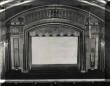
The Original Kinema Ballroom Building (1938 - present) 'The Palace Kinema (Dunfermline) Ltd' who built and owned the cinema of the same name decided to build the original 'Kinema Ballroom' adjacent to the cinema using predominantly local contractors as can be seen below: Design: Messrs Muirhead & Rutherford of Dunfermline. Daniel Younger who was associated with building The Palace Kinema in 1915 was also involved in the building of the Kinema Ballroom in 1938 and his grandson (John Brewster) later invested in and was instrumental in the ballroom's transformation into one of Britain's of not Europe's finest discotheques (Night Magic) in 1980. Design features included: The “Grand Opening Carnival Dance” took place on Friday 23rd of December 1938 from 20:00 until 01:30. Patrons who paid the not insubstantial ticket price at the time of two shillings and sixpence (2/6d) danced the night away to the sounds of 'Ernest Dobbie and his Swingtette' aka ‘The Swingtette Dance Band’ (later renamed ‘The Swingtettes’) and saw Provost & Mrs Hoggan open “The New Ballroom” which would be managed by Mr Hylands. Coincidentally, the opening took place on the 23rd of December 1938, exactly 23 years to the day, after The Palace Kinema (next door) opened on the 23rd of December 1915! Described in it’s early advertising variously as “The Dancer’s Mecca”, “The Rendezvous Of All Discerning Dancers”, “Fifeshire’s Super Dance Hall” and for five weeks in January & February 1939 as “The Kinema Super Ballroom”, patrons were invited to “Follow The Dancers” and most famously to “Dance And Be Gay The KB Way” long before the contemporary use of the word! The manager lived in a flat above the original entrance in Pilmuir Street and it's still there today though now largely derelict. 'The Kinema Ballroom' was closed on Saturday 30th December 1939 and re-opened on Wednesday 30th July 1941. During this time it was used to billet soldiers from some Scottish regiments while some Polish soldiers were billeted at the Carnegie Women's Institute. The then Manager, Mr George Hylands, was quite concerned about the soldiers stomping around on the new sprung floor that had been installed and had it protected by a linoleum floor covering during the period it was used by the soldiers. (I'm indebted to David Gilchrist - Mr. Hylands' grandson, for this info). In the 1940s many advertising slogans were used including: “There never was a time when so many people were devoted to the art of dancing as today and let it be said, local followers as growing more & more numerous. There must be a reason. The answer is The Kinema Ballroom.” Various talent contests and beauty shows were regularly staged including The Kinema Ballroom's 'Miss lovely To Look At' awarded to Miss Margaret Russell of Edinburgh in 1953 and a competition to find new vocalist for the then resident band 'The Top Notchers' in 1957, won by Mr. Stuart Cameron. The Kinema was a favourite haunt of Naval staff from the Royal Naval Dockyard and Naval bases HMS Caledonia and HMS Cochrane at Rosyth some five miles to the south on The River Forth to whom it was known affectionately as 'The Kin'. The rivalry between The St.Margaret's Hall (where Rock & Roll first took hold in the city) & the Kinema, took an interesting turn when The Kinema management (as 'Kinema Ballroom Enterprises') took over the lease of the St.Margaret's Hall from Jim Brown for a time. Some time later in 1961 the lease was returned to Jim but on the last night before the handover, after a boxing match, the St.Margaret's was gutted by fire (see photo). As some of the boxers were also Kinema bouncers, it was probably inevitable that speculations of arson were rife amongst the public though no evidence was found. The Kinema did as a result, increase business substantially with reduced competition and a new dance floor was laid on Monday 22nd January 1962. Two years later an extension was being planned out to Carnegie drive ...
The Present Kinema Ballroom Building (1964 - Present) On Thursday December 19th 1963 plans were approved by The Dunfermline Dean of Guild Court for a huge (95ft x 51ft) extension to be built to the north of the original building, including the new the two-storey frontage and main entrance on Carnegie Drive we see today. This effectively increased the capacity of the building fourfold to more than 1000 patrons at a cost of £31,000 and was opened on Monday the 30th November 1964 though it was originally planned to open in the April. The transition seems to have been largely seamless as performances took place in the immediately preceding days including the night before! The new extension had a maple strip floor, the cafe was transformed into a lounge bar and the previous bar became a restaurant. (The postal address was also changed to 45 Carnegie 'Street' at this time). The Master of Works was Mr. Andrew Sinclair after whom 'Sinclair Gardens' is named. On the Monday 24th April 1967, Avril Young & Sheena McIntyre (pupils of Woodmill High School) interviewed The Small Faces after their appearance at The Ballroom for their school magazine. Pix here. The saddest event in the ballroom's history occurred on Saturday 9th September 1967 at around 22:15 when a seventeen year-old lad from Lochgelly was assaulted and murdered on the dance floor by two Lanarkshire labourers of eighteen and nineteen years from Bellshill and Uddingston respectively. William Craigie jr (an apprentice butcher with the Co-op in Lochgelly) was stabbed through the heart by what was believed to have been a metal tail-comb. The Kinema was sealed by Police until evidence & statements had been recorded. The accused, James Mcfarlane (18) and Myles Lee (19) were sentenced to life-imprisonment on 6th December 1967 after the jury of nine women and six men came to a unanimous decision after only eighty minutes deliberation at the end of a three-day trial at the High Court in Edinburgh. A subsequent appeal was rejected. On Sunday the 10th September 1967, the BBC recorded the East of Scotland heats for the very popular TV show, ‘Come Dancing’. Throughout this period, wrestling bouts were staged featuring some of the best-known names of the day including Jackie Pallo. In 1968 the local Dunfermline Folk Club took up residence with 'Folk at the KB'. Around 1968 George Crichton Armitt became Assistant Manager to Cecil Hunter and took over as Manager in 1973. The East of Scotland Open Hairdressers Championship was staged in the ballroom on Sunday 28th May 1972 sponsored by The National Hairdresser's Federation. One of the panel was local Baldridgeburn hairdresser, (Secretary & Treasurer of The National Hairdresser's Federation) Mr. Duncan Dobbie. A three-storey ballroom extension was planned in 1973 but it did not complete until November 1976 when it had evolved into and opened as The Castleton (Free House) Public Bar & Function Suite. (Later called Bailey's / The Sinclair Arms / Sinky's / The Corner Music Bar). An Oakley woman died, another Dunfermline woman sustained serious injuries to her jaw & leg and six other people were taken to hospital on Wednesday 21st January 1976 after a double-decker bus and a Ford Capri were involved in a collision at the traffic lights at the junction of Pilmuir Street and Carnegie Drive Dunfermline at around 21:00. The bus ended-up crashing into the newly-built Castleton lounge bar & function suite, badly cracking a wall. The bus was travelling southbound on Pilmuir Street while the car was Westbound on Carnegie Drive. Full story here. 'The Kinema Ballroom' closed its doors for the last time on Saturday 20th September 1980 for four and a half weeks. This was to be the end of an era in terms of the ballroom's role as a regular venue for live music performance.
New owner John Brewster reopened on the Friday 24th October 1980 after extensive modernisation & remodelling (principally as a discothèque) by The Kinema Ballroom Ltd at a cost of approximately £250,000. The £2 tickets for the opening night are alleged to have changed hands for ten times face value (£20) with other offers of £25 each being turned down, such was the desperation to see it all kick-off with top international DJ Abi King (who wore a specially made space suit) and London go-go dance team 'A Touch of Class' as long as you weren't wearing jeans or a t-shirt or looked under 20 years of age. The light & sound system (by Bacchus International Discotheque Services) was reputed to have been amongst the best in Britain if not perhaps Europe and was certainly amongst the most innovative & sophisticated in the world, though there were teething problems on the opening night! Lights and sound were handled by a world-unique custom-built 16-channel computer controlled console. Features included mirror reflective disco balls, columns of neon light rings and in another first for Britain, banks of parabolic reflecting (PAR 64) flood lamps and a two-watt Argon laser. These lasers can create three-dimensional shapes in space and can be used in conjunction with the reflective mirror balls. This was all topped-off with the Neon Atomic Ball centrepiece. They claimed that there were so many possible lighting permutations that it would be impossible to see them all in one evening. And that's not all,... The lighting effects were augmented with two wind machines, four confetti/snow cannons and a huge dry-ice plant. Refreshments were available from either of the two downstairs bars & one upstairs (quieter) bar. Though solo performers and bands still appeared occasionally, the 'golden age' for live entertainment was largely gone as the popularity of the discotheque took over and the venue returned to its original purpose as a dance hall. Pan's People performed on Thursday 1st January 1981. A two-week closure commenced on Sunday 17th July 1983 for a further modernisation costing £50,000. The doors were reopened on Saturday 30th July 1983. Around 1985/6, entrance was restricted to the 'Over 20s'. It closed on Friday 25th July 1986 for refurbishment and reopened on the following Friday 1st August 1986. She was sold in the November of 1987 to Dean Entertainments of Kirkcaldy. 'Night Magic' closed its doors for the last time on Sunday 31st of January 1988 for almost four and a half months for a £750,000 refurbishment by new owners Dean Entertainments of Kirkcaldy.
'Hollywood Boulevard' (1988 - 1991) Friday 10th of June 1988 saw the opening of a remodelled/renamed “Hollywood Boulevard" hailed as "Scotland’s Premier Night Scene". DJs that night were (Desert Island Tam) Jamieson & (Disco Deek) Miller. Architects: Burns & Taylor General Managers: Alex McKay / Martin Robb 'Hollywood Boulevard' was voted ‘Scottish Disco of the Year 1990’ by Disco Mirror. Special entertainment events at Hollywood Boulevard included: Six recordings of TV show 'The Hit Man & Her', Miss Wet-Top Competitions; The National Miss Stocking and Suspenders Contest; Annual Beach Party; Mr. Fife; Mr. Wet Y-Fronts; Mr. & Mrs (Club Show); Annual Tradesmen's Ball; Miss Lovely Legs; Blind Date (Club Show); various fancy dress & fund raising events. Despite being awarded 1st place in the Disco Club & Leisure International – 'Club Image Award', 'Hollywood Boulevard' closed its doors for the last time suddenly and amongst some controversy on Saturday 9th November 1991 following insurmountable "cash problems". Proposals were submitted & approved to use the building as a bingo hall in June 1995 but came to naught and the venue remained closed for seven years during which time it was broken into and many fixtures stolen.
It was the results of some market research which convinced owners Dean Entertainments of Kirkcaldy to invest £1 million in an extensive refurbishment programme and a popular retro-naming to ‘The Ballroom’. Patrons queued for 2 hours on Friday 27th November 1998 to attend the reopening at 9pm with live guests 'Bus Stop'. New features included: 10' x 14' video screen, island bar, dance floor podiums, ultraviolet murals, raised stage area and a 1st floor VIP lounge. Local opinion of the external pink/purple colour scheme was divided! Bernard Manning performed on Wednesday 7th March 2001. A fourteen-week £2 million refurbishment including extending the mezzanine level and installing a lift was completed and £5 ticket holders filled the hall once more at 21:00 on Friday 15th July 2005. The work was carried out by the following contractors: Principle Contractor: Ainslie Homes Ltd
'Velocity' [nightclub] & 'Kinema Live' [live gigs] (2007 - 2011) 'The Ballroom' and 'Sinky's (or 'The Sinclair Arms' / 'Bailey's' / 'The Castleton') was bought by the Stirling-based Castle Leisure Group on Monday 2nd July 2007 and closed its doors for an extensive refurbishment (inside & out) on Monday 23rd July. The new name is 'Velocity' while live events are branded as 'Kinema Live'. Other names seriously considered at the time were 'Logic' 'Kinetic' & 'Kinema'. You have to go back twenty odd years to 1986/7 to find any kind of regular live music in the ballroom so this is the start of something very exciting that Dunfermline has needed for a very long time - a large, regular live music venue! Dunfermline Press article “BALLROOM: New owner to ban promotions and says city’s a shocker for drink-fuelled bad behaviour.” (By: Gary Fitzpatrick) "Gigs will mostly be for age 14+ although under 16's must be accompanied by an adult. 18-21s will need to show ID at the bar to purchase alcohol". "All our gigs operate this way unless a band isn't suited to the Under 18's in which case we will keep it 18+". (John Gallacher - Operations & Security Manager, CLG) The bar known formerly as 'The Castleton' / Bailey's / 'The Sinclair Arms' or 'Sinky's' has been renamed 'The Corner Music Bar' and re-opened on November 30th 2007 with an 'absolutely no football' policy! Unfortunately it subsequently closed again early in 2010. Dunfermline Press article “Revamped nightclub promises live music boost for city centre" by Gary Fitzpatrick (The Dunfermline Press - Wednesday, 14th November, 2007) Dunfermline Press article “Quick way to win the hottest tickets in town" by Gary Fitzpatrick (The Dunfermline Press - Monday, 26th November, 2007) After a brief hiatus, nightclub activity returned on regular Saturdays from August 28th 2010 for a few months. The Smiths Indeed / The Kols / Crayons were billed for 17th December 2010 but the promoter cancelled the gig. The Draymin were to appear with Val Verde / Shanty Town & DJ Fusion, however the venue was struck by flooding from a burst pipe following the extended period of extremely low temperatures experienced since November 2010. Th egig was relocated to PJ Molloys. After a short period of inactivity, sadly CLG placed Velocity on the market for Let or Sale on Wednesday 4th May 2011 after (just short) of four years ownership.
'The Ballroom' (2011 - Present) The venue re-opened once more on December 2nd 2011 under the management of 'D2 Leisure' [Darran Taylor (formerly of The Brasshouse) and Douglas Inglis (formerly of Coady's] and the venue operated under the name 'The Ballroom' once more but the venue was never renamed and currently it remains 'Velocity'. They allegedly took a five-year lease on the historic venue but 'D2 Leisure' soon became a one-man operation with only Darren Taylor at the helm and operations failed again only several months later in 2012. The venue is once more To Let / May Sell - Click Here for Property Details
The venue and adjacent bar were sold once more in late July 2015. The identity or intent of the new owner is, as yet, not for publication. Watch this space for further news. Ghoulz.
|
|